Bill Gertz is a national security correspondent for The Washington Times. He has been with The Times since 1985. He is the author of eight books, four of them national best-sellers. His latest book, "Deceiving the Sky: Inside Communist China's Drive for Global Supremacy," reveals details about the growing threat posed by the People's Republic of China. He is also the author of the ebook "How China's Communist Party Made the World Sick." Mr. Gertz also writes Inside the Ring, a weekly column that chronicles the U.S. national security bureaucracy. Mr. Gertz has been a guest lecturer at the FBI National Academy in Quantico, Va.; the Central Intelligence Agency in Virginia; the National Defense University at Fort McNair in Washington; and the Brookings Institution in Washington. He has participated in the National Security Studies Program at the Johns Hopkins University School of Advanced International Studies and Syracuse University Maxwell School of Citizenship and Public Affairs. He studied English literature at Washington College in Chestertown, Md., and journalism at George Washington University. He is married and has two daughters. He can be reached at bgertz@washingtontimes.com.
China's People's Liberation Army is developing high-technology weapons designed to disrupt brain functions and influence government leaders or entire populations, according to a report by three open-source intelligence analysts.
A new Chinese counterespionage law poses risks to Americans and U.S. companies doing business in China, according to a security alert from a U.S. counterintelligence agency.
Vietnam's communist government has banned domestic screenings of the forthcoming film "Barbie" over a scene from the movie that shows a map of China's expansive maritime claims in the South China Sea, according to reports from Asia.
The new U.S. Space Force needs new offensive weapons and more sophisticated defenses to counter China's rapid deployment of multiple space arms that would pose major dangers for the U.S. military in a future conflict, according to an extensive new study.
Former intelligence officials are criticizing the declassified report by the Office of the Director of National Intelligence that continues to promote the theory that the COVID-19 pandemic likely emerged naturally from a wild animal host and is not linked to a government research laboratory in Wuhan, China.
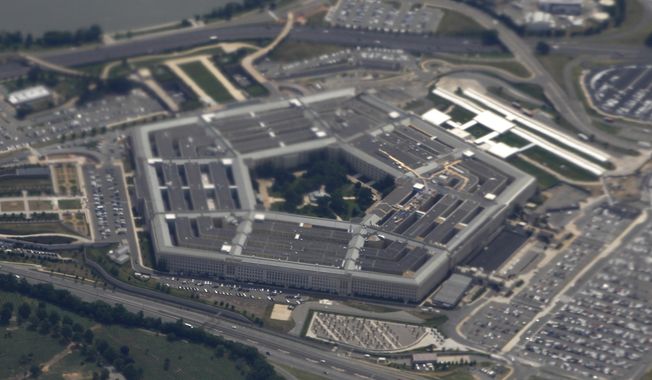
The House version of a major defense authorization bill now working its way through Congress would order Pentagon planners to study the feasibility of imposing a U.S. naval blockade of China to prevent oil shipments from reaching the country in the event of a future conflict.
China's leadership is closely watching recent events in Russia, concerned that a similar military revolt may erupt in Beijing, a senior White House official said Monday.
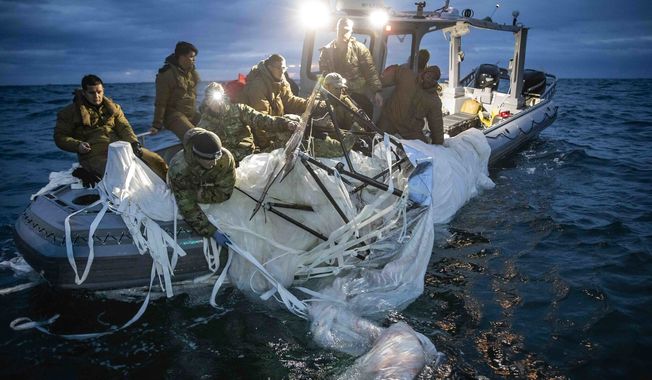
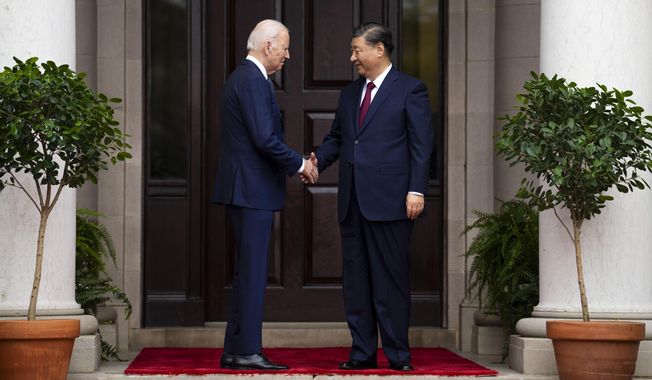
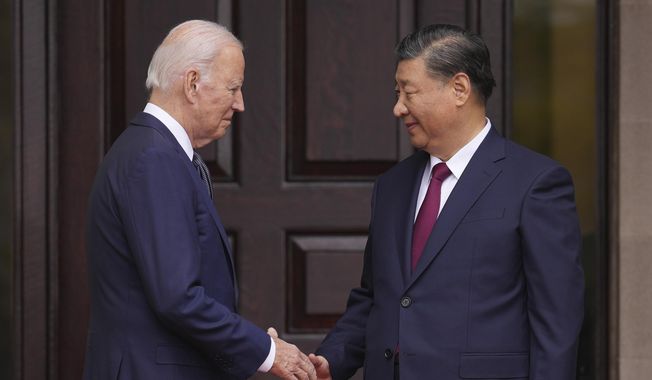
President Biden this week referred to Chinese President Xi Jinping as a "dictator" for the way he responded to the U.S. Air Force's shooting down of a suspected Chinese surveillance balloon over the Atlantic in February.
A key Biden administration goal for averting a future war with China through greater military-to-military exchanges went unmet as Chinese officials refused to reopen the communications channel during recent top-level talks in Beijing.
China's military this week carried out nighttime bomber missions around Taiwan, flights that coincided with the visit to Beijing by Secretary of State Antony Blinken, Chinese state media reported Monday.
China and Russia are waging "gray zone" warfare against the U.S. below the threshold of traditional combat, "gaining benefits without suffering significant consequences," according to a report by the Pentagon's Defense Science Board.
Advances in undersea warfare and defenses by China and Russia are endangering the key strategic ability of U.S. Navy nuclear attack submarines to deter a war in the Taiwan Strait or track adversarial missile submarines, according to a report by two experts on American defense capabilities.
John R. Schindler, a former National Security Agency counterintelligence official, recently disclosed new information linking deceased pedophile financier Jeffrey Epstein to Russian intelligence.
U.S. and Chinese military leaders squared off at a major security conference in Singapore. Beijing asserted that its forces are ready for war over Taiwan. Defense Secretary Lloyd Austin chided China for its increasingly aggressive military actions in the region.
Russian arms inspections under the New START arms accord were halted by the Biden administration Thursday in response to Moscow's suspension of the treaty, the State Department said.
Chinese President Xi Jinping urged top security officials of the ruling Communist Party this week to modernize the country's national security system and warned them to be ready for "worst-case" scenarios amid growing tensions with the United States.
Adm. John Aquilino, commander of the U.S. Indo-Pacific command, recently warned Chinese President Xi Jinping that any attempt to take Taiwan by force would result in massive losses of "blood and treasure" for China.
The State Department unveiled a new space diplomacy strategy on Tuesday in a bid to counter efforts by China and Russia to militarize space and challenge U.S. power.
The U.S. government on Tuesday imposed sanctions on 17 entities from China and Mexico for their alleged role in producing illicit fentanyl that has killed hundreds of thousands of Americans through drug overdoses.
China's rapid large-scale buildup of nuclear missiles, submarines, bombers, including an orbiting nuclear strike weapon, is increasing the danger of nuclear war, according to a study.