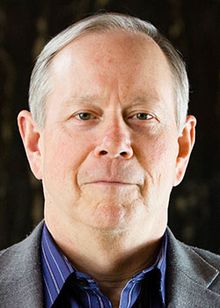
Bill Gertz is a national security correspondent for The Washington Times. He has been with The Times since 1985. He is the author of eight books, four of them national best-sellers. His latest book, "Deceiving the Sky: Inside Communist China's Drive for Global Supremacy," reveals details about the growing threat posed by the People's Republic of China. He is also the author of the ebook "How China's Communist Party Made the World Sick." Mr. Gertz also writes Inside the Ring, a weekly column that chronicles the U.S. national security bureaucracy. Mr. Gertz has been a guest lecturer at the FBI National Academy in Quantico, Va.; the Central Intelligence Agency in Virginia; the National Defense University at Fort McNair in Washington; and the Brookings Institution in Washington. He has participated in the National Security Studies Program at the Johns Hopkins University School of Advanced International Studies and Syracuse University Maxwell School of Citizenship and Public Affairs. He studied English literature at Washington College in Chestertown, Md., and journalism at George Washington University. He is married and has two daughters. He can be reached at bgertz@washingtontimes.com.
The three-star general nominated to head the U.S. Space Command declined to endorse the Biden administration's diversity, equity and inclusion (DEI) policies in the military at a Senate hearing on Wednesday.
China's dispatch of a suspected surveillance balloon over the United States earlier this year is likely to be repeated, the nominee to lead the Pentagon's Northern Command told Congress on Wednesday.
Military forces from China and Russia have engaged in operations in the Pacific since last week, prompting the commander of U.S. military forces in the Pacific to call the emerging alliance "dangerous."
China's government removed Foreign Minister Qin Gang from his post on Tuesday with no explanation following the minister's mysterious disappearance from public view last month, state media reported.
China will prevent the CIA from conducting intelligence operations in the country after CIA Director William Burns said last week the agency has made progress in rebuilding lost agent networks, a Foreign Ministry spokeswoman said on Monday.
China's buildup of nuclear missiles and other strategic weapons requires that Beijing begin nuclear talks with the U.S., White House National Security Adviser Jake Sullivan said Friday.
The Central Intelligence Agency is working to rebuild spy networks in China after a devastating counterintelligence loss of its recruited-agent networks there more than a decade ago, CIA Director William Burns disclosed Thursday.
The U.S. government is employing sanctions and export controls to limit China's military buildup, including development of brain warfare and toxin weapons, a senior Commerce Department official told Congress on Thursday.
Former Secretary of State Henry Kissinger visited China this week for meetings with senior officials and was told that any Western effort to transform China or encircle the country was "impossible."
Amid growing threats by China to attack Taiwan, the commander of the U.S. Indo-Pacific Command said on Tuesday he is confident U.S. forces could prevent a military takeover of the island state.
Chinese Foreign Minister Qin Gang is missing from public view and his whereabouts are a mystery to the U.S. government, a senior Biden administration said.
Chinese communist ideology has become the driving force behind President Xi Jinping's campaign to make the regime the world's dominant power, according to the White House's most senior China affairs policymaker.
A dual U.S.-Israeli citizen who once lived in Maryland has been indicted for serving as a Chinese agent and working with Beijing in a 2016 plot to recruit a senior adviser to President-elect Donald Trump to push pro-China policies.
China's People's Liberation Army is developing high-technology weapons designed to disrupt brain functions and influence government leaders or entire populations, according to a report by three open-source intelligence analysts.
A new Chinese counterespionage law poses risks to Americans and U.S. companies doing business in China, according to a security alert from a U.S. counterintelligence agency.
Vietnam's communist government has banned domestic screenings of the forthcoming film "Barbie" over a scene from the movie that shows a map of China's expansive maritime claims in the South China Sea, according to reports from Asia.
The new U.S. Space Force needs new offensive weapons and more sophisticated defenses to counter China's rapid deployment of multiple space arms that would pose major dangers for the U.S. military in a future conflict, according to an extensive new study.
Former intelligence officials are criticizing the declassified report by the Office of the Director of National Intelligence that continues to promote the theory that the COVID-19 pandemic likely emerged naturally from a wild animal host and is not linked to a government research laboratory in Wuhan, China.
The House version of a major defense authorization bill now working its way through Congress would order Pentagon planners to study the feasibility of imposing a U.S. naval blockade of China to prevent oil shipments from reaching the country in the event of a future conflict.