



President Trump restored commercial fishing in three Pacific Ocean marine national monuments on Thursday, rolling back previous presidents’ environmental protections.
The proclamation will open roughly half a million square miles in the Pacific to bolster the U.S. fishing industry and lower the cost of seafood for American consumers.
Previously, fishermen from other countries could use the waters for commercial fishing, but it was off-limits to U.S. fishermen.
People were interested in these podcasts
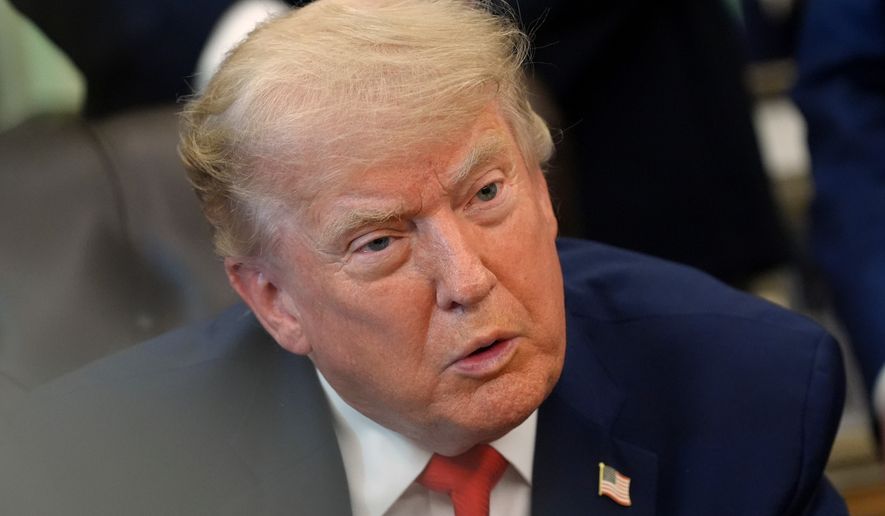
Mr. Trump signed the proclamation at an Oval Office event surrounded by commercial fishermen.
“You weren’t allowed to fish,” Mr. Trump told them. “Canada was, Japan was. They all came in to fish, but our people weren’t allowed to fish there,” Mr. Trump said. “It destroyed livelihoods and made the United States more dependent on foreign products.”
Fishermen will now be able to access portions of the Papahanaumokuakea Marine National Monument, near Hawaii, the Islands Unit of the Mariana Trench Marine National Monument, east of the Philippines, and the Rose Atoll Marine National Monument near American Samoa. All three monuments are managed by the federal government.
Mr. Trump said it boggled the mind that past presidents would disadvantage U.S. fishermen.
“Did you ever think that was going to happen as you grew up, probably as the sons and daughters of fishermen, that someday they were going to take away the right for you to fish in the Pacific Ocean?” he said. “Those decisions closed off vast resources, and really, the richest fishing grounds, they say, anywhere in the world.”
President Biden designated portions of the Papahanaumokuakea as a national marine sanctuary. President George W. Bush designated the Islands Unit of the Mariana Trench and the Rose Atoll as national monuments.
The Papahānaumokuākea, Mariana Trench and Rose Atoll are three of the nation’s five marine national monuments, a designation assigned because scientists recognize the underwater areas as “some of the most effective tools for improving ocean ecosystems and threatened fish stocks,” according to the National Parks Conservation Association, a nonprofit that advocates for environmental conservation.
The nation’s eight regional fishery management councils have raised concerns about prohibitions on fishing within the monuments, saying in a June 2025 letter to Trump that they are “counterproductive to domestic fishery goals.” “The removal of American fishing vessels from U.S. waters eliminates their ability to act as watchdogs over U.S. fishing grounds threatened by foreign fishing and other incursions,” the letter said.
U.S. marine fisheries are valued at $319 billion and are responsible for 2.1 million jobs as of 2023, according to the National Oceanic and Atmospheric Administration.
Fisheries are important contributors to U.S. ocean economies and the livelihoods of coastal communities.1 Marine fisheries revenue and employment have increased since the mid-20th century, with U.S. marine fisheries valued at $319 billion and responsible for 2.1 million jobs as of 2023.
The three monuments were designated as such because scientists concluded that the areas feature “some of the most effective tools for improving ocean ecosystems and threatened fish stock,” according to the National Parks Conservation Association, a nonprofit that advocates for environmental causes.
However, the nation’s eight regional fishery management councils have argued that prohibitions on fishing within the monument threaten U.S. fishing from foreign fishing and other incursions. In a June 2025 letter to Mr. Trump, the councils urged Mr. Trump to remove the prohibitions, saying the designations were “counterproductive to domestic fishery goals.”
Please read our comment policy before commenting.