



OPINION:
During the Cold War, Americans took communism seriously. We knew it was vital to study the ideology of our enemies.
In 1946, Columbia University established the Russian Institute to train what its founders called “American specialists” in Soviet affairs. I was a student there in the 1970s.
Harvard followed with its Russian Research Center in 1948. The federal government itself published a journal, “Problems of Communism,” from 1952 to 1992 — sophisticated, well-documented analyses written by scholars and diplomats and read by policymakers in both parties.
People were interested in these podcasts
Sovietologists didn’t just track Kremlin decrees. They studied Marxism-Leninism, tracing its splits: Soviet vs. Chinese vs. Yugoslav vs. Eurocommunist. For decades, there were debates about what Marx and Lenin meant and how their heirs were bending their doctrines.
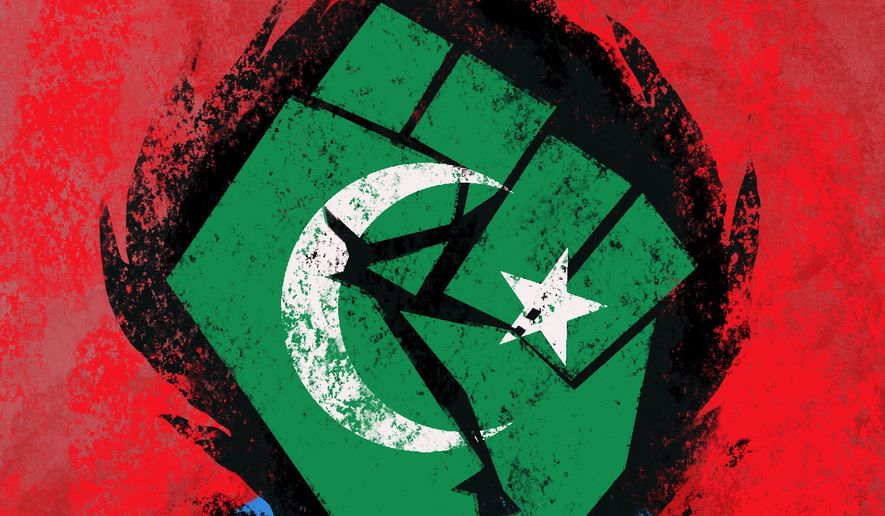
The ideology we call Islamism – or radical Islam or jihadism – has been responsible for killing far more Americans on American soil than communism ever was.
Islamism’s intellectual genealogy runs from a 1920s Egyptian schoolteacher, straight through to al-Qaida’s attacks on Sept. 11, 2001, and on to the current conflict with Iran’s rulers, who for decades have declared that they are leading an “Islamic revolution” against America.
This is as complex as anything Sovietologists ever mapped, yet there is no Islamism Institute at Columbia or Harvard. On the contrary, many of those teaching in Middle East studies departments at elite universities are themselves Islamists — or at least Islamist-adjacent.
Extravagant funding over many years by Qatar is a major reason why.
Nor is there a U.S. government journal called “Problems of Islamism.” And last week, Sen. Ted Cruz, Texas Republican and chairman of a Senate Judiciary subcommittee, convened a fact-finding hearing titled “Hidden in Plain Sight: Confronting the Muslim Brotherhood Network in America.”
All five Democrats on the subcommittee announced in advance that they would boycott, dismissing it in a joint statement as a “political creepshow” designed to scapegoat all Muslims. Not one Senate Republican showed up either, likely because they feared being called “Islamophobic.”
I’ll concede a civil-liberties concern. But Sovietologists managed to study Kremlin policies without treating every American with a Russian last name as a suspect.
Perhaps these senators are unaware that the Muslim Brotherhood has been banned or designated as a terrorist organization in the UAE, Saudi Arabia, Bahrain, Egypt, Jordan and several other Muslim countries.
I should note that serious operational counterterrorism work on Islamism is being conducted. RAND, a nonpartisan, nonprofit think tank that conducts research under federal government contracts, has produced solid analysis of jihadi networks for many years.
West Point’s Combating Terrorism Center and some Hoover Institution fellows do careful research about groups, tactics, financing, radicalization – the equivalent of Cold War threat assessment. But most of this is threat-tracking, not sustained idea-tracking — not the study of what jihadists believe and why, the gap Sovietology existed to fill for communism.
Every member of Congress should at least be familiar with Islamism’s intellectual history. The Muslim Brotherhood was founded in 1928 by Hassan al-Banna, four years after Mustafa Kemal Ataturk, a highly decorated former Ottoman military commander, abolished the Ottoman Caliphate. That move was one of the final steps in building what was – back then, though no longer – a secular Republic of Turkey.
Al-Banna set out to revive the caliphate and restore the power Muslims had wielded over the Middle East and slices of Europe for more than a millennium.
According to credible academic sources, the Brotherhood received financial support from the German legation in Cairo during the late 1930s and into the 1940s – a relationship Jeffrey Herf and other scholars trace beyond funding to a fusion of Nazi antisemitism with Islamist thought.
The Brotherhood today is estimated to have affiliates in more than 70 countries with no single recognized leader or international headquarters. It often works through groups that don’t acknowledge their links with the Brotherhood.
A British government review of the Brotherhood released in 2015 concluded that it is “deliberately opaque and habitually secretive,” and parts have a “highly ambiguous relationship with violent extremism.”
In January of this year, the U.S. Treasury’s Office of Foreign Assets Control (OFAC) designated the Egyptian and Jordanian branches of the Muslim Brotherhood as Specially Designated Global Terrorists for their material support to Hamas. Separately, the State Department designated the Sudanese Muslim Brotherhood as a foreign terrorist organization.
A bit more history: Sayyid Qutb, among the Brotherhood’s most influential theorists, spent time in the U.S. circa 1950 and was shocked and appalled to see men and women dancing at church socials in Greeley, Colorado.
As a teenager, Ayman al-Zawahiri — later Osama bin Laden’s deputy and, after bin Laden’s death, the head of al-Qaida — joined the Brotherhood as a teenager and would spend his life trying, as he put it, to realize Qutb’s vision.
Decades before the 1979 Iranian revolution, a young Shiite cleric named Ali Khamenei translated several of Qutb’s books into Persian. After Khamenei became the second supreme leader of the Islamic Republic of Iran in 1989, Qutb’s texts were reportedly taught in training schools of the Islamic Revolutionary Guard Corps (IRGC).
In 1984, the Islamic Republic even issued a postage stamp honoring him.
In other words, the Brotherhood inspired both the Sunni jihadis of al-Qaida and the Shiite revolutionaries that have ruled Iran for nearly half a century.
Averell Harriman, a distinguished American diplomat who in 1982 endowed Columbia’s Russian Institute – later renamed in his honor – said that policy based on ignorance and illusion is dangerous; policy should rest on knowledge and deep understanding.
The difference is that today, when a senator tries to pursue such an inquiry regarding one of America’s oldest enemies, his colleagues don’t even show up.
• Clifford D. May is founder and president of the Foundation for Defense of Democracies (FDD), a columnist for the Washington Times, and host of the “Foreign Podicy” podcast.
Follow the author
Please read our comment policy before commenting.