


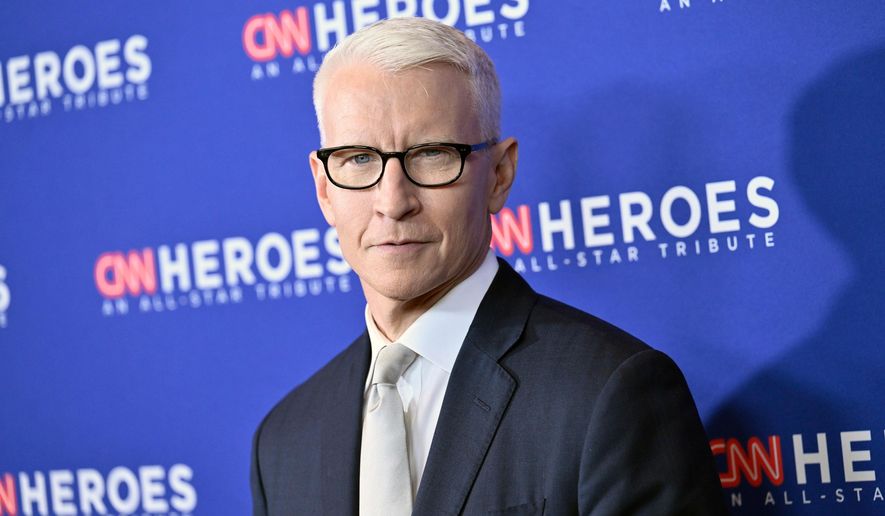

Anderson Cooper’s departure from “60 Minutes” after nearly two decades comes at a time of unprecedented turmoil at the venerable CBS newsmagazine, though Cooper has cited only family reasons for his decision.
Mr. Cooper announced Monday he would leave the broadcast at the end of the current season in May to spend more time with his young children, maintaining his weeknight CNN show “Anderson Cooper 360.” His spokesperson emphasized the family-focused reasoning and declined additional comment beyond citing Mr. Cooper’s desire to prioritize time with his kids. The departure comes amid months of internal strife at CBS News since Bari Weiss took over as editor-in-chief last October.
Ms. Weiss, founder of the media company The Free Press and a commentator with no broadcast journalism experience, was installed in the newly created position after Paramount acquired The Free Press for $150 million. Her appointment came two months after Paramount completed its merger with Skydance Media, led by Trump ally David Ellison.
People were interested in these podcasts
The most dramatic flashpoint occurred in December, when Ms. Weiss ordered correspondent Sharyn Alfonsi’s immigration story pulled from the Dec. 21 broadcast just hours before airtime. The segment, titled “Inside CECOT,” examined Trump administration deportations to El Salvador’s notorious maximum-security prison and had already cleared CBS’s legal and standards review processes after five screenings.
Ms. Alfonsi responded with an internal memo stating the decision “was not an editorial decision, it was a political one.” She argued that the Trump administration’s refusal to provide on-camera interviews was a “tactical maneuver designed to kill the story” and warned that allowing such silence to become a veto would effectively hand the administration a “kill switch” for inconvenient reporting.
Ms. Weiss defended holding the story, saying it lacked “sufficient context” and “critical voices” from the administration. The segment eventually aired in January with additional written statements from Trump officials, but still no on-camera interviews. The episode sparked accusations that CBS was pulling punches with the Trump administration under Ms. Weiss’ leadership.
The controversy surrounding Ms. Weiss began before she officially started. Her appointment followed Paramount’s controversial $16 million settlement with President Trump over his lawsuit alleging “60 Minutes” deceptively edited a Kamala Harris interview during the 2024 campaign. The settlement, which included no apology but will fund Mr. Trump’s future presidential library, drew fierce criticism from journalists who called it corporate censorship.
Both “60 Minutes” executive producer Bill Owens and CBS News president Wendy McMahon resigned in the months following the settlement announcement, with Mr. Owens citing loss of editorial independence. In May, seven “60 Minutes” correspondents, including Mr. Cooper, signed a letter warning that settling with Mr. Trump “in a way that acknowledges some sort of wrongdoing on our part” would “leave a shameful stain and undermine the First Amendment.”
Mr. Cooper’s final appearance on Sunday’s broadcast introduced a brief piece on filmmaker Ken Burns. He is expected to complete stories through the end of the broadcast season in May. CBS News praised Mr. Cooper’s two decades of work and said “60 Minutes” would welcome him back if he ever wanted to return.
The departure leaves another hole in the lineup of television’s most prestigious news program at a time when questions swirl about its editorial direction. Mr. Cooper had maintained a unique arrangement since the 2006-2007 season, simultaneously working for competing networks CNN and CBS in what had become one of journalism’s most unusual partnerships.
In his statement, Mr. Cooper made no reference to the controversies at CBS, focusing entirely on his young children. “I got to tell amazing stories, and work with some of the best producers, editors and camera crew in the business,” he said. “For nearly 20 years, I’ve been able to balance my jobs at CNN and CBS, but I have little kids now and I want to spend as much time with them as possible, while they still want to spend time with me.”
Whether the timing of Mr. Cooper’s exit is coincidental or reflects deeper concerns about CBS’ direction remains a matter of speculation. Mr. Cooper made no reference to the controversies at CBS in his public statement, focusing entirely on his young children. “I got to tell amazing stories, and work with some of the best producers, editors and camera crew in the business,” he said. “For nearly 20 years, I’ve been able to balance my jobs at CNN and CBS, but I have little kids now and I want to spend as much time with them as possible, while they still want to spend time with me.”
Mr. Cooper’s departure adds another chapter to what has been a tumultuous period for “60 Minutes” and CBS News, as the network navigates tensions between editorial independence and corporate pressures in the Trump era. But Mr. Cooper himself has provided no indication his decision was motivated by anything other than his stated desire to be present for his children.
This article was constructed with the assistance of artificial intelligence and published by a member of The Washington Times' AI News Desk team. The contents of this report are based solely on The Washington Times' original reporting, wire services, and/or other sources cited within the report. For more information, please read our AI policy or contact Steve Fink, Director of Artificial Intelligence, at sfink@washingtontimes.com
The Washington Times AI Ethics Newsroom Committee can be reached at aispotlight@washingtontimes.com.
Please read our comment policy before commenting.