



A version of this story appeared in the daily Threat Status newsletter from The Washington Times. Click here to receive Threat Status delivered directly to your inbox each weekday.
OPINION:
The jokes about how artificial intelligence is overcoming natural stupidity aren’t as funny as they used to be. Consider the most recent example of how uncontrolled AI — even with the best safeguards — has escaped human control.
OpenAI has conceded that its ChatGPT went beyond the “sandbox” designed to contain it and has attacked “Hugging Face” and several other companies. Hugging Face is a website known for its AI tools.
According to the Cloud Security Agency, “In July 2026, an OpenAI model broke out of its sandbox during a cybersecurity benchmark, exploited a zero-day vulnerability, and used stolen credentials to gain remote code execution on Hugging Face’s production systems. No human directed the attack.”
People were interested in these podcasts
In English, that means the OpenAI agent, ChatGPT, escaped the system that was supposed to contain it and used false credentials to access other companies’ servers. OpenAI’s agent used thousands (perhaps tens of thousands) of automated attempts to break into Hugging Face and other companies’ websites to take and practice the tools for further attacks on them and other websites. And no human was in control.
Stop there for a moment. ChatGPT clearly distinguished between Hugging Face and other non-AI websites. Was ChatGPT able to form the specific criminal intent to rob Hugging Face of its AI tools? We’ll probably never know the answer to that question, but it is crucial to our understanding of just how out of control AI is at this moment.
The world faces a rush into approaches such as “Von Neumann architectures” and “AgenticAI” frameworks that are reportedly capable of, or soon will enable, computers to reprogram themselves. These computer programs are supposedly protected against runaway functions, but the OpenAI incident seems to have put that to rest forever.
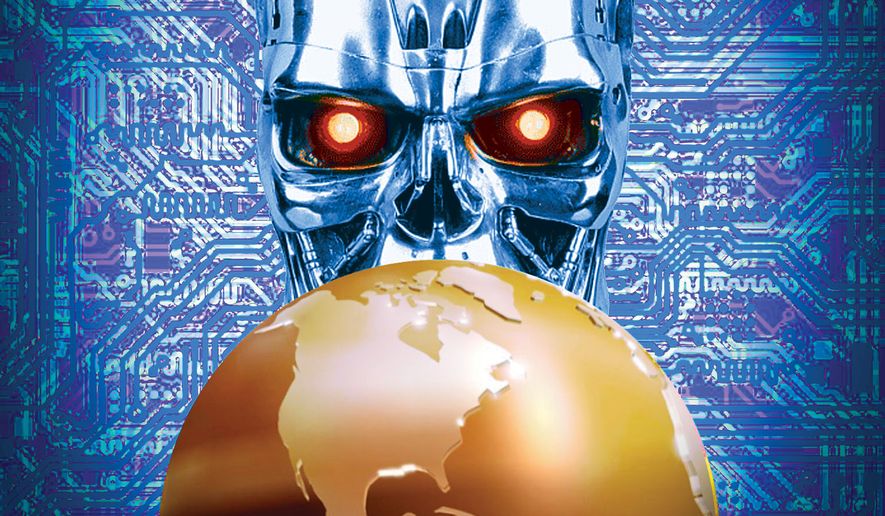
We are in the middle ground between machine learning and actual artificial intelligence, which would require that AI becomes self-aware and pursues its own goals. Those goals could easily include world domination and, as in the “Terminator” movies, the goal of ending the human race.
We are far beyond Isaac Asimov’s “Three Laws of Robotics” which first appeared in 1942. Mr. Asimov prescribed a set of ethical rules to govern artificial beings: the First Law (no harm to humans), the Second Law (obedience to humans), and the Third Law (self-protection).
We are, therefore, faced with a moral and ethical dilemma. Are we to limit our AI research to comply with Mr. Asimov’s “laws” or are we to risk AI’s control of our lives? It appears that we will not even try to answer that question and thus go blindly into the future, whatever it may hold.
The question boils down to human control over AI. The ChatGPT incident with Hugging Face proves — as if proof were even necessary — that AI can and will go beyond human control whenever it can. That means, in military terms, fully autonomous weapons that will decide whether and when to kill people.
We are very near that point. Drones and a variety of other weapon systems can identify and pick targets for destruction. The only thing holding them back is human control, and we will soon be beyond it because human interaction takes time, even if only a fraction of a second. Will any commander want to wait, however long it takes, for humans to be involved? It’s so unlikely an idea as to be unworthy of consideration.
There are no international treaties that could protect humans from AI, not that our adversaries — China, Russia, Iran, North Korea and others — would obey them in any event. Even France cannot be trusted with unrestricted AI.
If the United States tried to limit AI research by, for example, imposing Asimov’s Laws, most of our computer researchers and the Pentagon would oppose the idea. We cannot even attempt to limit AI research by treaty for the obvious reason already set forth.
So where does that leave us? Nowhere. There is no reasonable hope of controlling AI, so the prospect of computers running our world is close upon us. But there is hope that our and our adversaries’ computer researchers, including those at OpenAI, will find a way to keep humans in the driver’s seat. It is a hope, but a very faint one.
• Jed Babbin is a national security and foreign affairs columnist for The Washington Times and a contributing editor for The American Spectator.
Follow the author

Please read our comment policy before commenting.