



A version of this story appeared in the daily Threat Status newsletter from The Washington Times. Click here to receive Threat Status delivered directly to your inbox each weekday.
OPINION:
One of the most sacred duties of the director of the CIA is to tell the president and Cabinet officials what they need to know, even when it’s not what they want to hear.
That means Director John Ratcliffe must be prepared to report to President Trump that there is no evidence Iran has any intention ever of entering into good faith negotiations with the U.S. on its nuclear program. War against the U.S., whether direct or through its proxy terrorists, has been the oxygen for Iran’s hardline terrorist regime since the 1979 revolution.
Iran’s resilience derives from the regime’s practically infinite tolerance for inflicting pain on its own population.
People were interested in these podcasts
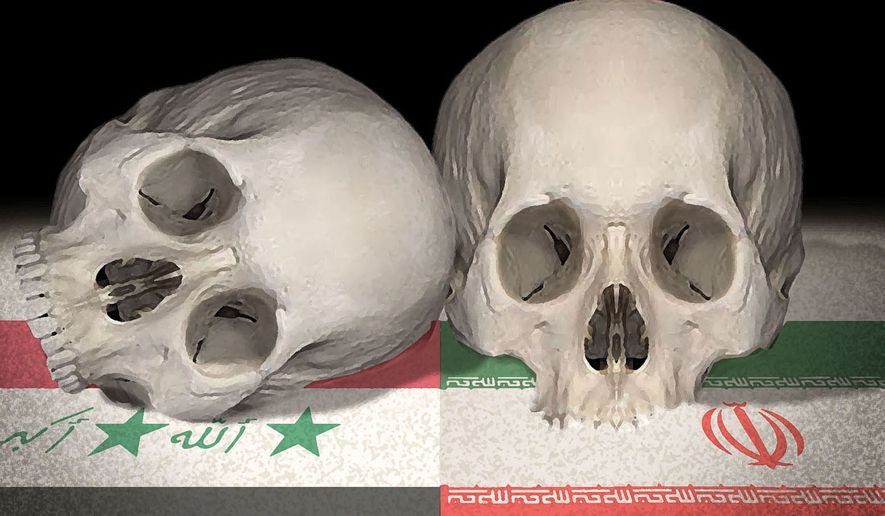
Consider the first Gulf War, which began in September 1980 when Iraq invaded Iran, and ended eight years later after the United Nations brokered a ceasefire. The war resulted in over a million casualties, with deliberate kinetic strikes on civilians and Iraq’s use of chemical weapons.
Even after having spilled so much of his country’s blood and treasure, Iran’s leader Ayatollah Khomeini declared that ending the war was “worse than drinking poison.”
The Iran-Iraq war transformed the Islamic Revolutionary Guard Corps, the regime’s most reliable and effective fighting force, into the key powerbroker inside Iran.
Iran also realized the benefits of deploying proxy militias like the Badr brigade, which the Iranian Intelligence created in 1982 to fight inside Iraq against Saddam Hussein’s regime.
Now the most powerful extrajudicial paramilitary force in Iraq, Badr controls Iraq’s Interior Ministry.
Iran also used the war to destroy what was left of the regime’s domestic opposition by unifying the country under the guise of fighting an external enemy while violently repressing freedoms of speech and assembly.
U.S. statesman Henry Kissinger once remarked that a “modern, strong, peaceful Iran could become a pillar of stability and progress in the region. This cannot happen unless Iran’s leaders decide whether they are representing a cause or a nation, whether their basic motivation is crusading or international cooperation.”
Iran’s IRGC-dominated hard line regime has made it clear that its strategic objectives do not include improving the lives of its citizens but rather destroying Israel; reducing or eliminating altogether U.S. influence in the Middle East; and dominating its own self-designated sphere of influence over Iran’s Arab Gulf state adversaries.
That’s why Iran has steadfastly refused to negotiate in good faith despite significant economic incentives.
Iran has made the Strait of Hormuz the center of gravity in its war on the U.S. and its allies.
U.S. kinetic strikes reportedly hit roughly 1,000 targets from July 12 to July 24, and over 10,000 targets struck during the war’s first phase in March and April have not yet induced Iran to negotiate in good faith on its nuclear program.
Iran has taken a few steps toward engaging in negotiations over the Strait of Hormuz, but with an eye on exerting control over maritime shipping.
IRGC Commander Brigadier Gen. Ahmad Vahidi, who exercises command and control over the Iranian regime’s national security strategy, joined the IRGC in 1979 and was promoted to deputy for intelligence in 1981. He then led the IRGC Quds Force from 1988-97 and later served as defense minister.
Gen. Vahidi, whose formative experience was during the Iran-Iraq war, is under heavy U.S. and EU sanctions as a result of the litany of terrorist attacks for which he was responsible.
U.S. and Israeli kinetic strikes have not created the conditions to negotiate a better deal than the flawed JCPOA, which granted sunset clauses for Iran’s nuclear program and never addressed Iran’s arsenal of ballistic weapons or material support for proxy terrorists.
Gen. Vahidi clearly understands that negotiating in good faith would mean “drinking the poison” not just metaphorically but perhaps literally, since he would lose his authority and standing among subordinate IRGC hardliners.
Regardless of whether we negotiate some modus operandi over the Strait of Hormuz, Iran is poised to continue to wage war on the U.S. and our allies as it has for the past 47 years through its proxy terrorists, while continuing to pursue a nuclear program and reconstitute its arsenal of ballistic missiles and drones.
The CIA director is the apolitical dispassionate consigliere to the president. It’s over to Mr. Ratcliffe, therefore, to explain that if we are unable to induce a change in Iran’s calculus, then we will need to continue periodically to conduct kinetic strikes to degrade Iran’s nuclear program, military forces, proxy terrorists and conventional weapons — or face the consequences.
• Daniel N. Hoffman is a retired clandestine services officer and former chief of station with the Central Intelligence Agency. His combined 30 years of government service included high-level overseas and domestic positions at the CIA. He has been a Fox News contributor since May 2018. All statements of fact, opinion or analysis expressed are those of the author and do not reflect the official positions or endorsement of the CIA or any other U.S. government agency.
Follow the author

Please read our comment policy before commenting.