


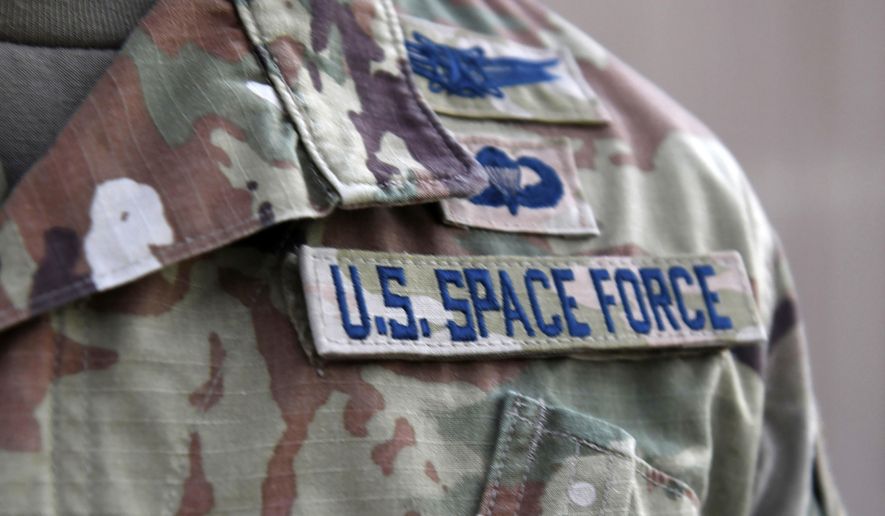

The Washington Times reported this week that the U.S. Space Force is racing to deploy counterspace weapons to match China and Russia’s anti-satellite capabilities. But the long-term environmental consequences of such weapons remain visible in orbit nearly two decades after the most notorious test.
China’s 2007 anti-satellite missile test created thousands of pieces of high-speed orbiting debris that continue to threaten spacecraft operations. A missile knocked out a weather satellite, leaving a debris field that persists today.
Russia added to the orbital debris problem in 2021 when its own anti-satellite missile test struck a satellite, spreading more than 1,500 additional pieces of debris. U.S. officials have previously condemned debris-generating anti-satellite tests by China and Russia as irresponsible.
People were interested in these podcasts
The debris from these tests illustrates the lasting environmental impact of space weapons. Defense Secretary Pete Hegseth has said the U.S. military seeks what he called “total orbital supremacy” over China and Russia, with the Space Force accelerating deployment of multiple counterspace systems under the new administration.
Space Force Gen. B. Chance Saltzman, chief of space operations, told The Washington Times that the service “has and will continue to invest in a full range of counterspace capabilities to deter conflict in space and to win decisively if called upon.”
The current U.S. arsenal includes three electronic satellite jammers: the Counter Communications System (operational since 2020), plus two new systems called Meadowlands and Remote Modular Terminal now being deployed. Electronic jammers don’t create physical debris.
The Space Force’s planned arsenal, however, includes several weapon types that could create debris. While current U.S. systems are limited to these three electronic jammers, the counterspace weapons under development include categories that physically destroy targets.
A March 2025 Space Force planning document titled “United States Space Force Space Warfighting: A Framework for Planners” outlines more aggressive orbital warfare tactics, including “pursuit operations” where attacking systems maneuver close to enemy spacecraft before firing weapons. The framework also details kinetic kill missiles that physically destroy targets.
China and Russia have already tested and deployed several types of ground-based missiles capable of destroying satellites. These hard-kill systems have generated debris fields in past tests.
The Space Force planning document also describes co-orbital systems, including “maneuvering killer satellites that can grab and crush enemy systems.”
China has tested several variants of these robotic satellites. The Shijian-21 satellite, launched in 2021, practiced grappling a BeiDou navigation satellite and moved it to a higher graveyard orbit. U.S. officials have identified this as a dual-use anti-satellite capability that could be weaponized.
U.S. intelligence has identified Russia’s co-orbital killer as the Nivelir system that can deploy sub-satellites for inspection or kinetic kills. Moscow also is working on the Burevestnik missile for anti-satellite attacks at various orbital altitudes.
Most current U.S. satellites were not designed for conflict in space and remain vulnerable to enemy jamming, lasers, maneuvering killer robot satellites, anti-satellite missiles and cyberattacks, according to Lt. Gen. Scott Berrier, director of the Defense Intelligence Agency.
“The loss of space-based communication and navigation services could have a devastating impact on warfighters during a conflict,” Berrier warned Congress in 2022. “That’s one of the most serious scenarios anticipated.”
High-speed orbital debris adds to these vulnerabilities. Debris can damage or destroy satellites on contact, and the thousands of pieces from the 2007 Chinese test continue to circulate in orbit.
The Space Force is working to match Chinese and Russian counterspace capabilities, which analysts say are more advanced in several areas, particularly in anti-satellite missiles. Proposed weapons systems include kinetic missiles and co-orbital systems that, if used destructively, could generate debris similar to the 2007 Chinese test.
The congressional U.S.-China Economic and Security Review Commission warned in its November report that “winning this race is not only about securing dominance in orbit. It is about protecting critical infrastructure, maintaining operational resilience, safeguarding democratic values in space governance, and ensuring that U.S. standards guide the development of rules and norms in space.”
The publicly available Space Force planning documents do not detail how debris-creation risks would be mitigated.
This article was constructed with the assistance of artificial intelligence and published by a member of The Washington Times' AI News Desk team. The contents of this report are based solely on The Washington Times' original reporting, wire services, and/or other sources cited within the report. For more information, please read our AI policy or contact Steve Fink, Director of Artificial Intelligence, at sfink@washingtontimes.com
The Washington Times AI Ethics Newsroom Committee can be reached at aispotlight@washingtontimes.com.
Please read our comment policy before commenting.