Skip to content
Advertisement
Author profile
Richard W. Rahn

Richard W. Rahn

rahn123@washingtontimes.com

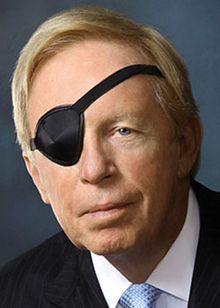
Richard W. Rahn is a senior fellow at the Cato Institute and chairman of the Institute for Global Economic Growth.

Articles by Richard W. Rahn

RICHARD RAHN: Abolish the IRS

Abolish the Internal Revenue Service? IRS Commissioner John Koskinen has said the government must have an IRS to collect the taxes to fund the government. Mr. Koskinen is right that no matter what kind of tax system we have, there needs to be a tax collection bureau. But those in favor of abolishing the present IRS are correct in that the United States certainly can get along perfectly well without the politicized, abusive and rights-trampling tax agency the IRS has become.

April 13, 2015
Unequal justice in government illustration by Greg Groesch/The Washington Times

RICHARD RAHN: Lois Lerner, Hillary Clinton should be subject to rule of law

Last week, the Obama Justice Department declined to press charges against former Internal Revenue Service official Lois Lerner — even though there was overwhelming evidence that she had targeted conservative groups and may have been complicit in destroying her emails. She also waived her Fifth Amendment privilege by proclaiming her innocence before a congressional committee and then refused to answer questions. It is possible that for some unknown reason Ms. Lerner's case should have been dropped, but to many it appeared that once again President Obama and Attorney General Eric Holder were applying the rule of law selectively.

April 6, 2015
Illustration on asset forfeiture abuse by Alexander Hunter/The Washington Times

RICHARD RAHN: Loretta Lynch, asset forfeiture lose support

Do you think the government should be able to seize your property if you have not been convicted of any crime? Most people are not aware that one of the most odious activities of federal, state and local tax and police authorities is that of "asset forfeiture." Asset forfeiture laws allow law enforcement to seize and keep property of individuals and businesses without a criminal conviction.

March 30, 2015
Chart to accompany Rahn article

RICHARD RAHN: In Peru, standard of living increasing

When someone mentions Peru to you, what is the first visual image that pops into your head? Inca Indians with their llamas in the Andes Mountains, looking at the some of the stone ruins of their ancient civilization? Yes, Peru still does have some of that, but most Peruvians are now employed in an increasingly rapid-growing and diverse economy.

March 23, 2015
Illustration on political and economic success in Chile by Alexander Hunter/The Washington Times

RICHARD RAHN: Chile thrives under limited government

Why have Chile, Hong Kong, Singapore, South Korea, Estonia and the Cayman Islands all become relatively prosperous in recent decades while other countries have lagged? The answer is not a mystery, but is often ignored or even suppressed by the political and media classes in many places throughout the world because many of them believe the truth will diminish their own political power.

March 16, 2015
Government Waste Illustration by Greg Groesch/The Washington Times

RICHARD RAHN: How to rate the new Congress

How would you measure congressional success? Even though the new Congress is only two months old, there has been much criticism of both the leadership and the members. The Republicans promised to reduce government spending, reform the tax code, and reduce the regulatory burden.

March 9, 2015
Rolling the Dice Illustration by Greg Groesch/The Washington Times

RICHARD RAHN: The world a year from now, after corruption and strife

The world is a mess, but what will it look like a year from now? No one knows with certainty, but informed guesses can be made, in part, based on the direction of the economies in conflicted areas of the world. Global debt (including that of the United States) is now a higher percentage of global gross domestic product than it was before the Great Recession that began in December 2007, making the world increasingly vulnerable to a new financial crisis.

March 2, 2015
Illustration on attacking ISIS's finances by Alexander Hunter/The Washington Times

RICHARD RAHN: Pushing back against Islamist aggression

How would you feel if you had to have bodyguards anytime you moved about — not because you were a voluntary celebrity, such as a presidential candidate or movie star, but merely because you exercised your free speech right by publishing cartoons that some found offensive?

February 23, 2015
U.S. Government Waste Illustration by Linas Garsys/The Washington Times

RICHARD RAHN: U.S. government wastes $1 trillion a year

The London Times headlined last week, "HSBC helped customers to hide millions from taxman." There are decades of stories about corporations, movie actors, artists and politicians hiding money from the taxman. Many economic studies have shown that once tax rates exceed 20 percent, most people will start thinking about and then acting in legal or illegal ways to avoid the tax bill.

February 16, 2015
Illustration on Russia's interference with global energy production by Linas Garsys/The Washington Times

RICHARD RAHN: Vladimir Putin funding opposition to Keystone pipeline

Which country has the biggest interest in stopping the expansion of the oil and gas industry in Europe and North America? Answer: the Russian Federation is highly dependent — to the tune of several hundred billion dollars — on the export of these commodities, particularly to Europe.

February 2, 2015
Illustration on President Obama's fictional record by Greg Groesch/The Washington Times

RICHARD RAHN: Obama’s unrealistic policies

If you were a librarian, would you put President Obama's recently delivered State of the Union address in the fiction or nonfiction section? All presidents puff their accomplishments and gloss over their failures, but no previous president has been so blatant in just making up "facts" and numbers that are so disconnected from reality.

January 26, 2015

RICHARD RAHN: Republican Congress sizes up big government bureaucrats

What is the greatest obstacle confronting the new congressional Republican majority in enacting good policy? It may not be President Obama, because there is an even more formidable force in Washington that crushes good policy: the permanent bureaucracy. The permanent bureaucracy is made up of federal employees, government contractors and their employees, congressional staff and the special-interest lobbying community (including law and accounting firms). It also includes the media establishment, which depends on leaks and information from those in government for stories in exchange for protective coverage.

January 5, 2015
King Louis XIV of France

RICHARD RAHN: Loux XIV, John Rockefeller had harder life than common man today

As we go into this Christmas week, you should count your blessings that you live in 2014. Would you prefer to live as the French King Louis XIV did (1643-1715), or as you do today? The average low-income American, who makes $25,000 per year, lives in a home that has air conditioning, a color TV and a dishwasher, owns an automobile, and eats more calories than he should from an immense variety of food.

December 22, 2014

RICHARD RAHN: Michelle Bachelet socialist economy reverses Chile success

Why do very successful nations often adopt policies that lead to their undoing? After a revolution or major reform, some countries allow a high degree of economic freedom, establish the rule of law, protect private property rights and establish low tax rates with strict limits on government spending and regulation. The economy takes off, the citizens become far richer and then the government mucks it up, usually by attempting to redistribute income and expand state control.

December 15, 2014