Skip to content
Advertisement
Author profile
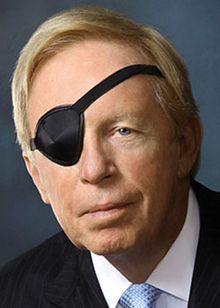
Richard W. Rahn

Richard W. Rahn

rahn123@washingtontimes.com

Richard W. Rahn is a senior fellow at the Cato Institute and chairman of the Institute for Global Economic Growth.

Articles by Richard W. Rahn

Illustration on Adam Smith     The Washington Times

Adam Smith’s common-sense insights as to the way the world works are correct now

This historic and most interesting city has never looked better, even during its earlier pre-eminence in the late 1700s when Adam Smith lived and died here. The current economy is largely based on financial services, research and tourism -- all of which are "clean" industries -- resulting in the end of the historic smoky image of Edinburgh.

October 8, 2018
Chart to accompany Rahn article of Oct 2, 2018.

The rise and fall of nations

This small group of volcanic islands off the African coast is one of the more interesting places on Earth with almost ideal temperatures. The name comes from the Latin, meaning islands of the dogs, not the birds. The Spanish gained control of them 600 years ago, and tourists have been flocking here ever since. A notable visitor was Christopher Columbus, who stopped by on each of his four voyages to the "new world" to do last-minute ship repairs and stock up on provisions for the long trips ahead. One could only suspect that after weeks at sea he might have regretted leaving the Canaries.

October 1, 2018
Illustration on economic freedom by Alexander Hunter/The Washington Times

Why care about economic freedom

Good news -- the United States is becoming a bit more economically free. The "Economic Freedom of the World 2018 Annual Report," published by the Fraser Institute of Vancouver, Canada, and co-operating think tanks around the world, is released today. Last year, the United States and Canada were tied at number 11, but now the United States has moved up to number six.

September 24, 2018
FILE - In this Dec. 26, 2016 file photo, a currency exchange bureau owner counts U.S. dollars in downtown Tehran, Iran. Iran's Central Bank has allowed money exchange offices across the country to resume work after a ban imposed in March 2018 amid the country's economic troubles. The bank's governor, Abdolnasser Hemmati, told sate TV late on Sunday, Aug 5, 2018, that "money exchangers are allowed to sell and buy foreign currencies." (AP Photo/Vahid Salemi, File)

Property rights and pricing

Many problems exist because the activity is mispriced and/or the key decision makers lack the proper incentives. Argentina is going through another financial crisis which occurs almost like clockwork every few years.

September 17, 2018
The Richest Man Illustration by Greg Groesch/The Washington Times

Lower taxes and fewer regulations mean more prosperity and liberty

For the past two years, most major media outlets have been running non-stop about what a disaster President Trump is, and how his mere existence is a threat to both citizens' pocketbooks and liberty. Yet the economy has been booming, and lower taxes and fewer regulations not only meant more prosperity but more liberty.

September 10, 2018
Illustration on the need for alternative currencies by Alexander Hunter/The Washington Times

A justified fear of inflation fuels the search for money alternatives

Last week, the Federal Reserve announced that it had reached its goal of a 2 percent inflation rate. Why not 1 percent or 4 percent or better yet, zero? The act creating the Federal Reserve back in 1913 tasked the Fed with the goal of price stability — which in normal (not Washington) speak should mean an inflation rate of zero.

September 3, 2018
Illustration on state economic experiments and results by Linas Garsys/The Washington Times

How states can experiment with different policies to find what works

From the beginning of time, people have moved from less desirable to more desirable places. In early times, the main driver of migration was the availability of food. In the modern world, the big drivers of migration are economic opportunity, including well-paying jobs and personal freedom, as well as climate.

August 27, 2018
Illustration on economic growth and hazards to sustaining it by Alexander Hunter/The Washington Times

The United States is doing better than it did during the Obama years

The "new normal" is 2 percent economic growth as we were endlessly told by Hillary Clinton and Barack Obama supporters in the 2016 campaign. Unlike all previous administrations, economic growth never reached a 3 percent annual rate during the Obama years. Many economists who were Obama and Clinton supporters endlessly repeated the mantra that the age of great productivity growth was over and that Americans had to get used to a sluggish economy.

July 30, 2018
Conflicts of Law Illustration by Greg Groesch/The Washington Times

The rule of law requires that no one be subject to conflicting laws, anywhere

Increasing numbers of people find themselves in legal never-never land, where they cannot follow the law of their home country without violating the law of another country for which they can be prosecuted. Intelligence agents of all countries have always faced such risks. However, now more and more business people, and even government foreign policy and statistics officials, find themselves being charged and convicted of felonies, no matter what they do.

July 16, 2018
Illustration on why some problems are never solved by Alezxander Hunter/The Washington Times

Why some problems seem never to be solved

"Public choice theory" in economics, in part, explains the way self-interest of those in government and other institutions motivates them to avoid solving problems in order to keep their jobs and perks. Now, a new series of studies by researchers at Harvard and other universities shows "that as the prevalence of a problem is reduced, humans are naturally inclined to redefine the problem itself."

July 9, 2018
Illustration on the attractiveness of Socialism by Alexander Hunter/The Washington Times

History shows that socialism brings misery to nations that adopt it

This past week, Alexandria Ocasio-Cortez, a self-proclaimed socialist, won the Democratic primary for a congressional seat in New York. Why would a sane person advocate a political movement that was responsible for well over a hundred million deaths in the last century, as well as untold misery? By her comments, Ms. Ocasio-Cortez revealed a couple of things about herself. The first is an ignorance of history — because it is unlikely that she really meant to be an advocate for a cause that often results in mass death and destruction — and that she is unable to think beyond stage 1, or the first order effect of a policy.

July 2, 2018
More Jobs Available Illustration by Greg Groesch/The Washington Times

The AI revolution may eliminate jobs, but right now there are more jobs available than job seekers

Will there be too few or too many jobs in the future? We are told as a result of the artificial intelligence (AI) revolution with endless robots, autonomous vehicles, etc. that there will be far fewer jobs. Yet last week, despite record levels of automation, the Department of Labor announced that the country had reached the point where there were more jobs available than people seeking work.

June 18, 2018
Russian Money Funneled to the Democrats Illustration by Greg Groesch/The Washington Times

How U.S. environmental groups collude with the Russians and Chinese

Two of the world's biggest polluters are China and Russia. You would think that U.S. environmental groups would be major critics of these countries; yet, the reality is some take money from entities controlled by these governments and disseminate their propaganda.

June 11, 2018
Illustration on the similarities between Watergate and Hillary Clinton's actions surrounding the 2016 election campaign by Alexander Hunter/The Washington Times

Watergate redux

Was Watergate worse than the present scandal? Do you know what the crime was in Watergate?

June 4, 2018
Outline of Switzerland mashed up with Swiss flag design. Image via Wikimedia Commons. Accessed June 29, 2016.

A skilled hand with the U.S.-Swiss mix

This past week, with the passing of Faith Ryan Whittlesey, America lost the best example of what an ambassador should be. By happenstance, Ambassador Whittlesey also served twice in, perhaps, the best example of what a country ought to be — Switzerland.

May 28, 2018