Ben Wolfgang is a national security correspondent at The Washington Times, a senior member of its Threat Status team, and the host and producer of the award-winning Threat Status Podcast. Ben covers national security, foreign policy, military affairs, the defense industry and the rapidly evolving landscape of military technology. A Pennsylvania native, he joined The Washington Times in 2011 after serving as a political reporter at The Republican-Herald in Pottsville, Pa. Over the course of his career, Ben has covered the White House, Congress, and four presidential campaigns. His reporting has earned recognition from some of journalism's most respected organizations, including the Virginia Press Association and the Society of Professional Journalists' Washington, D.C. Chapter, among other honors. Ben has interviewed heads of state, chairmen of the Joint Chiefs of Staff, senior military commanders, cabinet secretaries, senior government officials, and the CEOs of many of the nation's largest and most influential defense companies. Ben is a frequent guest on broadcast media, with appearances on C-SPAN, the Sirius XM POTUS channel, and other outlets. He can be reached at bwolfgang@washingtontimes.com.
Ahead of a contentious vote on his confirmation this week, David Bernhardt has become the latest target of environmentalists' ire, with green groups and other critics charging that the deputy Interior secretary nominee failed to disclose lobbying work he did on behalf of California's Westlands Water District while spearheading the Trump administration's transition team at the Interior Department.
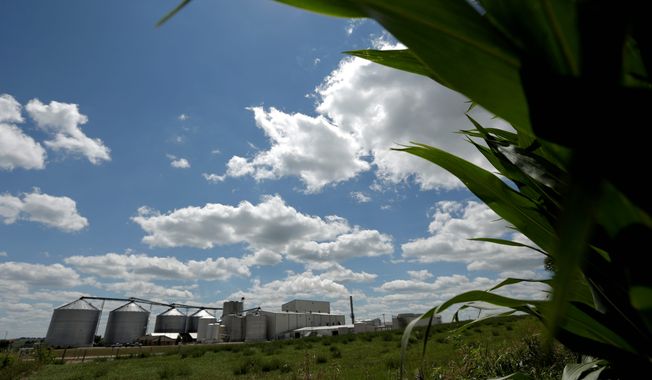
In a major defeat for the ethanol industry, senators of both parties joined forces late last week to sink a controversial bill that would've allowed gasoline with 15 percent ethanol to be sold year-round.
Interior Secretary Ryan Zinke said Friday he's completed a review of Colorado's Canyons of the Ancients National Monument and will recommend to President Trump that no changes be made to its boundaries.
In a major blow to the ethanol industry and its supporters in Congress, a bill to expand the availability of gasoline containing 15 percent ethanol has stalled in the Senate and won't come up for a committee vote before the August recess.
Legislation paving the way for Alaska's long-awaited King Cove road cleared the House easily on Thursday, marking a key step forward in the isolated community's 30-year battle with Washington.
An unlikely coalition of environmentalists, labor unions, boaters and some of the Senate's most conservative Republicans is mobilizing to fend off a pro-ethanol bill that has divided both parties and, if passed, would mark one of the biggest wins in recent memory for the industry.
By extending its controversial cap and trade system for another decade, California this week officially replaced the federal government as the nation's most powerful actor on global warming — and in the process got several Republicans to buck their national party leadership.
Saying that the government had become far too slow in facilitating oil and gas development on federal lands, Interior Secretary Ryan Zinke on Thursday signed an order directing his department to hold more lease sales and speed up permitting for energy exploration.
The Trump administration on Wednesday proposed to lower the amount of renewable fuels that must be blended into the nation's gasoline supply next year, saying "market realities" have informed its decision and leaving the door open for a much broader overhaul of the entire Renewable Fuel Standard in the near future.
The biggest critics of President Trump's decision to withdraw from the Paris climate accord are also the world's biggest hypocrites on energy policy, top environmental groups charged Wednesday in a report that found many top nations' rhetoric on cutting emissions doesn't line up with how and where they spend their money.
The Trump administration's "unprecedented" effort to break up and shrink a national monument has been done at least 18 times before, with presidents of both parties exercising power to significantly reduce the size of U.S. landmarks established by their predecessors.
A federal court on Monday dealt a blow to President Trump and EPA Administrator Scott Pruitt, striking down the agency's attempts to delay an Obama-era rule limiting methane emissions from oil and gas wells.
President Trump's Twitter account again stole the spotlight Sunday, drawing fire from both sides of the aisle as Republicans stepped up their rebukes and claimed the commander in chief is using social media as a key part of a sinister strategy to "weaponize distrust" in his No. 1 enemy: the media.
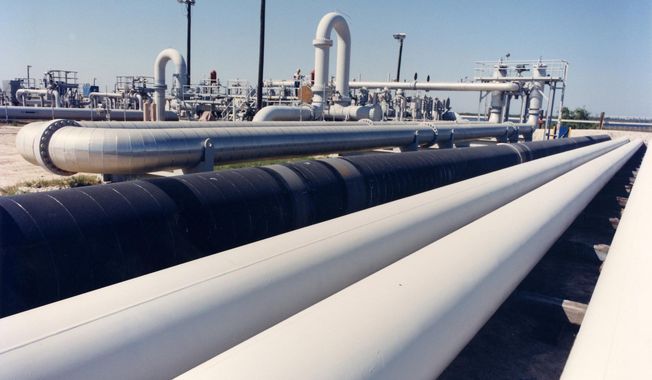
President Trump on Thursday said he's approved a new petroleum pipeline to Mexico as part of a broader plan to export American energy around the world.
President Trump on Wednesday promised to usher in a "golden age of American energy dominance," pledging that his administration will lift regulatory restrictions that hamper coal mining and oil drilling.
A coal-fired power plant partially owned by the federal government and critical to tribal economies in the West will survive for another two years, though its future beyond that remains uncertain.