



OPINION:
Nearly two years after the 2024 election, election officials nationwide have reached an important milestone.
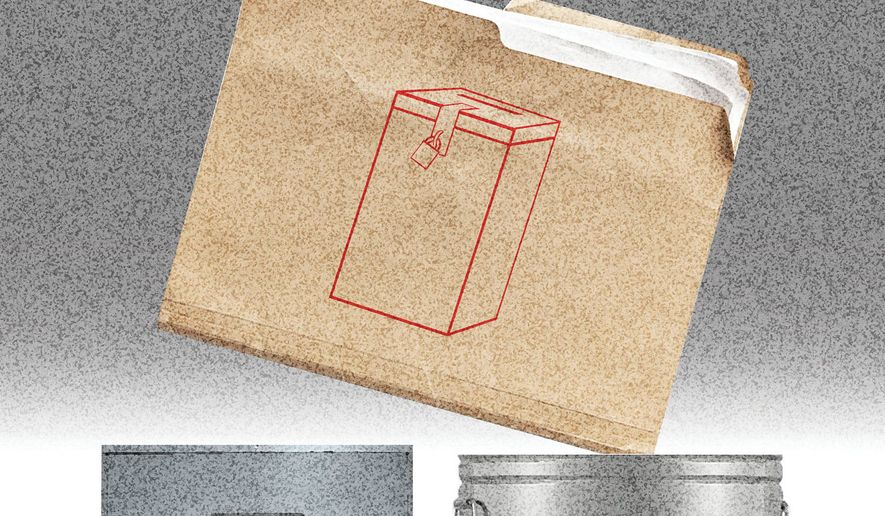
Federal law requires that records related to federal elections be preserved for 22 months. That retention period has now expired for the November 2024 election.
As a result, some election records could soon be destroyed, even as the Department of Justice remains engaged in ongoing litigation over access to voter registration information in states across the country.
People were interested in these podcasts
That possibility helps explain why the Justice Department issued litigation hold notices to election officials in 29 states and the District of Columbia in September. It directed them to preserve hard-copy documents and electronically stored information that could be relevant to the federal government’s voter roll litigation.
The notices remind election officials of their obligation to retain potentially relevant evidence and warn that destroying such records could result in legal sanctions. They are already having an effect. Nevada and New Hampshire have directed local election officials to preserve election records beyond their normal retention periods, and other states are taking steps to comply.
The preservation orders arrive in the middle of a broader legal dispute between the Justice Department and the states. For months, the federal government has sought extensive voter registration data to determine whether states are complying with federal voter list maintenance requirements.
Several states have resisted those requests, arguing that the Justice Department is demanding information beyond its lawful authority and raising concerns about protecting sensitive voter information. Courts have sided with states in several cases, and the litigation continues.
An active legal dispute remains over what information the Justice Department may obtain and what states must produce. Although those scope issues belong in court, the question of whether relevant evidence should be preserved during ongoing litigation should not be controversial.
Regardless of who ultimately prevails, it is difficult to see any benefit in allowing records that may be central to the dispute to disappear before the dispute is resolved.
Every day, businesses, government agencies, and private citizens receive litigation holds that require them to preserve documents relevant to ongoing legal disputes. Such holds do not establish wrongdoing, determine who will prevail or prove that any particular allegation is true. They simply ensure that the evidence remains available until the facts can be established.
Congress required the preservation of federal election records for a reason. These records provide the documentary history needed to determine whether election laws were followed and voter registration lists were properly maintained. They can confirm that election systems functioned as intended or reveal mistakes, outdated registrations, ineligible registrations and other problems that should be corrected.
Either outcome serves the public interest because confidence in elections should rest on evidence, not assumption. Americans should not be asked simply to trust assurances that everything went right any more than they should be expected to accept unsupported claims that everything went wrong.
Preserving records, examining evidence where the law permits and allowing the facts to speak for themselves are a far healthier approach than asking citizens to substitute trust for verification.
That principle becomes even more important when litigation remains unresolved. The federal government insists that it needs access to certain voter registration information to evaluate state compliance with federal law. States maintain that the Justice Department is demanding information it has no legal authority to obtain.
Judges will eventually determine which side is correct, but imagine the practical consequences if a court later concludes that the Justice Department is entitled to inspect a particular category of records only to discover that those records were destroyed while the case was pending because ordinary retention deadlines had expired.
In that scenario, the legal dispute would be resolved, but the evidence at its center would be gone. The government could win the legal argument and still lose access to the records that prompted the litigation in the first place. There is no good reason to permit that outcome.
Too much of the debate surrounding election integrity begins with a predetermined conclusion and then searches for evidence to support it. The better approach is the opposite: Preserve the evidence first, establish the facts second and draw conclusions only afterward.
The Justice Department and the states can continue arguing over the scope of federal authority and voter privacy protections. Courts can resolve those questions. What no court can do, however, is examine records that no longer exist.
The 2024 election is over, but the litigation involving some of its records is not. Until the courts have finished their work, preserving those records is not a judgment about what happened in 2024. It simply recognizes that legal disputes should be decided on evidence rather than conjecture.
Once evidence is destroyed, it cannot be recovered. That is not a partisan position. It is common sense.
• Ken Cuccinelli, chairman of The Heritage Foundation and Heritage Action for America’s Election Transparency Initiative, is a former Virginia attorney general and acting deputy secretary of homeland security.
Please read our comment policy before commenting.