



OPINION:
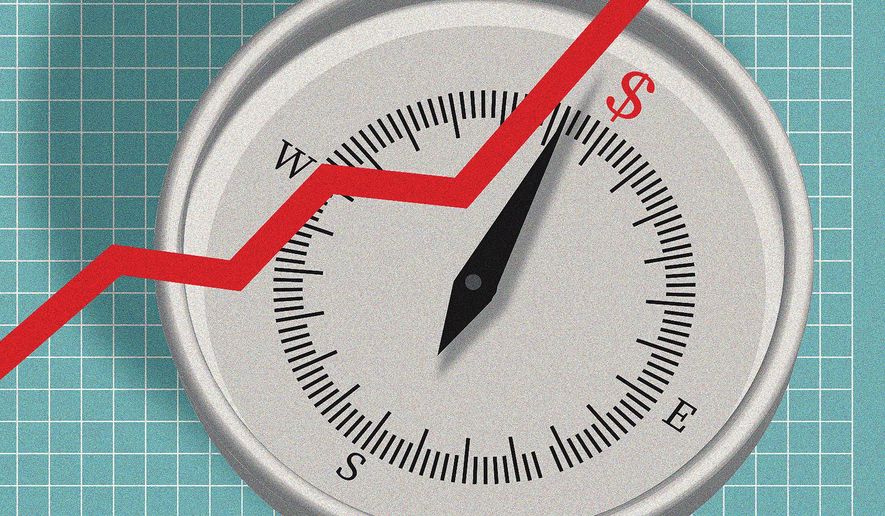
In September, the rate on the bellwether 10-year Treasury pierced 5% and rose to levels not seen since before the global financial crisis of 2007 to 2009.
Homebuyers and consumers using credit feel it most through higher rates on mortgages, auto loans and credit cards.
Folks who should know better went into a panic — or tried to inspire one.
People were interested in these podcasts
Mike Wilson, Morgan Stanley’s chief investment officer, said that a 5% 10-year rate posed the greatest risk of turning the recent stock market consolidation into a correction. Equities have been trading sideways since early August.
Ruchir Sharma, chairman of Rockefeller International, expounded that the artificial intelligence “bubble could pop.” With growth and stock prices so dependent on the data center and tech stock boom, this was akin to saying the sky could fall.
I found no solar debris in my lap. Instead, adults committed to battling inflation have grabbed the reins at the Federal Reserve.
After berating Chair Jerome Powell for not pushing down interest rates and batting zero trying to install White House loyalist Kevin Hassett at the helm of the central bank, President Trump settled for Federal Reserve Chairman Kevin Warsh, a longtime monetary policy hawk.
Mr. Warsh has limited Fed officials from coaching the market with too much forward guidance — proclamations about where rates should be headed months from now.
Now, financial markets, not the referee, are playing the ball. Interest rates are converging toward where economic fundamentals and fiscal policy excesses say they should be, not to the musings of nonclairvoyant Fed officials.
A good marker for a market equilibrium 10-year Treasury rate should be the sum of the gross domestic product growth and expected inflation.
So far this year, economic growth has been about 2.2%. It is likely to go higher as the productivity dividend from AI becomes more evident.
Household expectations as measured by the New York Federal Reserve and University of Michigan surveys indicate that inflation should be at or above 3% for the foreseeable future.
Bond market measures — specifically the spread between an inflation-adjusted Treasury security and an unprotected security — say less, but those have consistently underestimated future inflation.
Altogether, that makes 5% plus 10-year Treasurys appear reasonable.
When aggregate demand is growing much more rapidly than aggregate supply — currently 8% versus 2% — monetary policy is too loose to contain inflation.
Add to that the prospective pass-through of record diesel prices, which are important to agriculture, transportation, construction and mining, and the continued impacts of tariffs and shortages of skilled labor from Mr. Trump’s strict immigration policies and those optimistic about inflation coming down are likely to be disappointed.
The hysteria about a 5% plus 10-year Treasury rate owes much to short memories on Wall Street and Main Street.
Before the global financial crisis, interest rates were much higher than they are now.
That crisis precipitated a terrible recession and then left household balance sheets terribly crippled. The Fed responded with quantitative easing. Ditto for the COVID-19 recession.
The Fed printed money to buy Treasurys and mortgage-backed securities. That expanded its balance sheet from less than $1 trillion to nearly $9 trillion. All that liquidity will take another decade to work off.
These policies might have been necessary medicine, but with nominal GDP well below the current $32 trillion, they were a dollar-printing press on steroids.
Going forward, supply chain crises will persist.
The Russia-Ukraine war, which is disrupting Black Sea shipping lanes, is choking global wheat supplies. The loss of Persian Gulf petroleum will be mitigated by higher-priced resources elsewhere, and climate change is imposing general disruptions to ocean shipping and agriculture.
The federal budget deficit has zoomed from 1.2% just before the global financial crisis to nearly 6%.
Inflation and interest rates will likely remain anchored to the high pre-global financial crisis and post-COVID-19 norms, unless Mr. Warsh shocks the economy into deflation with a tough recession by sharply ratcheting up interest rates.
Democrats generally like low interest rates even more than Mr. Trump does.
With political tides running in their direction, the Fed cannot thrash the economy without serious political repercussions.
In the run-up to 5%, Treasury Secretary Scott Bessent tried to battle the rise by purchasing long-term bonds and replacing those with short-term notes.
Given the inflationary pressures we have and the Fed’s policy stance turning more hawkish, that was like spitting in the wind.
The obsession with 5% rates is folly.
With more responsible hands at the Fed, we are returning to more normal times in financial markets.
Over the four decades before the global financial crisis, 10-year Treasurys averaged 7.4%, inflation averaged 4.0% and GDP growth averaged 2.9%.
This is not a good time to buy long bonds. The risk is that markets will play the ball, not the Fed, driving longer-term Treasury yields higher and making existing lower-coupon bonds less valuable.
Stocks are the better option.
Over those pre-global financial crisis decades, the average return on the S&P 500 was 10.5%.
• Peter Morici is an economist and emeritus business professor at the University of Maryland and a national columnist.
Follow the author
Please read our comment policy before commenting.