



OPINION:
Conservatives didn’t have much to cheer on Election Day, but there were some bright spots, particularly when it came to ballot questions.
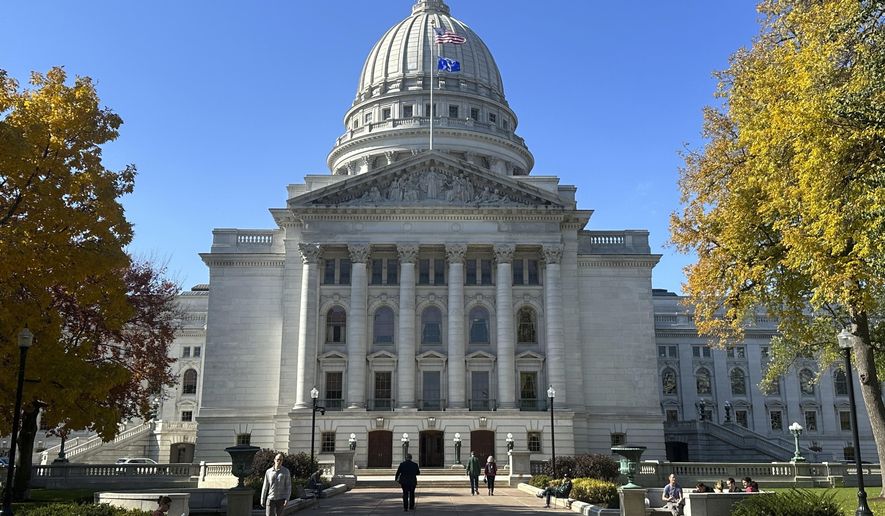
Take Wisconsin, where voters approved an amendment to their state constitution prohibiting state and local governments from discriminating against or granting preferential treatment based on race, sex, color, ethnicity or national origin.
While the constitutional amendment affects more areas than just education, like public employment, contracting and administration, it’s an important step in the right direction to push back on the use of racial preferences at state institutions.
People were interested in these podcasts
It’s not surprising that voters decided to adopt the amendment. In a 2023 Pew Research survey of U.S. adults on the use of racial preferences in higher education, 50% of Americans disapproved of the use, 16% were not sure, and only 33% approved of the use.
As amendment sponsor and Republican legislator Dave Murphy rightly said, our efforts will help to “restore merit, fairness and equality in hiring.”
However, this isn’t the first time that the state government has moved against DEI-related efforts.
In 2023, the Republican-controlled Legislature passed a budget that included pay raises for institution employees and spending for new campus developments, while also eliminating all DEI (diversity, equity and inclusion) positions in the University of Wisconsin system.
When Gov. Tony Evers and University of Wisconsin President Jay Rothman pushed back, Republicans strategically made pay raises conditional on cutting problematic DEI programs.
This was a win for students, families and taxpayers in Wisconsin alike. However, unfortunately, since then, DEI-related activities seem to remain alive and well at the state flagship campus in Madison.
The Wisconsin Institute for Law and Liberty recently filed a civil rights complaint against the University of Wisconsin at Madison at the beginning of this year, citing concerns that the school was offering 20 race-based scholarships.
Similarly, last year, the Department of Education’s Office for Civil Rights opened an investigation into the Madison campus and 44 other institutions over the use of racial preferences in education programs and activities, such as partnering with The Ph.D. Project, an organization that assists doctoral students, but limits participant eligibility based on race. And earlier this year, the Madison campus signed a resolution agreement with the Department of Education’s Office of Civil Rights to agree to end their partnership with The Project.
Just a few months ago, however, an article in City Journal titled “Has the University of Wisconsin really abandoned DEI?” highlighted a family’s recent visit to the Madison campus, as their daughter was a prospective student. Not surprisingly, the author noted that most DEI initiatives had simply been rebranded rather than dissolved.
“Critical Race Training in Education,” a website that documents instances of DEI-related activities in K-12 and higher education institutions nationwide, highlighted occurrences at the Madison campus. Its Department of French and Italian lists a goal of retaining more “diverse faculty, staff and students,” and the Department of History handbook notes that teaching assistants are required to complete a “diversity workshop.”
The Nov. 6 elections were tough for Republicans in Wisconsin; they lost both chambers in the Legislature and were unable to regain the governor’s seat. However, Wisconsin citizens recognized that racial discrimination has no place in their state and voted to add a critical anti-DEI amendment to their state constitution.
The constitutional amendment is a strong first step toward reversing discriminatory DEI practices that have plagued the University of Wisconsin and others in the state, and demonstrates that public appetite remains for ridding higher education of the scourge of racial discrimination.
• Madison Marino Doan is a policy analyst for The Heritage Foundation’s Center for Education Policy.
Please read our comment policy before commenting.