




A growing number of real estate agents and relocation services are benefiting from the nation’s partisan divide, helping Americans who are unhappy with their states’ political climate and elected leaders move to communities more closely aligned with their values.
At least a dozen businesses have popped up over the past five years catering to Americans seeking to relocate for political reasons, including several that have launched over the past year.
Paul Chabot, who founded Conservative Move, a relocation company that helps conservatives leave Democratic-run states for Republican-led ones, says his business has soared.
People were interested in these podcasts
Through August, Conservative Move relocated more than 1,600 households, eight times as many as he did last year and more than 2022 through 2024 combined. The company has helped relocate more than 3,100 households in the past four years.
In 13 days following the midterm elections, 1,305 people signed up with Conservative Move, compared to 221 in the 13 days before the election.
“This is not from advertising. People are looking for us,” Mr. Chabot told The Washington Times.
Red and blue
The emerging niche includes real estate referral networks, specialized relocation services and politically minded nonprofit organizations.
Businesses are catering to both sides of the aisle. Some help conservatives abandon Democratic strongholds for Republican-controlled states. Others assist liberals looking to leave conservative communities.
Still others help politically motivated movers settle in competitive congressional districts where their votes could change election outcomes.
The burgeoning cottage industry is capitalizing on a trend that is transforming American politics. Ideology is becoming an important consideration in deciding where to live, alongside schools, jobs, taxes and housing prices.
Red Refuge, another business helping conservatives move out of blue states, has completed 56 relocations — nearly one a week – since its formation in April 2025.
Some of the companies are not even locating clients out of state. Mr. Chabot estimates that about 25% of his business comes from people living in liberal enclaves such as Nashville, Tennessee, or Austin, Texas, who want to relocate to more conservative regions of their states.
It’s not just conservatives who are moving to more ideologically comfortable surroundings.
Lilly Rockwell, an Austin-based real estate agent, formed Texit, a firm specializing in people leaving the Lone Star state. She created Texit to capitalize on the number of people who contacted her about relocating out of state.
While not as politically explicit as the other organizations, Ms. Rockwell estimates that one-third of clients left Texas over the state’s conservative policies. She said inquiries spiked after the Supreme Court overturned Roe v. Wade and Texas enacted some of the strictest abortion laws in the country.
“I had noticed such a pronounced increase in people selling so they could move out of state, that I created an entire marketing campaign targeting this type of client,” she said.
Other popular businesses include Flee Red States, which helps LGBTQ residents and others relocate from conservative states, and MoveIndigo, which helps Democrats move to electorally competitive districts with the hope of influencing elections. Representatives for both companies declined interview requests.
How it works
Although the business models vary, many of these companies operate less like traditional moving services and more like matchmakers, connecting prospective homebuyers with real estate professionals in politically compatible communities.
Both Red Refuge and Conservative Move charge real estate agents a referral fee on a successful move. The companies provide real estate agents with customer referrals and marketing assistance, and give customers access to politically like-minded real estate agents.
Red Refuge charges participating real estate agents a 30% referral fee on closings, according to its website.
“People can find any number of attorneys, accountants, contractors or other professionals online, but they often prefer a recommendation from someone they already trust. It is also perfectly ordinary for people to prefer working with someone who shares their values, political or otherwise,” said Jamison Walsh, founder of Red Refuge.
Ms. Rockwell, a licensed real estate agent, takes a different approach. In addition to connecting clients with real estate professionals in their preferred destination, she offers clients up to $25,000 for home repairs and moving expenses, repaid when their home sells. She will also reduce her listing fee by $3,000 for clients who contact her through Texit.
MoveIndigo represents a different branch of this phenomenon. Instead of simply helping liberals move to reliably Democratic states, it encourages Democrats who are already contemplating relocation to consider purple districts where their vote could carry political influence. Its stated goal is to combine movers’ lifestyle preferences with electing Democratic candidates in swing districts.
These services are fueling a migration trend that has increased in recent years. A Consumer Affairs survey earlier this year found that about one in 10 registered voters reported having relocated for political reasons, while an additional 15% had considered doing so.
A 2024 survey by Redfin found that 32% of real estate agents had worked with at least one customer during the previous year who relocated primarily because of state or local laws or politics. The survey questioned 500 agents nationwide.
“I think more people are considering political fit than were in the past,” James Gimbel, who studies political relocation at the University of Maryland. “I have noticed that realtors and real estate sites are adding political information to the usual list of characteristics, along with income, school rankings, crime rates and retail.”
Mr. Walsh of Red Refuge said he has yet to have a single client move back to the blue state they left.
“I think we sometimes hold these decisions to an unreasonable standard, as though someone who moves because of dissatisfaction with government or culture has to find paradise to justify having left. They don’t,” he said.
Good for America?
Circumstantial evidence suggests the relocations are affecting elections.
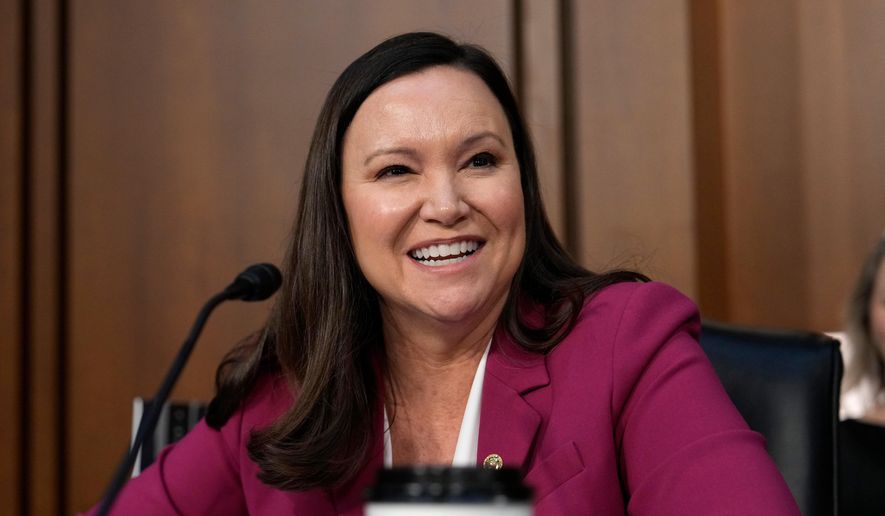
When Sen. Ashley Moody, Florida Republican, won her narrow election earlier this month, she noted in her acceptance speech that much of her support came from new residents who moved to the state within the past five years.
On the other side of the aisle, California Gov. Elect Xavier Becerra, a Democrat, credited Democrats who fled California for Texas with turning the Lone Star State blue for the first time in nearly three decades.
“Enjoy where you are. You’re always welcome back,” he said in a C-Span interview. “But keep making the country blue. That’s not a bad thing.”
Still, some question whether this trend is good for America. They wonder how America can ever become less divided if people who can’t stand their neighbors’ politics are moving away rather than talking to them.
“I don’t think this is good at all. It’s another form of gerrymandering,” said Seth McKee, a political science professor at Oklahoma State University who has studied the phenomenon. “In terms of the body politic and civic health, we need partisans of the opposite team to communicate and live near each other.”
Mr. McKee noted the increasing divide between rural voters, who tend to be more conservative, and urban voters, who tend to be more liberal, is an example of how political relocations could further damage America’s already troubled political climate.
“We have this whole literature about rural voters and how they harbor resentment towards urbanites and how they think they are getting shafted when it comes to government services,” he said. “There’s a psychology attached to this divide that builds a lack of trust and definitely adversarial relationships.”
Those who operate political relocation businesses disagree. Mr. Chabot said a lot of his clients are police officers who are relocating out of blue states where liberal prosecutors have made their jobs more difficult.
“It’s horrible and sad that politics have gotten that divisive, but that’s the state of play,” he said. “It’s also sad that there are policies that people feel are going to victimize them for doing nothing other than their job or pay somebody else’s bill or somebody’s pet project.”
Please read our comment policy before commenting.