



A version of this story appeared in the daily Threat Status newsletter from The Washington Times. Click here to receive Threat Status delivered directly to your inbox each weekday.
The Houthis, a Yemen-based rebel faction backed by Iran, announced a new maritime blockade targeting Saudi Arabia on Monday, potentially opening a new front in the Iran war even as Pakistani and Qatari mediators work to broker a ceasefire.
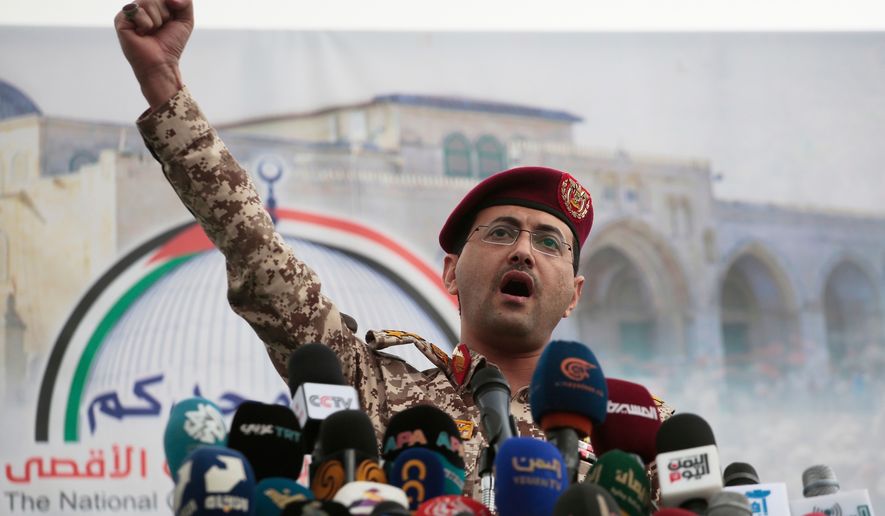
Houthi military spokesman Brig. Gen. Yahya Saree said in a video statement that the group would immediately impose a maritime blockade on Saudi Arabia, which borders the Red Sea.
Houthi-affiliated media confirmed the blockade would take effect immediately, saying it was in response to what the group called Saudi Arabia’s illegal “blockade on Yemenis for over 10 years.”
People were interested in these podcasts
The Houthis control much of southwestern Yemen and maintain effective command over the Bab al-Mandeb Strait, a critical waterway at the southern end of the Red Sea connecting to the Gulf of Aden.
Houthi militants previously targeted commercial vessels transiting the strait in response to Israel’s military campaign in the Gaza Strip after the Hamas attacks of Oct. 7, 2023.
The Saudis have relied on their East-West Pipeline to bypass the Strait of Hormuz, redirecting oil to the Red Sea port of Yanbu. This route now faces the Houthi threat directly.
It remains unclear whether the Houthis can effectively execute a blockade, but any disruption to Saudi Arabia — the world’s largest oil exporter — could push up U.S. gasoline and energy prices.
Even short of actual attacks, the mere threat to oil tankers in the strait could be enough to deter shipping companies and insurers from authorizing vessel transits.
Should the Bab al-Mandeb be effectively closed by the Houthis, it would eliminate one of the few remaining alternative pathways for Persian Gulf nations to move oil to the rest of the world.
Iran has kept the Strait of Hormuz — another critical choke point, connecting the Persian Gulf to the Gulf of Oman — largely closed since March in retaliation for U.S. and Israeli strikes. The closure has put enormous pressure on global energy markets, as at least 20% of the world’s oil supply passes through that strait each year.
Traffic through the Strait of Hormuz improved in late June after Iran and the U.S. agreed to a ceasefire under the Islamabad Memorandum of Understanding, but Iran has since closed the waterway, and shipping has slowed to a crawl.
The U.S. has also reinstituted a naval blockade of Iran’s ports, hampering Tehran’s ability to sell oil and further restricting global energy supply.
The Houthis’ entry comes as the U.S. and Iran continue to escalate their military confrontation across the region.
Overnight, the U.S. launched strikes on Iran for the eighth consecutive day, targeting critical infrastructure, including desalination and power plants. American forces have also inflicted significant damage on Iranian radar installations, surveillance hubs and command-and-control centers.
U.S. Central Command, which oversees American military operations in the Middle East, has maintained that the primary purpose of the strikes is to degrade Iran’s ability to hit ships in the Strait of Hormuz.
Iran has struck U.S. military installations across the region, focusing particularly on assets in the smaller Gulf nations.
Iran’s Islamic Revolutionary Guard Corps said Monday that its forces had targeted U.S. military facilities in Bahrain and Kuwait.
Iranian officials said the strikes — aimed at U.S. facilities used to maintain drones and prepare naval vessels for special forces operations — caused major damage. The Pentagon has not officially confirmed the claim.
Jordan’s military separately reported intercepting three Iranian missiles on Monday.
Since fighting resumed earlier this month, Iranian missiles and drones have struck targets in Bahrain, Kuwait, Jordan, Syria and Iraq.
Iranian strikes over the weekend killed two U.S. soldiers stationed in Jordan.
A third service member was reported missing after the strike. U.S. Central Command said Sunday that “unidentified remains” had been found at the site. Verification is ongoing, military officials said, but the discovery could mean the death toll from the Iranian strike will rise to three.
Separately, CENTCOM said another service member was killed in Iraq on Saturday during the “controlled detonation” of a downed Iranian drone.
The weekend casualties marked the first U.S. combat deaths in the Iran war since March, bringing the total count up as additional soldiers killed over the weekend await incorporation into the Pentagon’s official toll.
At least 17 Americans have been killed in combat since the war began on Feb. 28, according to Pentagon data, with more than 400 wounded.
The deaths could signal yet another escalation in the war between the U.S. and Iran. President Trump said Monday that he had directed his top defense officials to severely punish Iran for every American service member killed.
“Every time Iran kills an American soldier, they will pay for that killing many times over! This directive has been passed on to Secretary of War Pete Hegseth, Chairman of the Joint Chiefs of Staff Daniel Caine, and every leader in the military,” Mr. Trump wrote on Truth Social.
Still, diplomacy between the two nations has not entirely stalled, according to officials familiar with the talks. Pakistani and Qatari mediators are working steadily behind the scenes to deliver peace proposals to both sides that could yield a temporary ceasefire and, eventually, a return to the memorandum of understanding.
Esmaeil Baqaei, spokesman for Iran’s Foreign Ministry, confirmed Monday that his country had received several proposals from mediators tied to a potential 10-day ceasefire with the U.S.
Mr. Baqaei insisted, however, that Iran’s diplomatic track is closely tied to its self-defense posture, and declined to reveal further details.
“I reiterate that the diplomatic apparatus, in coordination with the defenders of the homeland in the Armed Forces, is pursuing its duties,” Mr. Baqaei said in comments carried by state-affiliated media. “The proposals put forward through mediators have been conveyed to us, and we have received them. However, I would rather not go into their details at this stage.”
Contact the author



Please read our comment policy before commenting.