


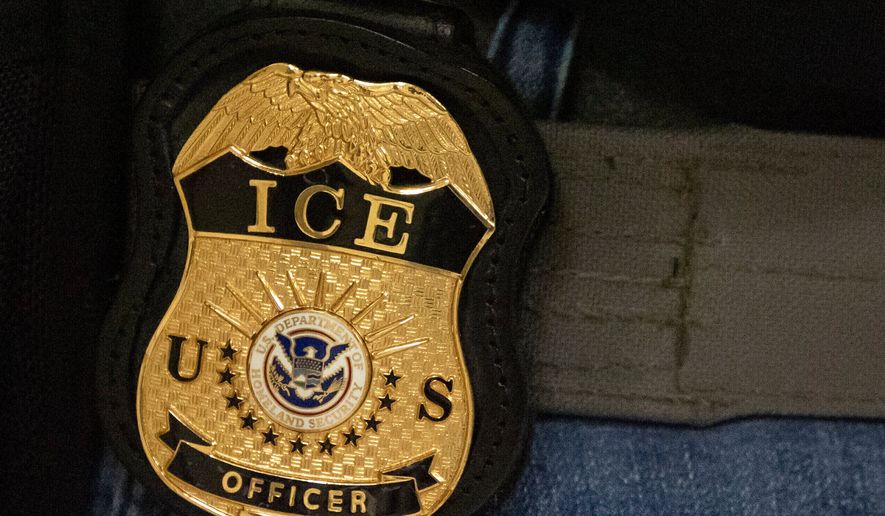

The Justice Department sued Tuesday to try to force Ohio’s largest county to let ICE make arrests at its municipal courthouse, saying officials are protecting illegal immigrants while making it more dangerous to get at them.
Franklin County’s municipal judges adopted a policy this past spring barring civil arrests. Immigration arrests that lead to deportation are civil arrests and fall under the ban.
U.S. Immigration and Customs Enforcement said that it violates the U.S. Constitution’s Supremacy Clause, which gives the federal government power to conduct its duties unfettered by state and local restrictions.
People were interested in these podcasts
“The rule brazenly violates the Supremacy Clause and directly conflicts with federal immigration law,” the DOJ said in the complaint filed in federal court.
The DOJ said ICE has made 12 arrests at the courthouse “in recent years.” Those would not have been possible with the new rule.
The Washington Times has sought comment from courthouse officials.
Sanctuary backers say allowing arrests at courthouses can scare off witnesses and ruin prosecutions.
ICE, however, says it doesn’t target witnesses or family members when making courthouse arrests. Instead, it usually goes after someone showing up for a court date.
Making arrests inside the courthouse is safer because the target has gone through a security check to get into the building, and the chance of an armed encounter is reduced.
Arrests typically occur after hearings are over to avoid interfering with court proceedings, the DOJ said.
“When conducting operations in courthouses, ICE officers have consistently respected the integrity and decorum of judicial proceedings,” the government said in its opening brief in the case.
Arrests with a criminal warrant are still allowed under the policy, but that’s of little help to ICE’s deportation operations division.
While crossing the border without permission can be a crime, being in the country without permission is usually only a civil matter.
The punishment is deportation and exclusion from the U.S.
The lawsuit is the latest in a string of cases the DOJ has brought against sanctuary jurisdictions.
A New York policy barring arrests at state courthouses was upheld by a federal judge last year. U.S. District Judge Anne Nardacci, a Biden appointee, ruled that trying to force local courthouses to allow arrests amounted to illegally commandeering local security forces for federal purposes.
That New York case has been appealed.
Contact the author

Please read our comment policy before commenting.