


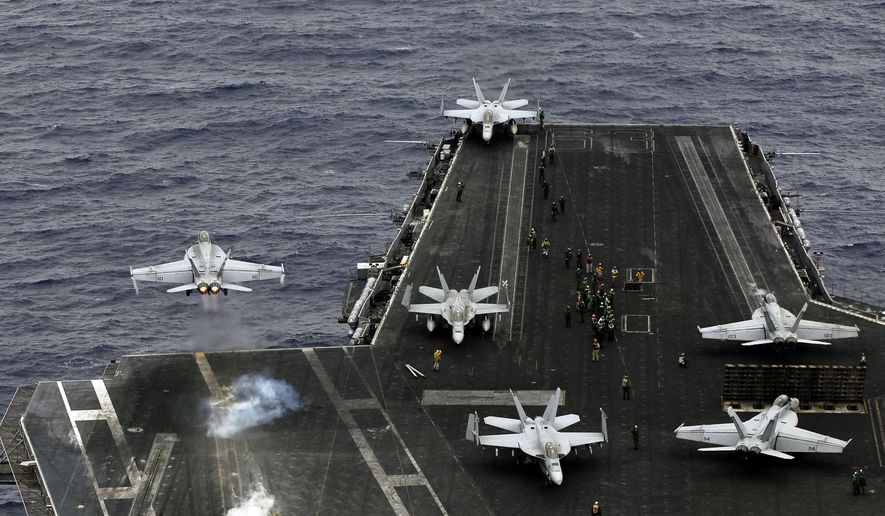

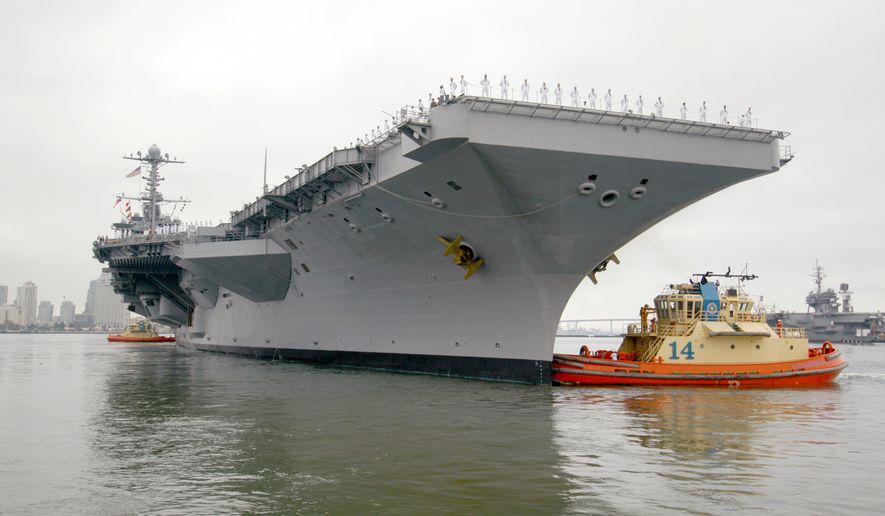
Twenty years ago this week, the Navy experienced one of its worst security failures when a Chinese Song-class submarine surfaced undetected within torpedo range of the aircraft carrier USS Kitty Hawk in waters near Japan.
The submarine showed itself some five nautical miles from the carrier on Oct. 26, 2006, alarming and angering officers and sailors aboard, including Navy pilot Sam Paparo. The then-commander of Strike Fighter Squadron 195, now Adm. Paparo, went on to become the current commander of the Hawaii-based Pacific Command.
The incident was kept secret by the Pentagon and the George W. Bush administration over concerns it would upset U.S.-China relations.
People were interested in these podcasts
The Washington Times was the first to report on the Chinese submarine stalking on Nov. 13, 2006, in a major news exclusive.
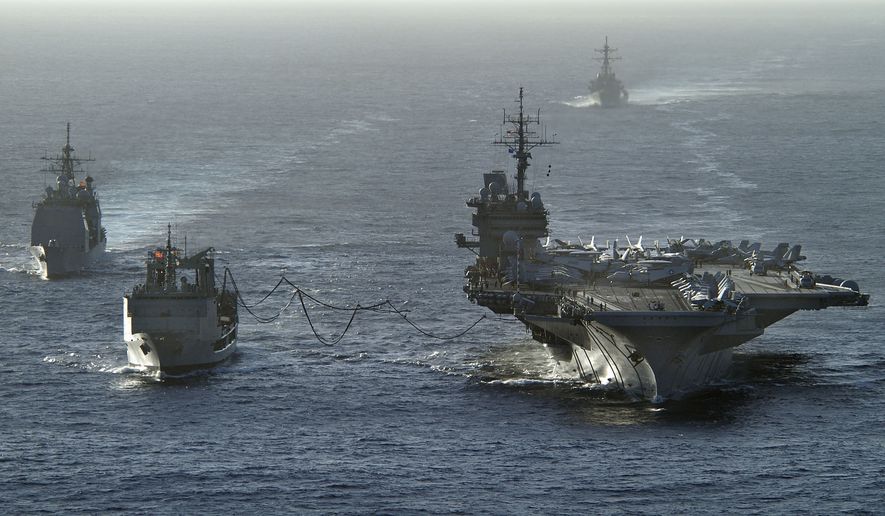
The Times report noted that the encounter revealed China’s efforts to prepare for a conflict with the U.S. despite Pentagon exchanges aimed at building relations with China’s communist-ruled military.
Disclosure of the incident by this reporter coincided with the first visit to China by then-Chief of Naval Operations Adm. Gary Roughead as part of what critics said were feckless Pentagon efforts to develop cordial relations with the Chinese military.
Another officer familiar with the scandal, retired Navy Capt. James E. Fanell, was the senior intelligence officer for China at the Office of Naval Intelligence at the time and from 2003 to 2005 was the Kitty Hawk’s strike group intelligence officer.
Capt. Fanell said the carrier was conducting flight operations east of Okinawa, and he called the incident a turning point in China’s effort to transform the PLA navy into a dominant maritime power in the Pacific.
“This incident was an important inflection point in history, the results of which the U.S. Pacific Command and Pacific Fleet are now dealing with the PRC and PLA navy that is threatening the existing regional peace and security of the Western Pacific,” he said.
The incident was a watershed event for legitimizing the Chinese navy’s modernization efforts, the largest any nation had undertaken since World War II.
It also was the first PLA navy “break out” operation seeking to extend power past East Asia’s first island chain that is continuing to expand globally, Capt. Fanell said.
Military officials have said the PLA naval buildup is aimed at control over all waters hundreds of miles from the Chinese coast covering a chain of islands stretching from Japan south to the South China Sea.
Two years before the carrier-sub standoff, Chinese submarine forces experienced multiple damaging and embarrassing disasters, including deadly onboard fires on several vessels.
After the failures, a submarine stand-down was ordered by then PLA navy commander Adm. Wu Shengli, who denied to the visiting Adm. Roughead that the Song submarine carried out the provocative maritime stalking.
The stand down ended with the carrier incident, Capt. Fanell said.
Today, China’s navy is the largest in the world with an expanding number of newer, more capable submarines that operate with increasing stealth.
“We have no time to waste in restoring America’s naval power,” he said.
Contact the author

Please read our comment policy before commenting.