



The government said Wednesday that a key index of what Americans pay for goods and services came in lower than expected for August, easing pressure on the Federal Reserve to raise interest rates.
The Personal Consumption Expenditures Price Index rose 0.3% in August, or 3.4% annually, according to the Bureau of Economic Analysis.
Core inflation, which excludes volatile food and energy prices, came in at 3% for the year.
People were interested in these podcasts
Both measures were slightly lower than Wall Street expectations of 3.7% for annual PCE and 3.3% for core inflation.
The PCE index is the Fed’s primary tool in evaluating inflation and whether to raise interest rates.
In mid-September, the Fed raised interest rates for the first time in three years. Central bankers said they were concerned about inflation measures that remain well above their target rate of 2%.
President Trump wants the Fed to lower rates, saying more favorable borrowing terms will let the economy flourish. He is not getting his wish, though the lower-than-expected PCE reading could encourage the Fed to leave rates alone at its late October meetings.
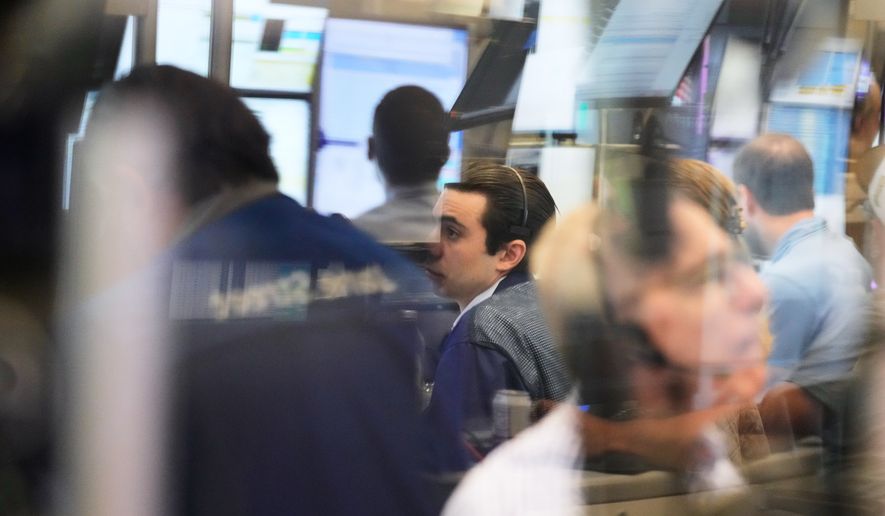
U.S. stocks surged on Wednesday after the PCE report, though the Dow Jones Industrial Average later turned negative.
CME Fedwatch, a key forecaster, put the probability of a rate increase at only 39%.
Peter Navarro, a senior White House counselor on trade and manufacturing, urged the Fed to avoid another rate hike.
“America is building more, investing more, and seeing inflation cool at the same time. Any other institution would call that a success,” he said on social media. “Only the Fed could look at it and see a problem.”
Central bankers will decide on rates days before the midterm elections that will determine whether Mr. Trump’s Republican Party retains its congressional majorities.
The president says Democrats created an affordability crisis through government spending during the Biden years, and that he’s made progress in reducing the price of eggs and other products.
Still, polling suggests Americans are struggling with high costs, particularly high fuel costs from the Iran war.
Mr. Trump says fuel prices will plummet once he resolves the conflict, and that short-term economic pain is worth the price of keeping a nuclear weapon out of Tehran’s hands.
Democrats are hammering Mr. Trump over high prices, saying he pledged to bring down costs but inflation remains uncomfortably elevated.
“Today’s [PCE] report confirms that costs are still too high under President Trump,” said Rep. Brendan Boyle, Pennsylvania Democrat and ranking member on the House Budget Committee. “While Trump builds himself a gilded ballroom, his Iran war, his tariff taxes, and his health care cuts have made life in America even more expensive for working families.”
The average U.S. price of gas stood at $4.43 per gallon on Wednesday, up from around $3 at the start of the war, according to the AAA motor club.
There have been signs of improvement.
Gas prices are inching lower each day, and diesel prices are slowly receding from record highs earlier in September.
The decline is gradual, and perhaps slower than drivers would like, but it tracks with an improving picture in the Middle East.
Commercial traffic through the Strait of Hormuz, an oil chokepoint Iran is using as leverage in the war, increased dramatically in September, according to maritime tracking firms.
Traffic is getting closer to prewar levels, as some speculate that Iran is losing leverage against the U.S. in the now seven-month-long war.
An average of 10 million barrels of oil have passed through the strait daily, according to data from maritime tracking agency Kpler.
About 17 million to 20 million barrels traveled through the strait daily before the war began in February and Iran closed the waterway.
• Vaughn Cockayne contributed to this report.
Contact the author

Please read our comment policy before commenting.