


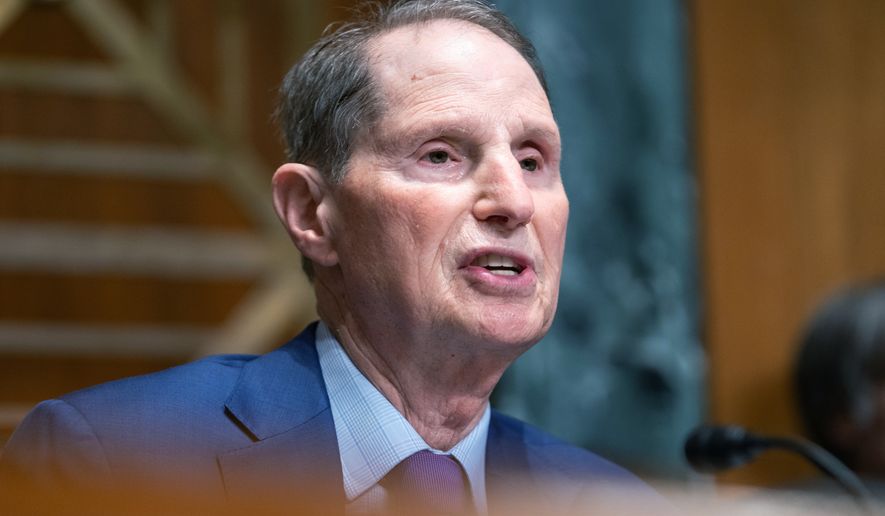

A New York bookstore owned by the wife of a senior Democratic senator has agreed to pay back an illegally obtained pandemic loan, the Justice Department said.
Strand Book Store collected more than $900,000 in a small business pandemic loan despite being owned by Nancy Bass Wyden, wife of Sen. Ron Wyden. At the time of the loan, in early 2021, the law governing the Paycheck Protection Program forbade money going to members of Congress or their spouses.
Mr. Wyden, Oregon Democrat, was chairman of the Senate Finance Committee at the time of the loan.
People were interested in these podcasts
His wife’s bookstore, in applying for the loan, had certified that no member or spouse had a controlling interest.
Strand agreed to pay $1,482,560 to settle the violation under the False Claims Act.
“The Paycheck Protection Program was created to save American jobs, not to enrich those who aren’t eligible for taxpayer-funded relief, especially the wife of a U.S. senator,” said Jeanine Pirro, the U.S. attorney in Washington.
DOJ announced the agreement on Election Day, though the case file was still sealed Thursday, so full details weren’t available.
Ms. Pirro’s office said the payment of a settlement isn’t an admission of liability. False claims actions are often brought by private individuals who then get a cut of the settlement payment if their case is successful.
Ms. Wyden, in a statement, said the original PPP didn’t contain the ban on members and spouses, but that restriction was added midway through the program. Neither her firm’s bookkeepers nor the bank administering the loan caught that change, she said.
“We stand by the facts: the circumstances arose during an unprecedented and rapidly changing public health emergency, the mistake was unintentional, and the funds were returned as soon as the issue came to our attention,” Ms. Wyden said.
She is the granddaughter of Ben Bass, who founded the bookstore nearly a century ago.
The PPP was created early in the pandemic as a way to pay firms to keep employees on their books rather than lay them off, even if they were shut down or had their business cut due to the spreading coronavirus. It was seen as a way to help businesses cut payroll, swelling unemployment rolls and making reopening tougher.
According to PPP records, Strand Book Store Inc. received a “second round” loan on Feb. 19, 2021. The company reported it would sustain 95 jobs.
HSBC Bank USA administered the loan.
The government later forgave the full loan, plus an extra $5,516 in accrued interest, for not laying off employees.
As initially written, there was no ban on lawmakers or their spouses. That was added in December 2020, after a spate of public reports that linked some of Congress’s wealthiest individuals to PPP loans.
The ban, which also applied to the president, vice president and heads of Cabinet departments, and their spouses, was added as part of a year-end spending bill that passed in December 2020.
Mr. Wyden voted for that legislation.
The Washington Times has sought comment from his office.
Mr. Wyden has been in the Senate for 30 years. QuiverQuant.com, which estimates the net value of stock portfolios of members of Congress, put Mr. Wyden’s at $24.3 million.
He is poised to retake the top post at the Finance Committee when Democrats regain control of the chamber in January.
He said in a statement Wednesday, concerning the election, that his focus will be on hiking taxes on billionaires and targeting tax cheats, erasing President Trump’s tariffs and going after banks he said helped “cover up” deceased sex offender Jeffrey Epstein’s crimes.
Mr. Wyden earlier this year spoke out against a proposal by Sen. Joni Ernst, Iowa Republican, to halt unemployment benefits being paid to households who report a million dollars in income.
Mr. Wyden said Ms. Ernst’s idea was a way to undermine the idea of unemployment benefits, which he said were an insurance program everybody pays into, and anyone can collect from if they meet the criteria.
Mr. Wyden in September also opposed another anti-fraud package by Ms. Ernst, saying he thought the Trump administration’s campaign to root out fraud in federal benefit programs had gone too far.
He said the bigger issue in fraud was corporations and wealthy individuals exploiting the tax code to find ways to avoid paying taxes.
Contact the author

Please read our comment policy before commenting.