


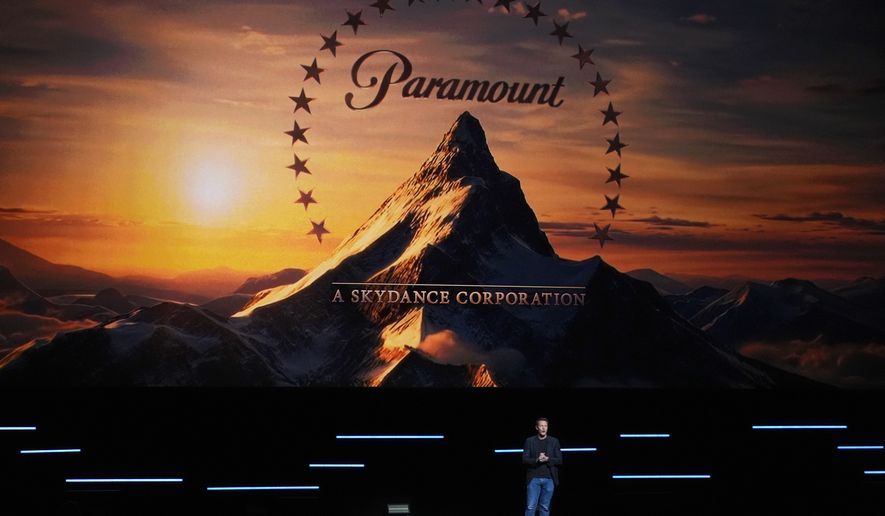

A confidential economic analysis is raising the stakes in California’s antitrust fight with Paramount Skydance, projecting that a full corporate exit from the state could permanently wipe out tens of thousands of jobs and billions of dollars in annual economic activity.
The report, produced by the Los Angeles County Economic Development Corporation’s Institute for Applied Economics, found that Paramount’s departure could cost California between 28,990 and 57,980 jobs and reduce annual economic output by $10.6 billion to $21.2 billion. Annual state and local tax revenue would also drop by an estimated $585 million to $1.17 billion under the study’s projections. The analysis was commissioned by Paramount itself and leaked to Politico last weekend, and the LAEDC cautioned that its figures reflect a worst-case scenario rather than a guaranteed outcome, since Paramount does not publicly disclose its state-by-state employment or spending breakdown.
The report lands amid an escalating standoff between Paramount Skydance CEO David Ellison and California Attorney General Rob Bonta over the company’s proposed $111 billion acquisition of Warner Bros. Discovery. Bonta and eleven other Democratic state attorneys general sued on July 13 to permanently block the merger under the Clayton Act, arguing the combined company would reduce competition in wide-release theatrical films and in licensing basic cable channels. The Writers Guild of America has filed a separate lawsuit also seeking to block the deal. Notably, the Justice Department had reached the opposite conclusion in June, closing its own investigation without filing suit and finding the deal unlikely to harm competition in streaming, linear television or theatrical distribution.
Mr. Ellison has said he will relocate Paramount’s headquarters — with Georgia, Tennessee and Texas floated as landing spots — if the states don’t come to the negotiating table. Mr. Bonta has publicly rejected that framing, calling the threat “blackmail” and dismissing Paramount’s pledge to keep producing 30 films a year as an unenforceable “behavioral remedy” rather than the kind of structural concession his office would accept in settlement talks.
Even a partial pullback would carry a cost, according to the study: a slower retreat tied to roughly $1.88 billion in merger-related “ticking fees” and financing costs could cost the state 550 to 1,110 job-years annually and between $202.7 million and $405.4 million in yearly economic output. Those ticking fees, owed to Warner Bros. Discovery shareholders if the deal isn’t closed by September 30, kick in at about $7 million per day starting October 1 — the same date Ellison has set as his negotiating deadline.
On the other side of the ledger, the LAEDC found upside if the merger closes and Paramount follows through on its production pledge: the company’s commitment to 30 theatrical releases a year could generate between 1,020 and 2,760 job-years and between $377.7 million and $1.01 billion in economic output across the state over a five-year window.
The relocation threat has split Hollywood. Actor Tom Cruise, a longtime collaborator of Ellison’s dating back to “Top Gun: Maverick,” voiced confidence that the merged studio will deliver on its promise. “They’re going to deliver 30 movies,” Mr. Cruise said. “It’s a community to me. It’s not an industry. … I know we’re going to get those 30 movies.” He added that the slate could eventually grow to 40 films a year.
Director James Cameron has similarly thrown his support behind Mr. Ellison, telling the Associated Press he considers him “the right man for the job to run a major studio” and that an Ellison-led combined studio “doesn’t bother me at all.” Mr. Cameron, who worked with Mr. Ellison on “Terminator: Dark Fate,” had previously argued that a Netflix acquisition of Warner Bros. — which Paramount beat out in the bidding war — would have been worse for the theatrical business.
Not everyone in the industry is on board. More than 2,000 industry figures have signed open letters urging regulators to block the deal. Paramount and Bonta’s office are scheduled to meet for settlement talks over two days at the end of October — nearly a month after the Oct. 1 deadline when the $7 million-a-day ticking fee is set to begin, meaning the fee will already be accruing by the time the two sides sit down.
This article was constructed with the assistance of artificial intelligence and published by a member of The Washington Times' AI News Desk team. The contents of this report are based solely on The Washington Times' original reporting, wire services, and/or other sources cited within the report. For more information, please read our AI policy or contact Steve Fink, Director of Artificial Intelligence, at sfink@washingtontimes.com
The Washington Times AI Ethics Newsroom Committee can be reached at aispotlight@washingtontimes.com.
Please read our comment policy before commenting.