



OPINION:
Michigan’s Abdul El-Sayed made history by becoming the U.S. Senate’s first elected Muslim. His youth, charisma and blended progressive-populist message charmed Michigan’s voters. Now that Mr. El-Sayed has power, it will be important to juxtapose what he promised on the campaign trail versus how he governs.
Mr. El-Sayed made “getting money out of politics” a core platform of his winning campaign, pledging never to accept corporate contributions, super PAC money or funds from special interest groups.
Three days after winning his election, Mr. El-Sayed launched Habibi PAC, a leadership political action committee. Habibi is an Arabic term of endearment meaning “my beloved” but is also used more casually to show warmth or affection, much like “buddy” or “friend.”
People were interested in these podcasts
Mr. El-Sayed’s goal is to use his PAC to raise money for his political allies. He is looking to become a kingmaker in Democratic politics by promoting friends who share his worldview.
On the campaign trail, Mr. El-Sayed ran as a warrior against “Big Pharma.” He criticized his Republican opponent, Mike Rogers, for accepting more than $1 million in campaign contributions from major pharmaceutical and medical companies, and criticized him for legislative votes, claiming Mr. Rogers voted against lowering prescription drug prices and allowing prescription drug imports from Canada.
After his win, Mr. El-Sayed tapped Brenda Abdelall, a former lobbyist whose past clients include Bayer Healthcare, to lead his Senate transition.
Ms. Abdelall worked at the white shoe law firm Sidley Austin, where she advocated on behalf of Bayer Healthcare, a subsidiary of the German pharmaceutical behemoth Bayer, as well as Talecris Biotherapeutics.
Perhaps Mr. El-Sayed is willing to compromise his anti-Pharma crusade because of Ms. Abdelall’s background and position on Israel. Ms. Abdelall was born in Michigan to Egyptian immigrant parents.
She has accused Zionists of “controlling” U.S. politics and Israel of “ethnic cleansing” and “terrorism.” Ms. Abdelall created a course called Islamophobia and the Law at the University of Michigan, and her mother founded the Ann Arbor branch of the American Muslim Council and worked with Mr. El-Sayed’s father.
During his campaign, Mr. El-Sayed repeatedly called for an end to unconditional U.S. military assistance to foreign countries, mainly Israel. He argued that American taxpayer dollars should be directed to domestic needs, such as schools, healthcare and infrastructure.
After his election win, Mr. El-Sayed reiterated his support for restoring U.S. foreign development funding through agencies such as the United States Agency for International Development.
President Trump dismantled USAID after major waste, fraud and abuse schemes were discovered. Entrenched bureaucrats wasted billions of taxpayer dollars on pet foreign assistance projects, political initiatives and procurement ruses, with little to no federal oversight.
In Mr. El-Sayed’s speeches and campaign messages, he repeatedly noted how politics should focus on the needs of all 10 million Michiganders — such as healthcare, education, and the cost of living — rather than divisions over race, faith, or background.
He started his victory speech by pronouncing: “My name is Abdulrahman Mohamed El-Sayed, and I’m so proud and honored to stand here as your senator-elect from the great state of Michigan. Up until right about now, you might have noticed that I always say ’Inshallah,’ or ’God willing,’ whenever the outcome of this race is mentioned. But today, tonight, we can turn that Inshallah into Alhamdulillah (all praise is due to Allah).”
In another speech after his win, at the Arab America Foundation’s Connect Empowerment Summit, Mr. El-Sayed declared Michigan to be the “capital of Arab America.”
For a man who says he does not want to focus on divisions over race, faith or background, Mr. El-Sayed certainly spends a lot of time talking about race, faith and his background.
Michiganders were won over by Mr. El-Sayed’s populist, progressive appeal. Time will tell what he can deliver for them in the U.S. Senate and where his priorities lie.
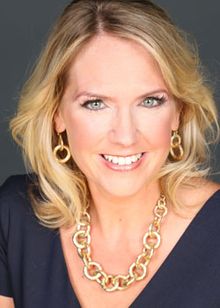
• Kelly Sadler is the commentary editor at The Washington Times.
Follow the author
Please read our comment policy before commenting.