


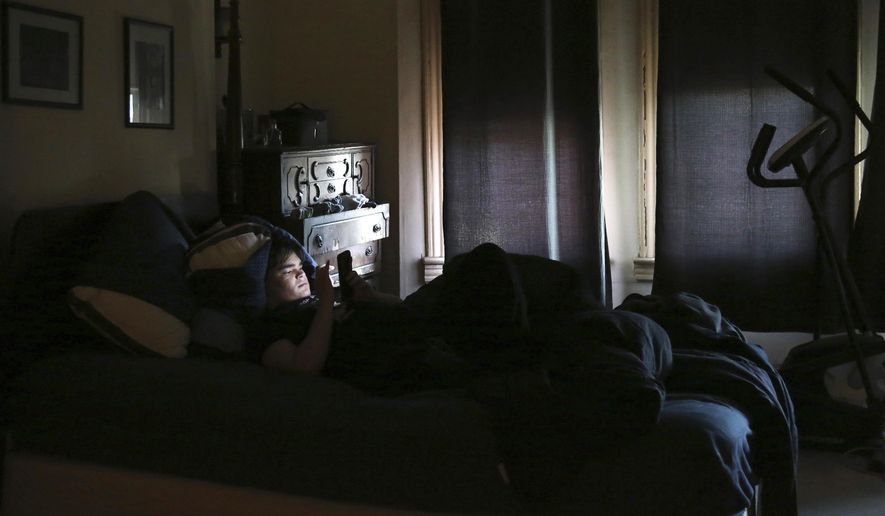

A phone charging screen-up on the nightstand or a sliver of light under the bedroom door may be doing more than disturbing sleep — new research from Tulane University found it is associated with changes in the physical structure of the heart, though the study cannot establish that light exposure causes those changes.
The study, published this week in the European Heart Journal, drew on the UK Biobank, a biomedical database of roughly half a million U.K. residents. Researchers analyzed cardiac MRI data from 11,071 adults with no prior history of cardiovascular disease, who had worn wrist sensors tracking ambient light for seven nights and then underwent MRI scans about three years later. A separate, much larger group of 73,286 Biobank participants was used to examine longer-term cardiovascular outcomes such as heart failure and stroke — a distinct sample from the MRI analysis, with its own follow-up period of eight to ten years.
In the 11,071-person MRI group, researchers compared people who slept in more than 3 lux of light — roughly the brightness of moonlight, or light seeping under a closed door — with those exposed to almost none. The high-exposure group showed associations with thicker left-ventricle walls, greater heart mass and reduced efficiency in the heart’s pumping motion — a pattern researchers describe as cardiac “remodeling,” a process usually seen when the heart adapts to chronic stress. Similar, smaller associations turned up in the right ventricle and left atrium. Researchers estimated that shorter sleep duration accounted for 24% to 49% of these MRI-measured associations, meaning shortened sleep may explain part — but not all — of the link between nighttime light and the structural heart changes seen on imaging.
People were interested in these podcasts
In the larger, 73,286-person cohort followed for cardiovascular outcomes, high nighttime light exposure was associated with a 29% higher risk of developing heart failure, along with elevated risk of atrial fibrillation, heart attack, stroke and cardiovascular death, compared with sleeping in the dark. Researchers said the 24% to 49% sleep-mediation figure applies specifically to the imaging findings and does not describe how much of this longer-term disease risk sleep duration might explain.
Lead author Lu Qi, an epidemiologist at Tulane’s School of Public Health and Tropical Medicine, said the study is among the first to examine structural heart changes tied to nighttime light exposure using cardiac MRI, and argued that dimming bedrooms should be considered alongside diet and exercise as a heart-protective habit, according to a news release accompanying the study.
In an editorial published alongside the paper, Dr. Thomas Munzel of University Medical Center Mainz in Germany went further, writing that “darkness deserves recognition as a vital sign,” on par with blood pressure control, and urging doctors to start asking heart patients about their sleep environment, screen habits and bedroom lighting.
Not every outside expert is convinced the study establishes a causal link. Karl Lawrence, a lecturer at King’s College London’s Institute of Pharmaceutical Science, noted that a single week of light monitoring is a narrow window, and called linking that data to heart scans taken three years later “somewhat of a stretch,” according to a CNN wire report. Other cardiologists said the biological plausibility holds up, since a thickening, stiffening heart muscle is a recognized precursor to failure regardless of what triggers it.
The researchers’ practical advice is inexpensive: block outside light with heavy drapes or blackout shades, turn off hallway lights at night, and keep phones and alarm clocks face-down or dimmed near the bed.
This article was constructed with the assistance of artificial intelligence and published by a member of The Washington Times' AI News Desk team. The contents of this report are based solely on The Washington Times' original reporting, wire services, and/or other sources cited within the report. For more information, please read our AI policy or contact Steve Fink, Director of Artificial Intelligence, at sfink@washingtontimes.com
The Washington Times AI Ethics Newsroom Committee can be reached at aispotlight@washingtontimes.com.
Please read our comment policy before commenting.