


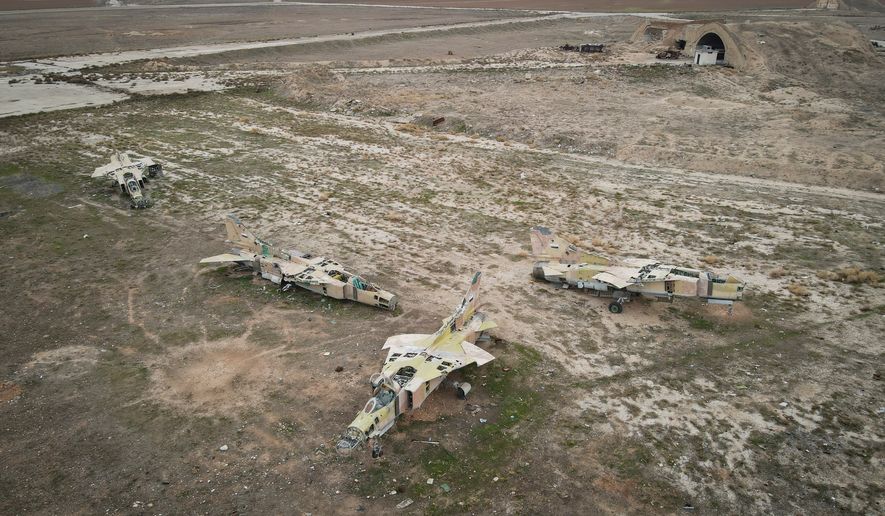

Syria and Israel met for U.S. mediated talks in Jordan Sunday as Washington looks to ease tensions in the region after the Israeli military struck a Syrian air base last week.
The negotiations were between Syrian Foreign Minister Asaad al-Shaibani and a “high-level Israeli delegation,” according to Syria’s Sana news agency. Other regional reports suggested that Roman Gofman, the head of Israel’s Mossad intelligence agency, was present at the meeting.
The talks reportedly focused on establishing “practical mechanisms” for de-escalation and the elimination of Israeli operations in Syrian territory. The negotiations are also aimed at rekindling broader negotiations over an Israeli-Syrian security agreement, which could see the full withdrawal of Israeli forces from Syria.
Mr. al-Shaibani told Reuters ahead of the talks that Syria had severed all diplomatic contact with Israel after the strike on the Abu Duhur air base in northwestern Syria last week.
Israeli media reports cited several “red lines” adopted by negotiators ahead of talks, including the banning of Turkish military activity in Syria and demilitarizing the Syrian side of the Golan Heights.
The talks are the first bout of public diplomacy involving Syria and Israel since the start of the U.S.-Iran war earlier this year. Washington has mediated several rounds of discussions between the two Middle East nations off and on since last year, hoping to halt Israeli strikes in Syria and establish a firm southern border.
Syrian President Ahmad al-Sharaa has remained publicly open to negotiating with Israel and has repeatedly said his country poses no threat to its southern neighbor. But Israeli Prime Minister Benjamin Netanyahu has thus far remained skeptical that the new Syrian government is stable enough to combat Islamic terrorism within its borders.
Still, previous rounds of negotiations between the two nations have resulted in some diplomatic victories, including an agreement for intelligence sharing.
Israeli forces have occupied large swaths of Syria’s southern provinces since the forces of Mr. al-Sharaa surged into Damascus at the end of 2024. The Israeli military has used the territory as a staging ground for what it calls counter-terrorism operations across Syria.
The Israeli military has launched hundreds of strikes against militants within Syria over the past year. Its forces also struck official Syrian military targets last year when ethnic tensions boiled over in the southern provinces between Druze and Bedouin militia.
However, the Israeli strikes reached a new level last week when they targeted the Abu Duhur air base, asserting that it was to prevent Turkey from deploying troops to the area. Both Turkey and Syria have denied the accusation.
The strike resulted in no casualties but caused unspecified damage to the air base’s facilities.
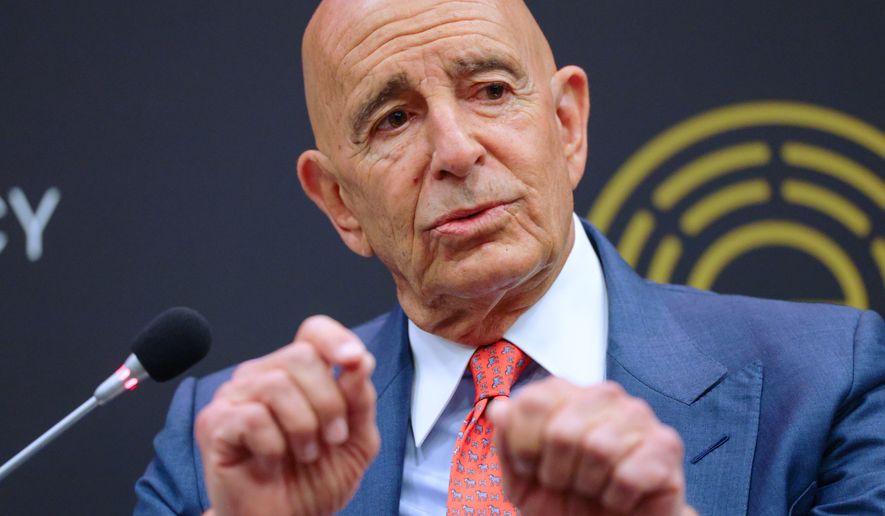
The strike infuriated U.S. Special Envoy to Syria Tom Barrack, who called the attack an unnecessary escalation and an assault on regional stability.
He had said Israel had not informed U.S. security officials of the strike ahead of time and that the attack was likely an attempt to bait Turkey into a larger confrontation.
Israeli Defense Minister Israel Katz rejected the accusation last week, insisting that its forces informed Syrian military officials and relevant authorities in the U.S. before the attack. He also indicated that Israel had received intelligence reports that Turkey intended to use the base “to harm Israel,” without providing any details.
The strikes risk further inflaming tensions between Turkey and Israel, which have only deteriorated further since the start of the Iran war. The two nations have traded political barbs for years over Israel’s treatment of Palestinians in Gaza and the West Bank and Turkey’s diplomatic support for internationally recognized terror groups such as Hamas.
Contact the author

Please read our comment policy before commenting.