


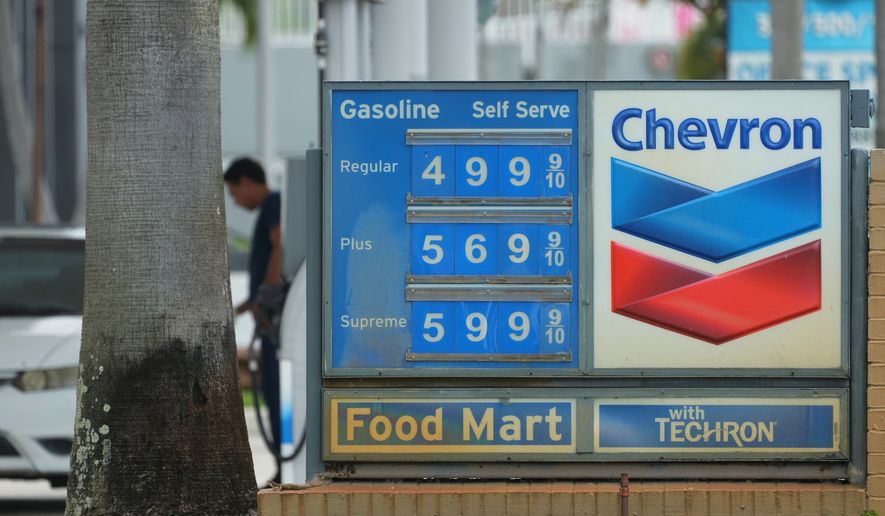

Oil giant Chevron said Wednesday it will greatly expand its operations in Venezuela, days after President Trump announced plans for joint U.S. control of 65 million barrels of oil in the South American country.
Chevron said it would invest more than $7 billion in Venezuela over the next five years, more than doubling its production compared with 2026 to about 600,000 barrels per day.
The Houston-based company’s presence in Venezuela dates to 1923, so it’s well-poised to take advantage of Mr. Trump’s decision to arrest and extradite Venezuelan strongman Nicolas Maduro to the U.S. on drug charges.
People were interested in these podcasts
The January raid led to partial U.S. control of Venezuela’s vast oil riches under the interim government in Caracas.
“Chevron’s history in Venezuela spans more than a century, and our expanded position reflects our confidence in the country’s deep resource potential and its ability to compete for investment within our portfolio for decades,” Chevron CEO Mike Wirth said. “With improved terms and additional acreage, we are strengthening a portfolio that we believe can deliver attractive low-cost oil growth, support energy supply and create differentiated long-term value.”
Chevron said it has been assigned additional acreage in the Orinoco Belt of Venezuela and will expand operations with Petroindependencia, a venture jointly controlled by Chevron and Venezuela’s national oil company.
SEE ALSO: U.S. officials say Venezuela oil deal step toward progress despite lingering concerns
Chevron outlined its plans after Mr. Trump said Friday that he reached an unprecedented deal with Venezuela.
The venture, which is separate from the Chevron deal, would allow a Barbados-based entity operating in Venezuela, North American Blue Energy Partners, to gain rights over multiple oil fields and large reserve deposits.
“Historic Transaction MORE THAN DOUBLES American Oil Reserves, greatly increases our Oil Supply, and will substantially lower Gas Prices for all Americans, long into the future, while helping to continue to set Venezuela on a course toward Tremendous Success and Great Prosperity,” Mr. Trump posted on social media.
Mr. Trump is working with interim President Delcy Rodriguez to steer the South American country away from its socialist past under Mr. Maduro and toward a more open and prosperous future.
Critics of Mr. Trump’s plans say he seems to be putting oil riches before democratic reforms that could benefit Venezuelans, plus warn it will take time to tap into Venezuelan riches and drive down oil prices.
Mr. Trump says the transactions will benefit both countries.
“No American firm knows how to operate in Venezuela better than Chevron,” Treasury Secretary Scott Bessent said Wednesday on “Fox & Friends.” “It is going to push down oil prices, push up production.”
Energy Secretary Chris Wright said Venezuela is poised to double its oil output in the coming years. He’s visiting the country this week to announce the joint venture with North American Blue Energy Partners.
“It’s not a displacement or replacement of private companies,” Mr. Wright told CNBC’s “Squawk Box” from Caracas. “It’s a deal between the U.S. government and a Venezuelan company to help develop the resources.”
He said Venezuela has 12%-15% of the world’s oil reserves but just over 1% of its production, presenting a “problem for today” but an “opportunity for tomorrow.”
Oil markets need relief after the U.S.-Iran war upset supply routes in the Middle East.
Iran retaliated against U.S. strikes by closing traffic in the Strait of Hormuz, a narrow channel that carried a fifth of the world’s oil supply before the war.
Gulf nations are finding new routes for oil, though Brent crude is trading at over $90 per barrel — up from prewar levels of about $70 — due to renewed fighting.
The average U.S. price of gasoline, which is refined from crude, has been stuck above $4 per gallon, up from about $3 before the war, according to the AAA motor club.
Contact the author

Please read our comment policy before commenting.