



OPINION:
“That it is better 100 guilty persons should escape, than that one innocent person should suffer.” — Benjamin Franklin (1706-1790)
The hardest decision a government prosecutor may ever face is also one of the most important tests of the rule of law: What do you do when you believe a crime occurred, and you believe you know who committed it, but you do not believe you can prove guilt beyond a reasonable doubt and to a moral certainty?
The temptation is obvious. A prosecutor is a public official. The alleged victim wants justice. The public demands accountability. The alleged offenders appear unsympathetic.
People were interested in these podcasts
The known facts produce moral outrage. Yet none of these considerations changes the prosecutor’s constitutional obligation.
A criminal prosecution is not a referendum on whether something terrible probably happened. It is an attempt to prove, in a courtroom, that a particular defendant committed a particular crime beyond a reasonable doubt and to a moral certainty.
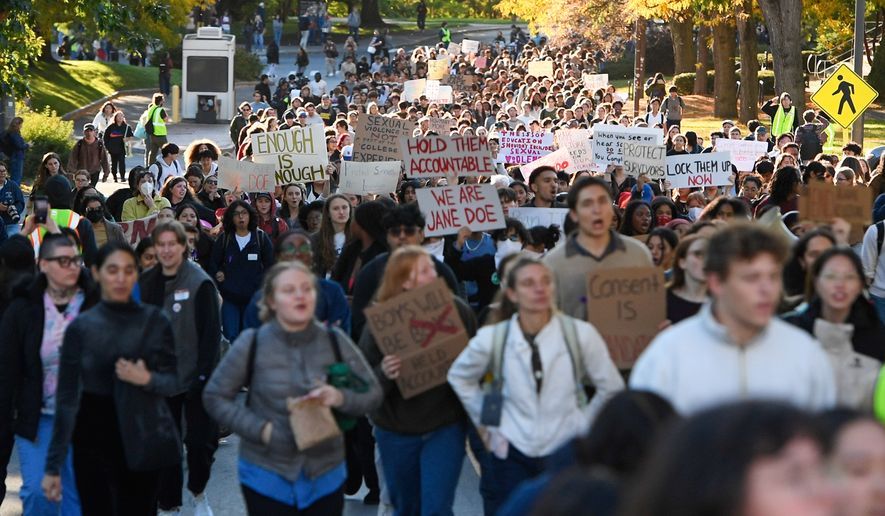
The recently renewed investigation into an alleged sexual assault involving seven Cornell University fraternity members illustrates this dilemma. The woman has alleged that she was sexually assaulted by multiple men at a Chi Phi fraternity house in October 2024. The case was initially not prosecuted, but it has now been reopened and reassigned amid the emergence of additional information and intense public scrutiny.
The publicly reported record demonstrates why prosecutors cannot simply substitute belief for evidence. The woman’s accounts developed over time. According to reporting based on investigative records, she initially described some sexual activity as consensual, later described other conduct as coercive and subsequently became unequivocal in saying that she had been raped.
She also continued friendly communications with at least one of the men afterward.
Those facts do not, by themselves, establish that no rape occurred. Trauma, intoxication, confusion, delayed realization, embarrassment, victim guilt and fragmented memory can complicate the way sexual assault victims describe events, as researchers in the field of trauma response have long documented.
Still, a prosecutor should not pretend that inconsistencies do not exist. They are evidence that a jury may consider, and prosecutors have an ethical obligation to assess how those inconsistencies may affect the likelihood of obtaining a conviction.
That is the difference between believing a victim and proving a criminal case.
The prosecutor is not the victim’s attorney. The prosecutor represents the government and, ultimately, the public interest in justice. That interest includes prosecuting those whose guilt can be proved and refusing to prosecute people whose guilt the government cannot prove.
This distinction is especially important in emotionally charged sexual assault cases. There is an understandable social demand that prosecutors believe victims, but the criminal justice system cannot operate on the principle that an accusation is proof.
Nor can it operate on the opposite principle: that an initially uncertain victim must necessarily be lying. Both propositions are inconsistent with due process.
The prosecutor’s job is to investigate and evaluate.
That means gathering physical evidence. It means interviewing the complainant and the accused, if they consent. It means testing competing accounts rather than simply adopting one. It also means asking the uncomfortable question: If the defense were presenting this case, what reasonable doubt could it present to the jury?
The Cornell matter illustrates why that process must be meticulous. The district attorney has said that the information originally provided to his office differed materially from information subsequently made public, including transcripts containing statements by the woman that she was confident she had been raped.
The district attorney also said he had not initially received those full interview transcripts. Whatever one’s ultimate conclusion about the case, those circumstances justify a renewed investigation. A prosecutor should never decide that a case is unprovable while important evidence remains unevaluated.
Yet reopening an investigation with a new prosecutor does not mean that charges must ultimately follow.
Public pressure cannot lower the burden of proof. Neither can the seriousness of the accusation. Neither can the fact that a university disciplinary proceeding reached a conclusion.
A university’s determination under its disciplinary rules is not equivalent to a criminal prosecution. The criminal justice system operates under a substantially different standard because the consequences are radically different: Criminal conviction can mean substantial imprisonment, lifelong registration requirements and the stigma of a criminal record.
The prosecutor, therefore, faces a genuine moral dilemma. If she declines prosecution and the accused actually committed the crime, justice will have been denied. If she prosecutes a case she does not believe she can prove and the accused are acquitted, justice has also been denied.
There is no painless answer.
The answer provided by Anglo-American law is the presumption of innocence and the requirement of proof beyond a reasonable doubt and to a moral certainty. Those principles deliberately place the risk of error on the government rather than on the victim or the accused.
It is better, under our constitutional system, for the government to decline a difficult prosecution than for it to obtain a conviction simply because public opinion believes someone must be punished.
The lesson of the Cornell controversy is that justice is not measured by whether prosecutors satisfy public anger. It is measured by how faithfully they apply the law.
A prosecutor who brings charges because the public demands them, despite believing that guilt cannot be established, is not demonstrating courage. She is abandoning the very safeguard that separates criminal justice from mob rule.
The prosecutor’s duty is to simultaneously show compassion toward an alleged victim and fairness toward an accused person. Those obligations are not mutually exclusive. Indeed, they are the essence of the rule of law.
Believe the allegation enough to investigate it fully. Believe the evidence enough to follow it wherever it leads, but charge only when the evidence honestly permits the government to conclude it can prove this case beyond a reasonable doubt and to a moral certainty.
Anything less risks turning the criminal courts from instruments of public justice into instruments of public vengeance.
• To learn more about Judge Andrew Napolitano, visit https://JudgeNap.com.
Follow the author

Please read our comment policy before commenting.