



OPINION:
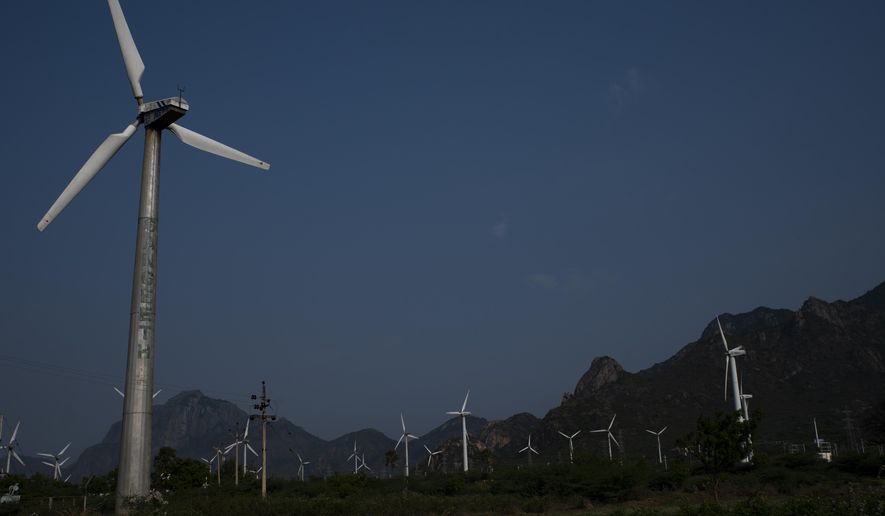
The road out of my hometown in the southern Indian state of Tamil Nadu runs between rows of wind turbines. For most of my life, I treated them as scenery, admiring them as technical marvels.
Danish engineers helped install the state’s first 110 turbines from 1985 to 1992, and at 1.5 gigawatts, the Muppandal cluster in Kanyakumari district grew into India’s largest onshore wind farm.
By 2012, wind was delivering up to 35% of the state’s electricity for days at a stretch. It was a share that industry observers said only Denmark had matched.
People were interested in these podcasts
In 2017, a friend who ran a factory told me that erratic swings in electricity supply had caused damage and lost orders, wiping out months of profits. He linked the problem to the surges and fades in wind power on the grid. That was a warning.
Nine years later, the entire state is experiencing the same grid failures at a far higher cost.
Poster child no more
Few Indian states received as much international praise for their renewable energy as Tamil Nadu. In 2018, the World Economic Forum recognized the state for generating more wind power than Sweden or Denmark, the Scandinavian countries that climate activists hold up as models.
Wind accounted for more than 28% of Tamil Nadu’s installed generating capacity, well ahead of Gujarat’s 19%. Today, Gujarat, Tamil Nadu and Karnataka lead India in wind installations, with Gujarat and Tamil Nadu alone accounting for nearly half of the national total.
Now look at what that reputation buys in October 2026.
To keep the lights on during evening hours, Tamil Nadu has signed the costliest power purchase deals in the country. The state confirmed that it would buy 1,500 megawatts of power for six peak hours each day from Oct. 15 to Oct. 31, mostly from natural gas plants, at a cost of about $527,000 per day.
Those emergency rates are six to seven times the existing thermal power contract rate and nearly double the rate paid by a neighboring state.
Where the electricity went
Officials blame a heat wave for the need to buy additional power. Peak demand jumped nearly 30%, driven by El Nino conditions that kept air conditioners and fans running long after the usual summer peak. Central generating stations also cut back on generation to accommodate scheduled maintenance.
Still, the real culprit is a drop in wind production to about 14% of what contracts had promised. Nobody should be surprised. The wind season in Tamil Nadu ends around this time every year. Solar output drops to zero after sunset, which explains why the shortage is between 6 p.m. and midnight.
Hydropower, a weather-bound source that depends on reservoir levels and monsoon inflows, offered no meaningful rescue.
Consider what filled the gap. Every bidder in the emergency tender was a gas-fired generator, some of them in Assam, 1,400 miles away. Gas won because it starts and stops on command. The state that spent three decades celebrating wind turbines now pays a premium for the one quality it cannot offer: on-demand dispatchability.
Tamil Nadu is India’s second-largest state economy, with a quarter of its output coming from manufacturing, which requires an affordable, continuous supply of electricity.
This month in Tiruppur, Tamil Nadu’s fourth-largest city, knitwear factories reported production losses as computerized machines failed during sudden outages and low-voltage incidents. They suffered the same damage my friend described nine years ago.
Spinning mills near Madurai were told to switch to diesel generators, whose electricity costs significantly more than grid electricity.
Tamil Nadu’s planners must stop treating installed wind capacity as a reliable source. A turbine that produces at 14% of its contracted level during peak demand cannot support a power grid for many millions of people.
India’s second-largest state economy needs an energy supply based on coal, natural gas and nuclear.
• Vijay Jayaraj is a science and research associate at the CO2 Coalition in Fairfax, Virginia.
Please read our comment policy before commenting.