



A version of this story appeared in the daily Threat Status newsletter from The Washington Times. Click here to receive Threat Status delivered directly to your inbox each weekday.
Talk of a renewed U.S. bombing campaign against Iran and its proxies ramped up Thursday as the Tehran-backed Houthi rebels in Yemen denied firing a missile toward the Saudi Arabian city of Medina, a holy site for Muslims around the world, just hours after the kingdom said its forces intercepted an attack there.
The Saudi-led coalition fighting the Houthis announced earlier in the day that its forces had intercepted a cruise missile over the Medina province, located on the country’s eastern coast.
The Houthis distanced themselves from the thwarted attack — an attempted strike that, had it been successful, could have turned much of the Muslim world against the rebel group and Iran.
People were interested in these podcasts
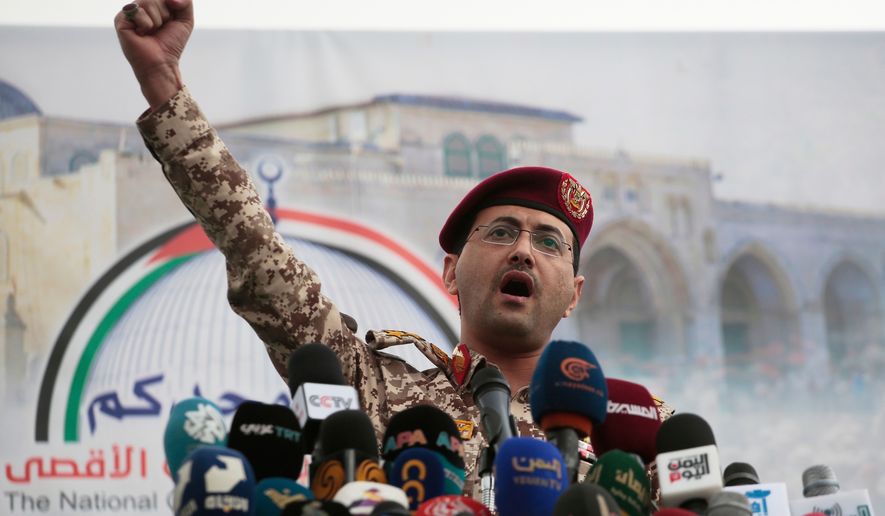
“The Yemeni armed forces confirm that they did not carry out any targeting operation toward Saudi territory today,” Brig. Gen. Yahya Saree, a Houthi spokesman, said in a statement.
The fighting in Yemen — with Iran-backed Houthis on one side against U.S.-backed Saudis and the Yemen government on the other — has escalated in the midst of the ongoing stalemate in the larger U.S.-Iran war.
Despite a recent lull in active combat between the U.S. and Iran, there are reports that President Trump may restart fighting before the end of the year.
CNN reported Thursday that the U.S. military had developed new strike plans that would target Iranian energy and nuclear sites with the GBU-43/B Massive Ordnance Air Blast Bomb or MOAB.
Mr. Trump has long voiced a desire to strike civilian infrastructure in Iran such as roads, bridges and electrical networks, but using the MOAB, the largest non-nuclear bomb in the U.S. arsenal, would be a major escalation in the war that is not in its eighth month.
For now, Mr. Trump has insisted that no major strikes will happen until after the midterm elections, as he faces mounting gas prices mostly as a result of the war with Iran and the closure of the Strait of Hormuz.
By using the Houthis to extend the conflict to Yemen and the Red Sea, Iran adds pressure on the Trump administration to agree to concessions or risk engulfing the Middle East in a wider, costlier war.
Medina is the second holiest city in Islam after Mecca and is where the Prophet Muhammad escaped following persecution to establish the world’s first independent Muslim community.
Saudi Arabia and the Houthis subscribe to different branches of Islam, Sunni and Zaydi Shia respectively, and Thursday’s accusation underscores how religious friction continues to color the kingdom’s escalating war in Yemen.
Just after fighting between the Houthis and Saudi-led coalition forces restarted earlier this year, Riyadh accused the Iran-backed militia of launching missiles and drones at the holy cities of Mecca and Medina.
In September, Saudi coalition spokesperson Col. Turki al-Maliki said the kingdom had shot down a Houthi-launched drone headed toward Mecca before it entered the city’s restricted airspace. Authorities also reported later that month that a Houthi drone had hit an electricity distribution station in Medina that supplied power to local mosques.
The attack did very little damage to the station and the city’s electrical grid was not affected.
Houthi officials rejected both accusations and said the Saudi government had offered no proof that the Mecca attack had occurred. Houthi leader Abdul-Malik al-Houthi said the attacks were fabricated to build support in Saudi Arabia for further military action in Yemen.
Pakistani Prime Minister Shehbaz Sharif, one of the signatories of the Mecca Joint Defence Agreement with Saudi Arabia and Turkey, condemned the Houthis for the alleged strikes on Mecca and Medina. His country has also deployed military assets to the kingdom to assist in defending against strikes from the rebels.
In an apparent response to the Saudi accusations, Gen. Saree said earlier this month that the Houthis would exclude the airports and airspace of Medina and Mecca from their escalating war effort against Saudi Arabia.
It remains to be seen if that means the Houthis will not target military infrastructure located in the two holy cities. Saudi Arabia houses radar, anti-drone and anti-missile systems in both cities.
The Medina incident comes as the Houthis escalate their ground campaign against the Saudi-backed government in Yemen.
On Thursday, witnesses in Yemen’s port city of Aden reported at least six explosions near the Maashiq Presidential Palace complex used by the internationally recognized government. Several explosions were reported on the palace itself, while others were reported near security checkpoints.
Contact the author

Please read our comment policy before commenting.