


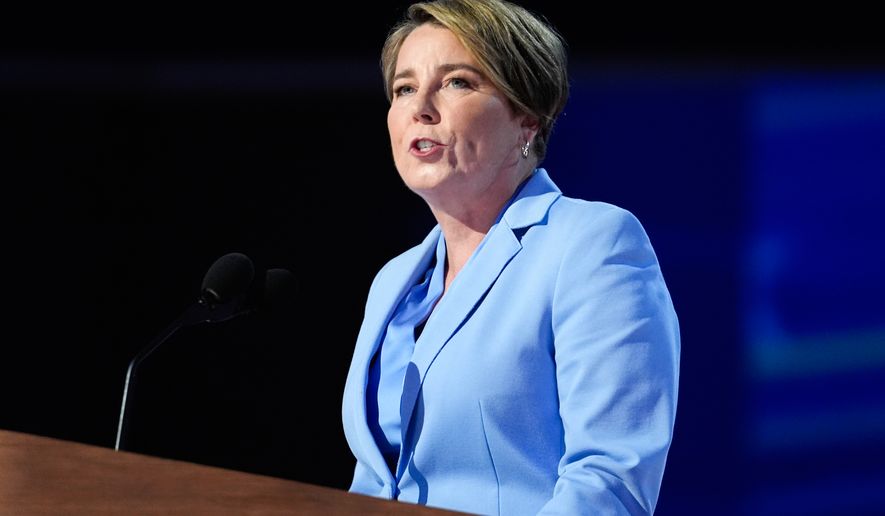

BOSTON — Do not ask Dom Naples about his heating and electric bills without expecting an earful about the steep rise in prices and fees that make it increasingly difficult to heat his modest Bay State home.
Gov. Maura Healey, Mr. Naples said, “is hammering the residents of this state” with policies that have made Massachusetts energy among the most expensive in the country.
Ms. Healey, facing a rising fury about the high cost of heat and electricity as she runs for a second term, took an extraordinary step. She asked the Department of Energy to expedite approval of a natural gas pipeline expansion project in the state.
People were interested in these podcasts
The move marked a dramatic pivot from the governor’s staunch opposition to increasing the use of fossil fuels in the state’s energy mix.
Just a few years ago, Ms. Healey wagged her finger and proudly boasted of her role in blocking two natural gas pipeline projects while serving as the state’s attorney general.
That move, which contributed to residents paying much higher prices for natural gas imported from overseas, has become a top campaign talking point for her Republican opponent, former medical-device executive Mike Minogue.
He has pledged to expand access to natural gas and pipelines and has slammed Ms. Healey for blocking two major, multibillion-dollar projects a decade ago.
“Now, [in the final stretch of] the election, she’s following my lead,” said Mr. Minogue, calling Ms. Healey’s pivot on natural gas “all talk and no action.”
This month, Ms. Healey made public a letter she sent to Energy Secretary Chris Wright urging him to expedite the federal government’s review and approval of the Algonquin natural gas pipeline expansion project. The pipeline, she said, would “get more U.S. natural gas into New England” and “deliver savings to customers.”
In the letter, Ms. Healey signaled support for an even larger pipeline expansion, Project Beacon, which would increase natural gas flow into the state by 10%. The Algonquin and Beacon projects are scheduled to begin serving the state by 2028 and 2030, respectively.
Massachusetts is one of several blue states reconsidering stringent and costly green energy policies that have led to sky-high electric and heating bills.
Rhode Island, Connecticut and New York recently reduced or delayed deadlines for converting the electrical grid to renewable energy or slashed emissions reduction targets.
Massachusetts and New Jersey moved to pause fees tacked onto utility bills that fund green energy projects.
“Healey is starting to feel the heat of the ratepayer revolution,” said Paul Diego Craney, executive director of taxpayer watchdog group Massachusetts Fiscal Alliance. “People are getting fed up with the high costs of paying for the net-zero climate mandate.”
Ms. Healey’s reelection prospects are not exactly under threat in deep-blue Massachusetts. She leads Mr. Minogue by an average of 20 percentage points in recent polls, but her support, hovering around 54%, has dropped from the nearly 64% she garnered in her first-term win four years ago. Voters list the high cost of heating and electricity as their top concern, and some blame her for the increase.
More than half the state’s residents rely on natural gas for heating.
Ms. Healey’s move a decade ago to block the pipeline expansions has forced more residents to pay for natural gas imported from overseas, which is more expensive and comes with a hefty delivery charge.
The state pays the fourth-highest electricity rate in the nation, in part because a significant portion of the grid is powered by imported liquefied natural gas.
According to the U.S. Energy Information Administration, Massachusetts residents paid an average electric bill of $174 in July for baseline usage, but most households shelled out closer to $274 per month, which was 67% higher than the national average.
Massachusetts residents pay more than 30 cents per kilowatt-hour, which is significantly higher than in nearly every other state.
Ms. Healey, seeking to reduce those costs, put some of the state’s green energy ambitions on the back burner.
She recently paused a fee on residential and commercial utility bills that pays solar panel owners for the electricity they provide to the grid. She also directed the state to help households pay sky-high heating costs with money that electricity companies pay for failing to meet the state’s emissions-reduction mandates.
Ms. Healey has not backed off the state’s goal of achieving 35% renewable electricity by 2030, however. Nor has she pulled Massachusetts from the Regional Greenhouse Gas Initiative, which both contribute to higher energy costs.
Under her administration, the state aims to be carbon-neutral by 2050, and those anti-fossil-fuel policies will continue to keep energy costs above average, according to green energy critics.
Environmental groups say the opposite is true and are pushing back against Ms. Healey for writing the letter to speed up the Algonquin pipeline project.
They urged Ms. Healey to stick to backing wind, solar and hydropower, which are not subject to the volatility of oil and natural gas.
“This letter unwittingly adopts the false narrative that expansion of gas infrastructure will lower heating costs for New England families and businesses,” said Caitlin Peale Sloan, Conservation Law Foundation vice president for Massachusetts.
Contact the author

Please read our comment policy before commenting.