


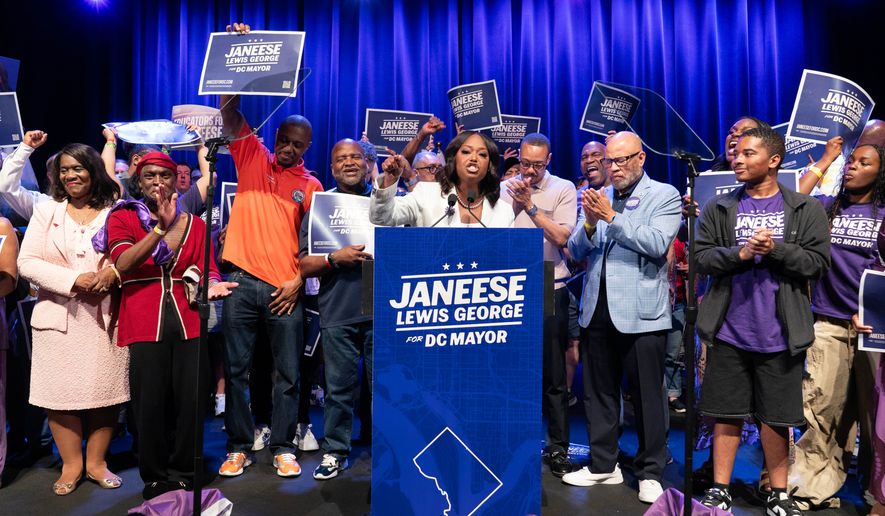

Janeese Lewis George made history Tuesday night as the first socialist elected mayor in the District, while Maryland Gov. Wes Moore strolled to a second term in a rematch against the man he beat four years earlier.
Ms. Lewis George secured a comfortable victory shortly after the final voters left polling locations, winning 84% of the vote over Robert Gross, the candidate for the Statehood Green Party, and Rhonda Hamilton, the independent candidate.
“I didn’t run for mayor to keep applauding how hard our people have to fight and how good we can fight. I ran for mayor so that government will fight for you.” Ms. Lewis George said in her victory speech in Southeast. “Tonight, our campaign ends. Tomorrow, our work begins.”
People were interested in these podcasts
In Maryland, Mr. Moore was projected to win his race against Republican challenger Dan Cox almost immediately after polls closed at 8 p.m.
The deep-blue state’s voters are also projected to give the legislature’s Democratic supermajority permission to redraw congressional districts in a way that would put in jeopardy the lone Republican U.S. House member in the state.
Back in the District, former D.C. Council member Robert White easily won the seat to become the federal city’s next nonvoting delegate, held for more than 30 years by the retiring Eleanor Holmes Norton. And several new Council members, including another self-described socialist, join the legislative body in a major sea change in city politics.
A D.C. ballot initiative to ban foie gras, the luxury duck and goose liver dish, throughout the nation’s capital in the name of combating animal cruelty is also projected to pass as well.
But Ms. Lewis George’s election brings the largest change to city politics.
The current Ward 4 Council member becomes the latest socialist to assume control of a major city. Last year, New York City voters backed Zohran Mamdani and Seattle voters supported Katie Wilson’s bid for mayor.
Once Ms. Lewis George assumes office in January, her left-wing agenda will be tested against revenue challenges and President Trump’s habit of dabbling in the affairs of the District, over which the federal government exercises far more power as the national capital.
The prospective mayor campaigned on using the government to tackle affordability issues. Her key promises include expanding rent control, building more than 70,000 housing units over the next five years, and ensuring no family pays more than 7% of its household income for childcare.
Ms. Lewis George aims to accomplish these goals by proposing a tax on out-of-state business owners in the District, while also auditing city agencies to trim administrative waste.
But those plans are countered by the capital city’s funding shortage that is forecasted to last for years.
A combination of the declining value of downtown office space — a remnant of the workforce trends brought on by the COVID-19 pandemic — and the Trump administration’s downsizing of the federal government has local officials projecting a $736 million decline in revenue between fiscal 2027 and 2030.
Mr. Trump’s presence looms over the District’s day-to-day functioning as well. The Department of Defense extended the National Guard deployment until the end of his second term, and federal agents are cooperating with the Metropolitan Police Department on patrols and criminal investigations.
The president has not been shy about bashing Ms. Lewis George, either. Following her primary victory in June, Mr. Trump called the mayoral favorite a “communist” and said he would “take over” the District if she won office.
Ms. Lewis George promised to fight the president’s perceived overreach in court with the help of D.C. Attorney General Brian Schwalb, but her rhetoric toward the commander-in-chief cooled as Election Day neared.
Last week, Ms. Lewis George said her only concrete goal was to end the police department’s cooperation with U.S. Immigration and Customs Enforcement. Beyond that, she said she wanted to demonstrate that her administration can run the city competently on the public safety and financial fronts.
Maryland’s gubernatorial race was a repeat of the 2022 election, in which Mr. Moore soared past Mr. Cox.
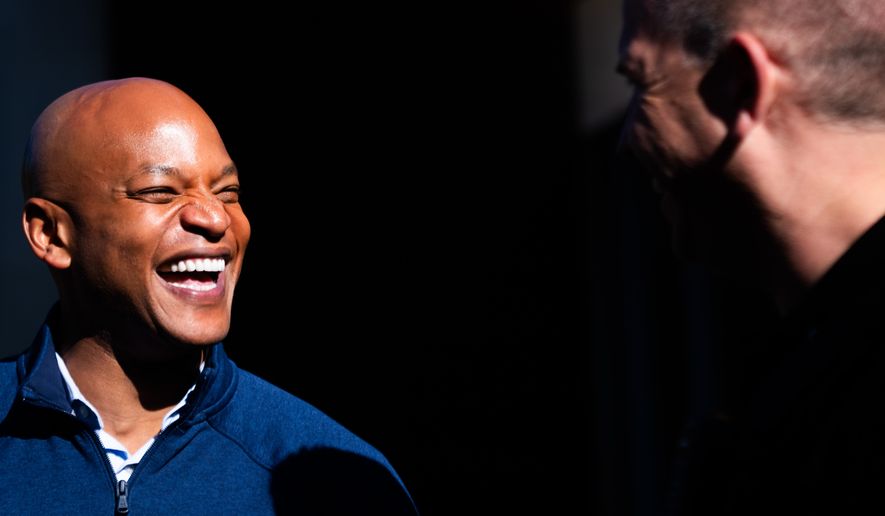
Mr. Moore has tried to quiet speculation that his second term at the governor’s mansion is merely a pit stop on the way to the presidency, but the Democratic executive has become a frequent face on national television and on trips around the country.
He also has influential friends, such as actor and Democratic donor George Clooney, who have voiced their support for his White House bid, should he move in that direction.
When debate moderators asked Mr. Moore last month if he would commit to serving his full term if he won office again, the governor said, “I’m committed to the people of Maryland, and that’s why I’m running for reelection.”
Please read our comment policy before commenting.