


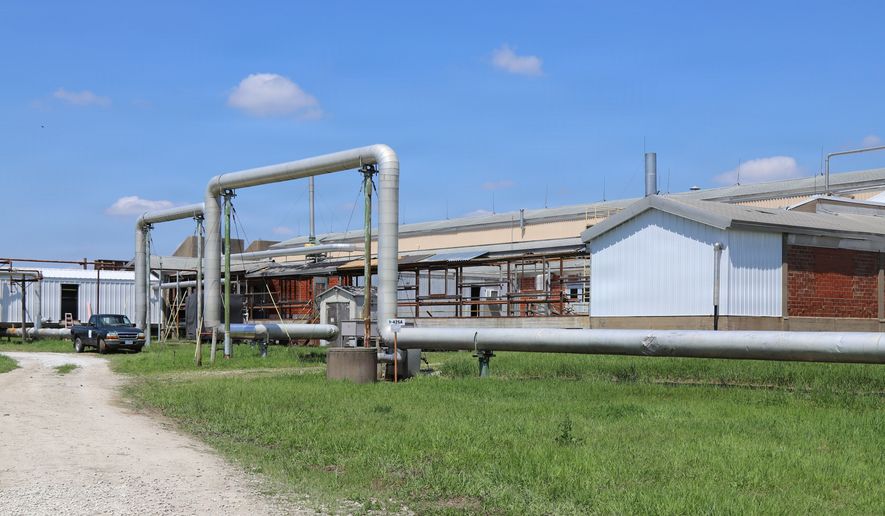

A federal appeals court on Monday lifted its blockade that had prevented the Army from carrying out a detonation of degraded explosives at an Iowa plant.
The 8th U.S. Circuit Court of Appeals said explosives are unstable and the government is on firm legal footing in saying the risk of an unplanned explosion is worse than a planned explosion, even if that controlled demolition would spew lead particles into the air.
The court’s ruling gives a go-ahead to the Army, though President Trump threw a new wrinkle into the matter earlier Monday, saying he also wanted permission from Iowa’s incoming governor-elect, Rob Sand.
People were interested in these podcasts
The 68 drums of lead azide have been stored at the Iowa Army Ammunition Plant in Middletown, near the Illinois border, for several decades.
The Army says the explosive material has become unstable. It secured a permit from the Environmental Protection Agency for intentional detonations, acknowledging the health hazards but saying the detonation was better than the alternative.
Environmental groups sued, saying the EPA’s permit did it properly evaluate alternatives, and skipped over any notice and public comment period.
The appeals court said the EPA did consider alternatives, and said the emergency nature of the problem meant no public comment period is required.
The judges acknowledged that the detonation “will result in harm to the public through environmental and health risks.”
“Again, however, here we are faced with a situation in which the risk is between a controlled detonation and an unplanned explosion, not between the risk of a controlled detonation and no explosion at all,” the court said in an unsigned opinion.
The panel included one George W. Bush appointee and two Trump appointees.
The controlled detonation of explosive lead azide had been scheduled for Wednesday, which the Army said was timed to allow optimal weather conditions and the completion of mitigation efforts.
“The Army and our interagency partners have been working around the clock to safeguard all Americans in the region,” officials said in a statement. “The health and safety of all Americans has been and always will be our first priority.”
The detonation was initially planned for last Friday, but the Army has since changed the date three times following public backlash over health and environmental effects.
Sen. Charles E. Grassley, Iowa Republican, said he wanted to see the government increase communication and transparency. But he also said from what he’s learned from the experts, the controlled demolition is the right answer.
“My position remains clear — a controlled, safe removal of the lead azide far outweighs a spontaneous catastrophe,” Mr. Grassley said Monday.
Mr. Sand, a Democrat, this weekend raised questions about the push to detonate now.
“Since a contract to remove the explosive risk was signed this spring, we must all be asking why it was cancelled, why nothing was done, and why we are rushing to demolition now in late November,” he said on social media. “Iowans deserve transparency over how we got here, then answers and accountability to stop this from ever happening again.”
Mr. Trump, in announcing a delay, said if things go wrong, Mr. Sand will bear responsibility “for any and all death or destruction caused by this very unfortunate and long-term situation.”
The Army has warned people to be inside during the detonation, and once the all-clear is given, people inside the affected area should clean off surfaces, both inside and outside.
Contact the author


Please read our comment policy before commenting.