



Don’t miss the full story, whose reporting from Kelvin Chan at The Associated Press is the basis of this artificial intelligence-assisted article.
Iran’s attacks on Qatar’s natural gas infrastructure have disrupted global helium supplies, threatening semiconductor manufacturing, medical imaging and space industries worldwide.
Some key facts:
People were interested in these podcasts
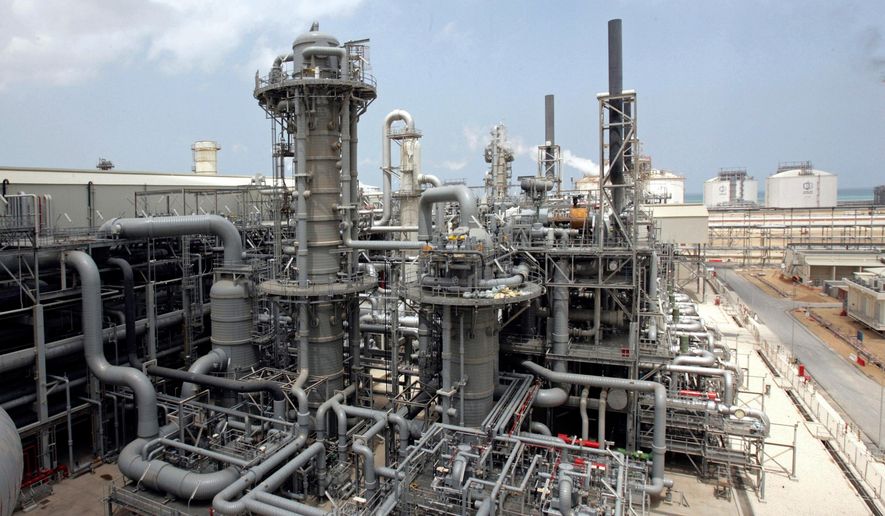
• Qatar supplies roughly 30% of the world’s helium as a byproduct of its massive natural gas operations at the Ras Laffan facility.
• QatarGas declared force majeure, meaning it’s unable to supply contracted customers due to circumstances beyond its control, on March 2 after Iranian drone strikes, halting Liquified Natural Gas, or LNG, and helium production.
• Subsequent Iranian strikes caused “extensive” damage to Ras Laffan, cutting annual helium exports by 14% and requiring years of repairs.
• Spot prices for helium have doubled since the conflict began, with contract prices expected to rise significantly if the outage is prolonged.
• Helium is irreplaceable in semiconductor manufacturing, used to cool silicon wafers during the etching process that forms transistor structures.
• South Korea is especially exposed, importing about 65% of its helium from Qatar, putting chipmakers Samsung Electronics and SK Hynix at particular risk.
• Approximately 200 specialized helium containers worth roughly $1 million each are currently stranded in the Middle East.
• A full helium crisis is considered unlikely by experts, as critical industries like chipmaking and medical imaging would be prioritized for allocation in a shortage.
READ MORE: Iran war halts Qatar helium output, threatening global tech supply chains
This article was constructed with the assistance of artificial intelligence and published by a member of The Washington Times' AI News Desk team. The contents of this report are based solely on The Washington Times' original reporting, wire services, and/or other sources cited within the report. For more information, please read our AI policy or contact Steve Fink, Director of Artificial Intelligence, at sfink@washingtontimes.com
The Washington Times AI Ethics Newsroom Committee can be reached at aispotlight@washingtontimes.com.
Please read our comment policy before commenting.