



A version of this story appeared in the daily Threat Status newsletter from The Washington Times. Click here to receive Threat Status delivered directly to your inbox each weekday.
An Army AH-64 Apache helicopter crashed near the Strait of Hormuz late Monday and its two crew members were rescued, Pentagon officials said.
The cause of the crash was not immediately clear. In a brief statement, U.S. Central Command did not say whether Iran shot down the Apache attack helicopter but said the “cause of the incident is under investigation.”
President Trump, speaking to journalists at John F. Kennedy International Airport in New York after watching the NBA Finals on Monday night, acknowledged the crash and said the pilots were not hurt.
People were interested in these podcasts
“Nobody injured. We are going to issue a report tomorrow. But the pilots are fine,” Mr. Trump said.
CENTCOM said the helicopter went down near the coast of Oman while patrolling regional waters. The two crew members are in stable condition, officials said, and were both rescued within two hours of the incident.
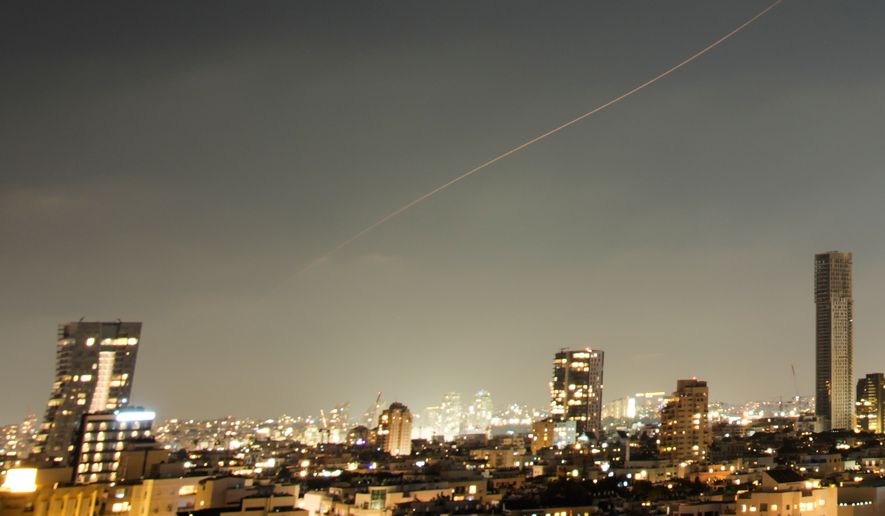
The crash comes against the backdrop of a so-called ceasefire between the U.S. and Iran, which is meant to facilitate diplomacy between the two sides in the hopes of reaching a deal to end the war, which began in late February. But U.S. and Iranian forces have been regularly clashing despite that ceasefire, with Iran firing missiles and drones at targets across the region and American forces bombing key Iranian military sites in response.
SEE ALSO: Israel, Iran hold their fire after Trump pressures Netanyahu
The Strait of Hormuz has become a critical flashpoint in the conflict. Since the early days of the war, Tehran has sought to shut down commercial maritime traffic through the strait, a vital waterway for moving oil and other goods in and out of the Persian Gulf. The U.S. responded with a naval blockade to prevent ships from reaching Iran, squeezing the country’s economy and putting political pressure on its leadership.
AH-64 Apache helicopters have been a key asset for the American military as it enforces the blockade. The United Arab Emirates has also used the helicopters to shoot down Iranian drones.
The U.S. has lost a significant number of aircraft during the Iran war.
On June 1, Iran shot down an MQ-1 Predator drone. At least 24 MQ-9 Reaper drones, four F-15E Strike Eagle fighter jets, one F-35 and seven KC-135 refueling tankers are among at least 42 total aircraft lost, according to a recent Congressional Research Service report.

The most notable incident came in early April when Iran shot down an F-15E fighter jet over its territory. U.S. forces mounted a daring rescue operation and found the two crew members before Iranian forces could capture them.
It was the first time a U.S. aircraft had been shot down over enemy territory since the early days of the Iraq war in 2003.
SEE ALSO: Iran war pushes Trump-Netanyahu friendship to limit
The U.S. has lost other aircraft in incidents that did not involve enemy fire.
In the early days of the conflict, Kuwaiti air defenses mistakenly shot down three American fighter jets in a friendly fire incident. None of the crew was killed.
In March, all six crew members of a KC-135 refueling aircraft died when their plane crashed in Iraq after an apparent mid-air collision with another plane.
• This article is based in part on wire service reports.
Contact the author

Please read our comment policy before commenting.