


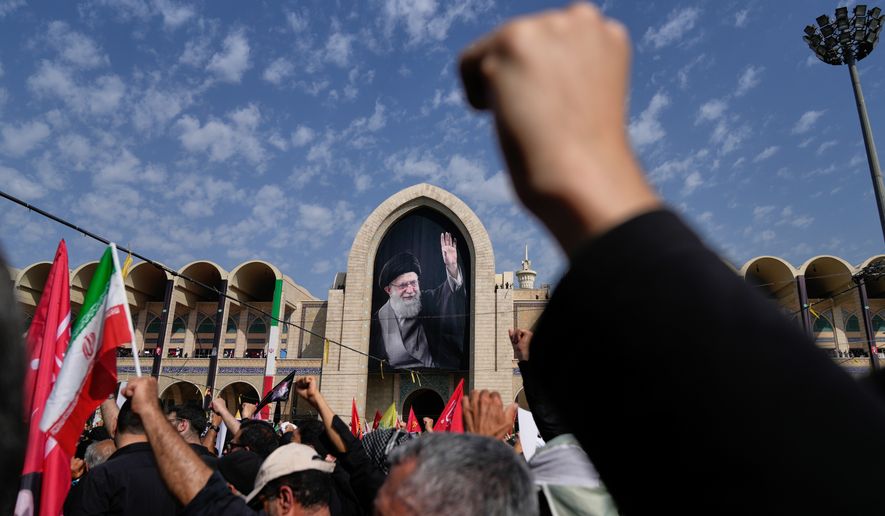

Tehran dragged its Persian Gulf neighbors back into the U.S.-Iran war Thursday by firing a volley of drones and missiles at American partners across the region as part of a major flare-up in violence that upended peace talks.
Jordan confirmed that it had to intercept at least eight ballistic missiles, while Bahrain’s military said it intercepted several rounds of drones and missiles.
Kuwait faced three ballistic missiles, one cruise missile and 10 drones. Although the missiles were intercepted, debris caused some damage, and one person was seriously injured.
People were interested in these podcasts
Iran’s Islamic Revolutionary Guard Corps said it targeted U.S. military bases in the Gulf region in response to President Trump’s latest round of attacks on Iranian targets.
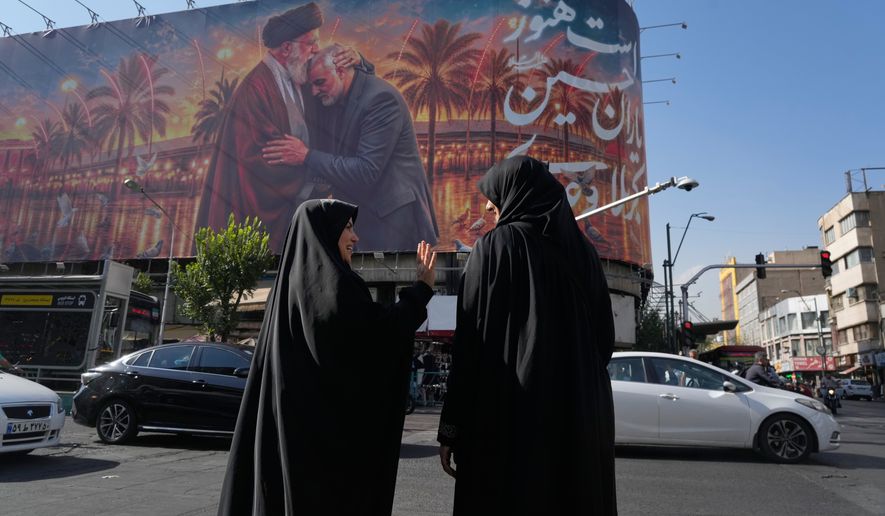
“The fighters of Islam will not leave the aggressions of the child-killing U.S. army unanswered,” the IRGC said in a statement carried by state-affiliated media.
Iran lashed out after the U.S. struck 170 targets in Iran over two days this week.
SEE ALSO: Trump says he does not know if U.S. is returning to full-scale war with Iran
Those strikes were in response to Iran’s targeting of commercial vessels in the Strait of Hormuz.
Iranian state media reported Thursday that damage from one headline-making U.S. strike — on the Tehran-Mashhad railway bridge in northeastern Iran — had been repaired and that the bridge would be available for use by passenger trains.
Iranian Foreign Minister Abbas Araghchi called counterparts in Oman, Turkey and Saudi Arabia to discuss the situation in the Middle East. He also spoke with Pakistani Field Marshal Asim Munir, who has been a key mediator between the Americans and the Iranians in the on-again, off-again peace talks.
The eruption of fighting threatens to unravel the progress both sides made in settling the war, which began with U.S.-Israeli airstrikes on Feb. 28.
The initial strikes killed Iran’s top leaders and decimated its military infrastructure. Yet Iran clamped down on oil traffic near its shores in retaliation, roiling markets and lifting gas prices.
The countries agreed to a memorandum of understanding in mid-June that called for an end to fighting and a reopening of the Strait of Hormuz.
Iran seems intent on retaining some control over the waterway, however, complicating final-stage negotiations over Tehran’s nuclear ambitions.
Mohammad Bagher Ghalibaf, speaker of Iran’s Islamic Consultative Assembly and Iran’s chief negotiator, said his country would not back down.
“The United States still hasn’t learned that bullying and breaking promises are no longer cost-free,” he said on X. “Let me put it plainly: If you strike, you’ll get hit.”
U.S. stocks rose despite the renewed tensions, as investors weighed mixed signals from Washington and Tehran.
Major indexes opened in positive territory after a big midweek sell-off that was fueled by tit-for-tat strikes in Iran over Tehran’s aggression in the Strait of Hormuz, a critical waterway for oil traffic.
The price of Brent crude oil dipped slightly, settling around $75 per barrel after trading a few dollars higher earlier Thursday.
Yet the average U.S. gas price rose 5 cents to $3.85 per gallon, up from $3.80 on Wednesday, according to AAA.
Gas prices averaged about $3 per gallon at the start of the war and had been falling after the mid-June pause in the fighting. Renewed strikes seemed to arrest and reverse that decline, at least for now.
Stocks were buoyed by chipmakers’ performance, and Wall Street seems to be betting that Washington can manage the economic fallout from the conflict.
Mr. Trump pointed directly to the economic benefits of halting the fighting when he signed the ceasefire memo last month. He said he did not want to be remembered as the next Herbert Hoover, referring to the president who presided over the onset of the Great Depression.
The president said late Wednesday that he did not know whether the U.S. was returning to a full-scale war with Iran. He said Tehran still wanted to reach a peace settlement.
Iran’s actions in the strait remain a key wild card.
“Don’t flail around pointlessly, or you’ll sink even deeper: The Strait of Hormuz will only open with Iranian arrangements, not American threats,” Mr. Ghalibaf said on X.
“Every time they hit us, we’re going to hit them 20-to-1,” Mr. Trump told reporters on his return from a summit of NATO leaders in Turkey.
“They want to make a deal so badly,” he said, but “I don’t know if they’re going to honor the deal. That’s the problem.”
Contact the author


Please read our comment policy before commenting.