



Top White House officials visited Capitol Hill on Wednesday to convince hesitant Senate Republicans to back the House’s $95 billion plan for a filibuster-proof budget reconciliation package and to kickstart the process before leaving for August recess.
“Nothing’s been clearly decided,” said Senate Budget Chairman Ron Johnson.
The Wisconsin Republican said his goal is to advance a budget resolution needed to begin the reconciliation process before the August recess, but “there are legitimate concerns” senators have raised that need to be addressed.
People were interested in these podcasts
A budget blueprint the House adopted last week lays out instructions for what should be included in the bill: up to $73 billion for defense funding related to the Iran war, $12 billion in economic assistance to farmers and $10 billion to implement election requirements from the SAVE America Act.
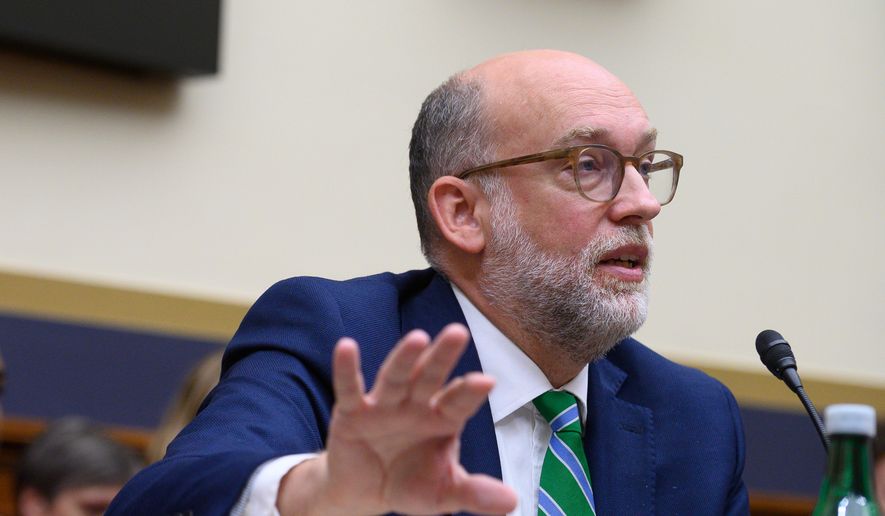
“What the House has done is they’ve put us in a position where we can pass SAVE America in a reconciliation package with 50 votes to do defense, [agricultural] spending, and get it to the president’s desk over the next several weeks and months,” said White House Office of Management and Budget Director Russell Vought.
Mr. Vought’s comments came after he and White House Office of Legislative Affairs Director James Braid met with Senate Republicans and urged them to quickly move forward with the third filibuster-proof package, dubbed “reconciliation 3.0.”
“We made a lot of progress, and they’re very open to it,” Mr. Vought said.
Senate Majority Leader John Thune said he has to determine whether enough of his members believe the juice is worth the squeeze.
“We had a good chance to bat it around a little bit. We heard from the White House, and we’ll kind of get a sense for where the conference wants to go,” the South Dakota Republican said.
Mr. Thune said he is open to the reconciliation 3.0 effort if Republicans can cobble together 50 votes for the plan and stay unified enough to reject Democrats’ political messaging votes during the open amendment process required by the reconciliation process.
“But that has to be proven, and we’re not there yet,” he said.
Republican senators have not been united on the plan presented by the House, with some suggesting more defense dollars, farm aid or offsets for the new spending.
The White House is arguing against such expansions.
“We don’t believe the package should be offset. It wasn’t offset in the House,” Mr. Vought said. “It should be tight. It should be for the defense needs that we need now, for the [agricultural] needs that we need now, and to get this as straight a shot to the president’s desk as possible.”
Mr. Vought and Mr. Johnson both shot down reports that Republicans could add a debt-limit increase to the reconciliation 3.0 measure.
“The debt limit is something that is not envisioned for this package,” Mr. Vought said. “We believe that is something that should come later in reconciliation 4.0, along with the rest of the defense spending that the president has [proposed] that will get you to $1.5 trillion.”
The Senate has to make at least a few changes to the House’s budget resolution to bring it into compliance with their chamber’s reconciliation rules, including providing instructions to Senate committees.
The House instructed only four of its committees, but the Senate is likely to instruct far more to preserve flexibility under its strict reconciliation rules.
Any policies included in the final reconciliation bill that fall outside of the jurisdiction of Senate committees instructed in the budget resolution lose their filibuster-proof status.
Mr. Thune said the policies contemplated for reconciliation 3.0 could implicate more than a dozen Senate committees. But that also opens the door to far more Democratic amendments that would be considered “germane” and subject to a simple-majority threshold instead of 60, making them harder to defeat.
“That creates an uphill challenge,” Mr. Thune said.
Contact the author

Please read our comment policy before commenting.