



OPINION:
The Anthony S. Fauci diary, just released by Sen. Rand Paul, Kentucky Republican, is the talk of the town. With nearly 60 mentions in the diary, I win, hands down, the title of White House official who most frequently challenged St. Fauci.
I challenged the director of the National Institute of Allergy and Infectious Diseases across the board: on the China travel ban, the lab origin of COVID-19, the efficacy of hydroxychloroquine and Dr. Fauci’s foolish mandatory face masks and punishing lockdowns.
For my opposition to his authoritarian edicts, Dr. Fauci calls me in his diaries “weird,” “crazy,” “arrogant” and “delusional,” along with one colorful anatomical epithet not fit to print.
People were interested in these podcasts
Ironically, it is Dr. Fauci’s own diary that proves I was right and he was wrong. About everything.
Consider my confrontation with Dr. Fauci in the Situation Room at the dawn of the pandemic, on Jan. 28, 2020, about the China travel ban. President Trump had sent me to make the case for action. Dr. Fauci was the biggest opponent, repeatedly insisting that “travel bans don’t work.”
Yet Dr. Fauci calls me a liar and insists that he supported the ban.
Yes, Dr. Fauci eventually supported the ban, but on Jan. 26, he wrote that he and Centers for Disease Control and Prevention Director Robert Redfield opposed it. A day later, he repeated his opposition to the ban in two White House meetings, and he did so again in the Situation Room.
Of course, changing your mind is not a lie. Pretending you never held the original position — and smearing the person who remembers it — is.
Consider next the lab theory of COVID-19. On April 19, 2020, on Fox News with Maria Bartiromo, I identified the likely source of the virus as a Wuhan lab leak. Dr. Fauci knew I was right. He said so in his diary.
Privately, Dr. Fauci recorded on Jan. 31 that scientists had raised the possibility of deliberate laboratory insertion followed by an accidental release. After a Feb. 1 expert call, he wrote that most participants regarded deliberate insertion as possible and that “we could not let this go.”
Yet Dr. Fauci’s diary reveals the beginnings of an institutional cover-up. He convened scientists who privately regarded laboratory manipulation and accidental release as plausible, then helped organize the scientific process that soon produced the natural-origin narrative.
What had been treated privately as an urgent possibility was publicly downgraded into a conspiracy theory.
Why did Dr. Fauci bury a theory he privately considered plausible? Mr. Paul will surely pursue the most obvious answer: Dr. Fauci had a powerful conflict of interest. His institute had funded dangerous coronavirus research routed through EcoHealth Alliance to Wuhan.
If that research contributed to a laboratory accident, “St. Fauci” would not merely lose his halo. He would face responsibility for championing the risks, failing to police the work and then helping shape the public story about its possible consequences.
His diary makes painfully clear how much fame, flattery and adulation meant to him.
What about hydroxychloroquine? Before the politics hardened, Dr. Fauci’s private position was strongly supportive. On March 18, after an Oval Office discussion, he wrote that hydroxychloroquine was “an approved drug” and that “we have tons of experience with it.”
He added, “I am comfortable with the HC plan as discussed in the Oval,” and even suggested leading with hydroxychloroquine through a flexible distribution protocol while placing remdesivir under a stricter trial regime.
That is not my spin. That is Tony Fauci in his own words.
Less than three weeks later, however, hydroxy had become politically radioactive after Mr. Trump dared to say it might help. That was when Dr. Fauci flipped from cautious openness to the all-purpose dismissal of “anecdotal evidence.”
In the Situation Room, with Vice President Mike Pence presiding, I laid a dossier of studies on the table and made the obvious point: These were supportive studies, not anecdotes.
Dr. Fauci never forgave the challenge.
Months later, after another hydroxychloroquine clash, he dismissed me in his diary as my “typical arrogant self” and acidly recorded my warning: “If I am wrong, no one is harmed. If you are wrong, thousands of people die.”
Thousands of people did indeed needlessly die.
On masks, Dr. Fauci turned changing judgments into national commandments. His diary acknowledges that the government had been “too strong in saying masks do not work.” He then reversed himself and became the country’s chief mask enforcer even as I continually questioned mask use.
On lockdowns, the same diary shows Dr. Fauci urging the closure of schools, bars and restaurants; backing a shelter-in-place order for New York City; praising then-Gov. Andrew Cuomo’s shutdown of nonessential activity; and pushing President Trump to extend national restrictions.
In contrast, I warned on “Meet the Press” that prolonged lockdowns could kill “many more” Americans through depression, alcoholism, deferred medical care, economic ruin and other collateral damage. Public health officials were counting viral cases while ignoring the lives being destroyed by their prescriptions.
History has vindicated my warning far more than Dr. Fauci’s one-dimensional certainty.
Here is the bottom line: The man who demanded that America “follow the science” was often following politics, panic, ego and institutional self-protection. I did not trust him then. His own diary proves America should not trust him now.
Mr. Paul, let the hard questions begin.
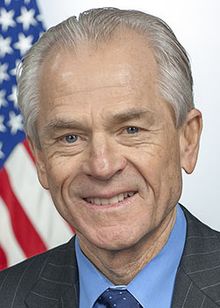
• Peter Navarro is the White House senior counselor for trade and manufacturing. Read his account of his clashes with Dr. Anthony Fauci in his memoir, “In Trump Time.”
Follow the author
Please read our comment policy before commenting.