



President Trump’s envoy to Israel during his first administration dismissed accusations from Democrats on Wednesday that the war with Iran has strained the Abraham Accords — the U.S.-brokered normalization agreements between Israel and several of its Arab neighbors.
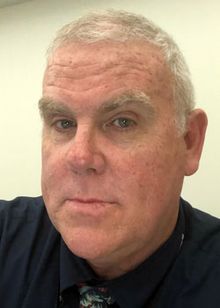
Former Ambassador David Friedman, who served from March 2017 to January 2021, told the House Foreign Affairs Committee that he doesn’t believe any of the signatories view Washington’s conflict with Tehran as a “strategic blunder” and a reason to back away from the accords.
“I hope that when the war ends successfully and victoriously for the United States — as we all hope, pray, and believe that it will — the moderates will be back in the lead and the Abraham Accords will have a bright future,” Mr. Friedman said.
People were interested in these podcasts
The hearing came a day after Mr. Trump attempted to bring Lebanon into the normalization agreement with Israel during an Oval Office visit by Lebanese President Joseph Aoun.
“The Abraham Accords have been, I think, a tremendous success. I think you’re going to see a lot of countries joining,” Mr. Trump told reporters at the White House.
Mr. Friedman played a key role in negotiating and formulating the agreement. Analysts say Mr. Friedman was one of the key Middle East strategists who built trust with regional leaders that allowed the agreement to move forward.
SEE ALSO: U.S., Saudi Arabia sign historic nuclear cooperation deal
“We were able to get there in the first Trump administration by doing two things — by degrading the extremists and by standing shoulder-to-shoulder with Israel,” he said. “It’s a simple, basic and highly moral formula.”
Mr. Trump achieved the deal by restoring “backbreaking” sanctions on Iran and cutting off funding for UNRWA, the U.N. relief agency for Palestine, which he said provided military, financial and propaganda support to Hamas.
“When the Biden administration took up the accords, it added a condition that was not present in any of the other successful deals — the requirement for a Palestinian state,” Mr. Friedman said. “Such a condition was a guarantee of failure then, and it continues to guarantee failure today.”
Rep. Michael Lawler of New York, the Republican chairman of the House Foreign Affairs Committee’s Middle East and North Africa subcommittee, said the Abraham Accords “fundamentally change” the trajectory of the Middle East.
“They demonstrated that peace and cooperation are possible when countries choose shared interests over open divisions,” Mr. Lawler said. The agreement “opened the door to a new era of diplomatic engagement, economic integration, technological innovation, and security cooperation.”
The Abraham Accords shouldn’t be viewed as a finished product, but as a foundation upon which a stronger regional security architecture in the Middle East could be built, he said.
Ambassador Daniel Shapiro, the U.S. envoy to Israel during the Obama administration, called the accords a “laudable diplomatic achievement” of the first Trump administration that formalized the first Arab-Israeli relationships in a generation.
“Hamas’ brutal Oct. 7 terrorist attacks and the war that followed have delayed many of the follow-on integration efforts, but they did not extinguish the Abraham Accords themselves,” he said. “These bilateral relations established between Israel and the United Arab Emirates, Bahrain, and Morocco have withstood the enormous pressures of the last three years, and that gives us a solid base to build on.”
But convincing additional Arab countries to sign the Abraham Accords is a challenge today, chiefly because of the destruction caused by the war in Gaza.
“Arab publics have turned sharply negative toward normalization with Israel. The ceasefire and hostage release deal signed last October has provided some respite to Palestinians in Gaza,” Mr. Shapiro said. “The stalled implementation of President Trump’s 20-point plan, caused by Hamas’ refusal to disarm but also by Israeli actions and sluggishness by Arab states, leaves the issue woefully unsettled.”
Contact the author
Please read our comment policy before commenting.