



OPINION:
Recently, on July 4th, I stood in Philadelphia as America marked the 250th anniversary of our nation’s birth. One of the most meaningful moments of that celebration was the burial of an American time capsule that will remain sealed until America’s 500th birthday in the year 2276.
I had made comments, along with a couple fellow commissioners that I serve with on the Semiquincentennial commission. My comments posed the question: What were we really leaving behind?
Certainly, future generations will inherit our buildings, our technology and our written history. They will know the milestones we achieved and the challenges we faced.
People were interested in these podcasts
But I hope they inherit something even more valuable: I hope they inherit a nation that still understands freedom.
Too often we think of freedom simply as the absence of government control. While that is certainly part of it, freedom is much richer than that. Freedom is the opportunity to worship according to one’s conscience. It is the ability to start a business, own property and build a better life through hard work. It is the right to speak freely, vote, assemble peacefully and choose those who govern us.
These freedoms do not compete with one another. They reinforce one another.
The late philosopher Michael Novak described this as a “three-legged stool.” A flourishing society depends upon political freedom, economic freedom and religious freedom working together. Remove any one of those legs, and the stool becomes unstable. And history bears this out.
A nation may hold elections, but if its citizens cannot own property, build businesses or enjoy the fruits of their labor, political liberty eventually rings hollow. You end up with elections that are just for show, like those in Russia, Iran and North Korea.
Likewise, economic opportunity cannot long survive where people are denied the freedom to speak their minds, criticize their government or peacefully influence public policy.
And neither political nor economic freedom can fully flourish when religious liberty is pushed aside. Faith transforms individuals toward personal responsibility, compassion, honesty and service to others. America’s faith has long strengthened our communities by encouraging citizens to care for their neighbors, raise strong families and live lives grounded in moral purpose.
The Founding Fathers understood this relationship well. They did not believe government was the source of our rights. They declared in the Declaration of Independence that we are “endowed by our Creator with certain unalienable Rights.” Government exists not to create those rights, but to secure them.
That idea remains just as revolutionary today as it was in 1776.
Around the world, we continue to see societies where freedom is divided or denied. Some permit economic activity while silencing political dissent. Others allow elections while restricting religious expression. Still others promise equality while placing nearly every aspect of life under government control.
Such systems may endure for a time, but history has shown they rarely produce societies where human flourishing truly thrives.
America’s strength has never rested solely on military might or economic prosperity. It has rested on a profound confidence that free people, guided by faith, personal responsibility and the rule of law, are capable of governing themselves, solving problems, building strong families and creating vibrant communities.
As we celebrate America’s 250th birthday throughout the year, we rightly honor the courage of those who pledged their lives, their fortunes and their sacred honor to secure liberty.
But preserving that liberty is now our responsibility. The freedoms they secured cannot simply be admired. They must be protected, practiced and passed on.
That responsibility extends to every generation, including those not yet born. Freedom is not merely an inheritance we receive. It is an inheritance we are called to preserve so that our children, our grandchildren, and yes, even the unborn, may one day enjoy the blessings of liberty that so many Americans have sacrificed to defend. If we truly believe our rights come from our Creator, then every human life possesses inherent dignity and deserves both protection and the opportunity to experience those God-given freedoms.
When Americans gather in Philadelphia in 2276 to open that time capsule, I hope they will discover more than artifacts from another century. I hope they will see that our generation understood the precious gift entrusted to us. That we defended political freedom, economic freedom and religious liberty. That we recognized these are not competing values but indispensable pillars of a free society.
Most of all, I hope they will find that we left behind not merely a prosperous nation but a free one — a nation that understood every generation is entrusted with safeguarding liberty for the next. Because no generation truly owns freedom. We simply hold it in trust, preserving it for those who come after us, including those whose voices have yet to be heard.
That may be the greatest inheritance we can leave behind.
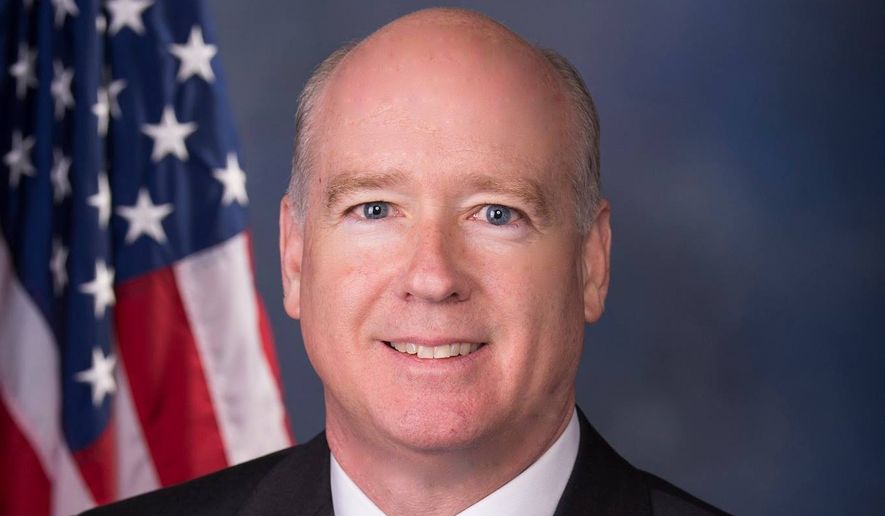
• Rep. Robert Aderholt, Alabama Republican, is chairman of the House Appropriations subcommittee on Labor, Health & Human Services, and Education, which oversees the largest non-defense segment of the federal budget. He also chairs the Values Action Team (VAT), a Congressional Member Organization dedicated to promoting families, communities, and religious freedom.
Please read our comment policy before commenting.