



OPINION:
Two hundred and fifty years ago, the founders of the United States enshrined something radical into the architecture of this republic: the idea that no government could stand between a human being and his or her Creator.
The First Amendment did not create religious freedom. It recognized it as self-evident, as belonging to every person by virtue of their humanity, not by the grace of any king or congress.
That vision did not arrive by accident. It was forged in the fires of lived experience. People came to these shores fleeing governments that told them how to pray, who to worship and what to believe. The memory of that coercion was fresh. They built the First Amendment as a wall of protection, not to keep faith out of the public square, but to keep the state from colonizing the human soul.
People were interested in these podcasts
Two hundred and fifty years later, that wall needs defending.
I have led the National Hispanic Christian Leadership Conference for more than two decades, representing millions of Latino Christians worldwide. We did not arrive in America and discover faith. We brought it with us. Faith is not a weekend activity for our community; it is the marrow of our identity and the framework through which we live our lives and raise our children. When religious freedom erodes, we feel it first. And we feel it most.
What I see today troubles me, beginning with the culture’s subtle, yet relentless encroachment on our religious freedoms. Business owners are forced to choose between their convictions and their livelihoods. Physicians face mandates that violate the sanctity of their conscience. Faith-based organizations that have served the poor and the broken for generations are told that their religious identity disqualifies them from the public square. A decade ago, the threat to religious freedom came in like a fog, but today it snapped into focus. Belief is permitted in private, but the moment faith walks into the world, it must leave its convictions at the door.
That is not the America our founders imagined. That is not the America we should pass to the next generation.
The thing every member of Congress must understand is that religious freedom is not a culture-war bargaining chip. It is the headwaters from which every other freedom flows. John Adams was right when he insisted that our Constitution was made only for a moral and religious people. He was not imposing a theocracy. He was stating a structural reality: Self-governance requires self-discipline, and self-discipline has historically been formed by faith communities. Weaken them, and you do not strengthen the state. You destabilize the nation.
America’s founders understood something many modern leaders have forgotten: Freedom cannot survive without virtue, and virtue cannot flourish without moral formation. The institutions that cultivate character, responsibility, compassion and self-governance are often the very faith communities now being pushed to the margins of public life. Weakening them will weaken the cultural foundations upon which our country depends.
I am not asking Congress to establish a religion. I am asking it to remember the principles our Founding Fathers built this nation under and to enforce the First Amendment as written. Do not penalize faith. Do not coerce silence. Do not demand that the most deeply held commitments of a person’s interior life be abandoned as the price of civic participation.
America is a nation that was built by people of faith, sustained by people of faith and renewed in every generation by the moral seriousness that faith produces. This is not nostalgia. It is history.
As we mark 250 years of this extraordinary country, the question before us is not merely political, it is civilizational. Will we pass on a republic where every person of faith can live, serve, speak and worship without fear, or will we hand to our children a nation that has quietly traded its first freedom for the illusion of a more manageable public square?
I choose the former. I believe Congress can too.
Religious freedom is not a relic; it is the foundation. And a nation that forgets its foundation does not gradually decline. It collapses.
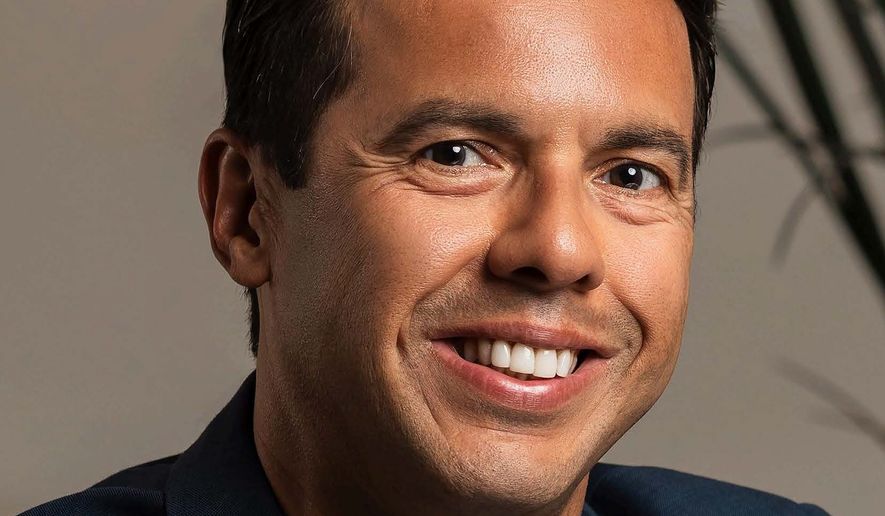
• Rev. Samuel Rodriguez is the Lead Pastor of New Season Church and president of the National Hispanic Christian Leadership Conference (NHCLC), the largest Hispanic Christian organization in America, representing millions of Christians worldwide. He has advised three U.S. presidents and is the first Latino to participate in multiple presidential inaugurations. A #1 best-selling author, he has written 12 books, including “Persevere with Power.” Rodriguez is a movie producer with “Breakthrough” and “Flamin’ Hot” both receiving Academy Award nominations for best original song. He is widely recognized by major media outlets as one of the most influential Christian leaders in America.
Please read our comment policy before commenting.