




Two New Jersey lawmakers have joined the rush to slap regulations on increasingly popular online casinos, sportsbooks and prediction markets.
Democratic Rep. Josh Gottheimer and Republican Rep. Jefferson Van Drew recently introduced legislation that would require gaming companies to use facial recognition to verify players’ ages and keep children from placing bets.
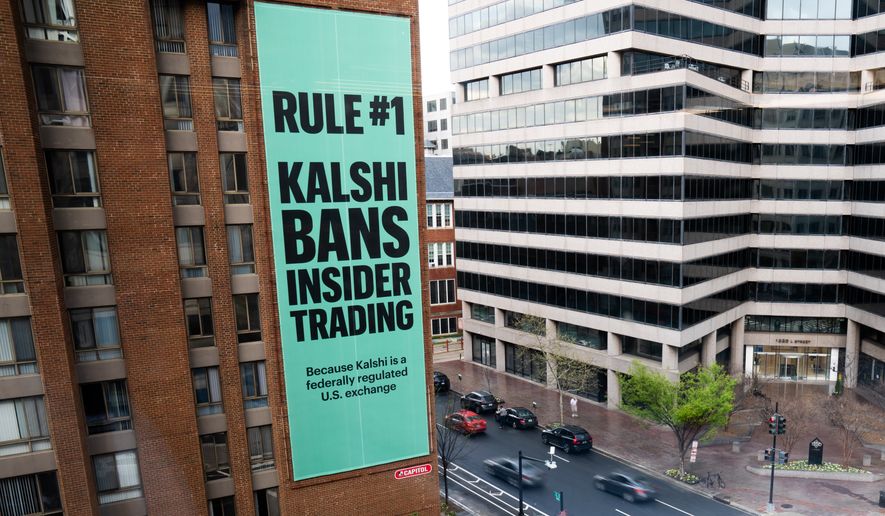
Mr. Gottheimer promoted the plan at a Capitol Hill event last week, joined by Tarek Mansour, the co-founder and CEO of prediction market Kalshi, who endorsed the facial-recognition rule.
People were interested in these podcasts
Mr. Mansour said Kalshi already does it.
Later, Mr. Gottheimer told The Washington Times that Congress should force all online casinos and betting markets to use the high-tech age check.
“If they refuse, the only excuse that I can come up with for them is that they want to target children. Otherwise, why in the hell aren’t they also willing to?” he said. “We’ve called them to make this commitment. They have more excuses and more double talk.”
Lawmakers are clamoring for a regulatory crackdown on prediction markets following a series of insider-trading scandals:
• President Trump’s teleprompter operator, Gabriel Perez, was accused of pocketing more than $100,000 from bets on Kalshi about what the president would say in his speeches.
• U.S. Army Sgt. Gannon Ken Van Dyke was charged with winning more than $400,000 by making bets based on inside knowledge of the raid to capture Venezuelan President Nicolas Maduro.
• Ex-reality TV star Mark Moran, an independent candidate for U.S. Senate in Virginia, admitted to betting on his own election bid and was suspended from trading on Kalshi.
• Former Rep. George Santos is under federal investigation for betting on his own attendance at the State of the Union.
• Prediction markets experienced a surge in trades on military-related outcomes shortly before U.S. and Israel launched missile strikes on Iran, prompting a House oversight committee investigation.
At the Capitol Hill event, reporters pressed Mr. Mansour about Kalshi taking bets on global events stemming from wars and other conflicts, such as the opening of the Strait of Hormuz.
“You cannot actually bet on military actions, war, terrorism, assassinations on Kalshi,” he said, adding that outcomes such as the opening of the Strait of Hormuz are “very economic in nature” and “not the same as launching a missile on Gaza or an actual war.”
Trading on oil futures could be considered just as ethically compromised because oil prices are tied to military conflict, he said.
Most gambling in the U.S. is regulated at the state level. Various federal agencies such as the National Indian Gaming Commission, Federal Trade Commission and Justice Department also have some jurisdiction over it.
Prediction markets, which take bets on sports and other events traditionally associated with gambling, are regulated by the Commodity Futures Trading Commission, a federal financial watchdog.
Republican Rep. Blake Moore of Utah and Democratic Rep. Salud Carbajal of California authored legislation to strengthen the CFTC’s authority over cases of insider trading on prediction markets.
It is one of a handful of bills introduced this Congress to crack down on prediction markets and other online gambling.
In April, the Senate unanimously passed a resolution blocking senators and staff from placing bets on prediction markets. But none of the bills has passed the House, let alone been signed into law.
Rep. Tom Suozzi, a New York Democrat, said Congress dropped the ball on regulating social media and shouldn’t make the same mistake with online prediction markets and other online gambling.
“We didn’t put liability in place for social media platforms and what’s happened with the different misinformation that’s being propagated… on social media,” he said. “We have to be thinking ahead on the new, quickly moving technological platforms.”
Please read our comment policy before commenting.