



OPINION:
There is a point in the decline of republics when the problem is no longer that the government breaks its own laws.
Governments will always behave unlawfully. The deeper problem comes when the constitutional machinery designed to prevent those acts stops functioning — when spending becomes detached from arithmetic, presidential power becomes detached from law and Congress and the courts become detached from the Constitution.
That is where America is today.
People were interested in these podcasts
The fiscal warning could hardly be clearer. The government’s debt has now passed $40 trillion. The Congressional Budget Office projects a $1.9 trillion federal deficit for fiscal year 2026, with annual deficits rising to $3.1 trillion by 2036.
Worse, borrowing itself is becoming more expensive. Ten-year Treasury yields recently reached 4.6% and 30-year yields 5.2%, as investors demand greater compensation for lending money to Washington. The July 2026 deficit alone reached $432 billion.
The uniparty government in the past 110 years has produced a vicious circle: It spends more than it collects, borrows the difference, pays interest on the borrowing and borrows still more to pay the interest. Eventually, arithmetic becomes destiny.
But fiscal insolvency is only half the story. What is more frightening is the simultaneous deterioration of constitutional norms.
The president increasingly acts as if his personality is the source of his legal authority.
The United States has gone to war without the congressional authorization that the Constitution was designed to require. And the U.S. has attacked speedboats in the Caribbean and eastern Pacific, with more than 220 people murdered and no legal basis for killing and dispensing with due process.
In January, the United States military killed 47 people in Venezuela during its violent kidnapping of President Nicolas Maduro and his wife. Whatever one’s opinion of Mr. Maduro, the fundamental question remains: By what constitutional authority does an American president decide that a foreign head of state may be violently seized by the United States? None.
This is not a defense of Mr. Maduro. It is a defense of the principle that American presidents do not possess a roving commission to decide whom the United States may depose, kidnap or kill.
The distinction matters because constitutional government is supposed to stand between political power and its targets. The president is supposed to enforce the law, not create it. Congress is supposed to write the laws, not ignore them. The courts are supposed to enforce the Constitution, not evade it.
Yet Congress increasingly behaves as if presidential power is someone else’s problem.
Members of Congress complain loudly when the other party occupies the White House and become remarkably accommodating when their own party holds it. The result is an informal, bipartisan transfer of power from the legislative to the executive branch.
Every president inherits the precedents accumulated by his predecessor and then adds a few of his own. The next president inherits those precedents and stretches them further.
Eventually, there are no meaningful limits.
The same disease infects the courts. Judicial review remains theoretically formidable, but judicial intervention often comes after the government has already exercised power unconstitutionally. A constitutional right that can be violated first and litigated later is a fragile right.
The person who has been silenced, imprisoned, deported, injured or killed cannot be restored to his previous condition merely because a court eventually announces that the government acted unlawfully and awards damages. Nor can a half-built, never congressionally authorized, $1 billion ballroom for billionaires be feasibly demolished.
The central question should be: What are the government’s legal authorities and what are their limits?
Instead, that question has become: What can the president get away with?
A free people should not have to depend on the temperament of the person occupying the Oval Office. The Constitution was designed precisely because the Founders understood that limited government cannot depend on a few good people. They assumed that presidents would sometimes be venal and unscrupulous, Congress sometimes pliant and cowardly, and judges sometimes wrong.
So they constructed competing institutions, with divided authorities and checks and balances, making governing difficult.
That difficulty was intentional.
A government that can spend without limit, wage war without Congress, kill without trial, kidnap without consequence and employ overwhelming force without due process is a government behaving outside the Constitution.
And the financial numbers make the constitutional deterioration even more ominous. A government approaching $40 trillion in debt cannot endlessly promise every constituency that someone else will pay.
This is how great powers decline — not necessarily with a dramatic explosion, but through accumulated exemptions, exceptions and evasions.
The president says the Constitution permits whatever he wants to do because national security demands it. Congress permits the president to do what he wants because confronting him is politically inconvenient.
The courts intervene only after it is too late to undo the damage, straining at a gnat to avoid hard decisions. The Treasury borrows another trillion dollars because balancing the books would be a nightmare.
The public becomes accustomed to extraordinary government power because yesterday’s outrage becomes today’s precedent.
Then, one morning, people wake up and discover that the constitutional republic they inherited exists mostly on paper.
But the night before this realization — at twilight’s last gleaming — the nation that once possessed protections for personal freedoms, opportunities for wealth and a unique cultural environment sees its former fidelity to the first principles that made those things possible slipping away.
A republic survives only when the passionate among us light brushfires of freedom by insisting that the U.S. stays out of other countries’ business, presidents obey the law, Congress exercises constitutional powers, courts enforce constitutional limits, war is a last resort and governments acknowledge that borrowed money is not free money.
The alternative is gradual normalization of unlimited debt, unlimited executive discretion and unlimited rationalizations.
The twilight of our constitutional republic has not arrived because the sun suddenly disappeared. It has arrived because, little by little, nearly everyone became accustomed to the darkness.
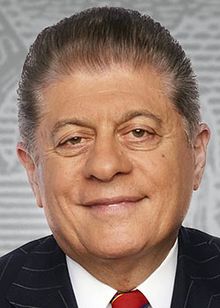
• To learn more about Judge Andrew Napolitano, visit https://JudgeNap.com.
Follow the author
Please read our comment policy before commenting.