



A version of this story appeared in the daily Threat Status newsletter from The Washington Times. Click here to receive Threat Status delivered directly to your inbox each weekday.
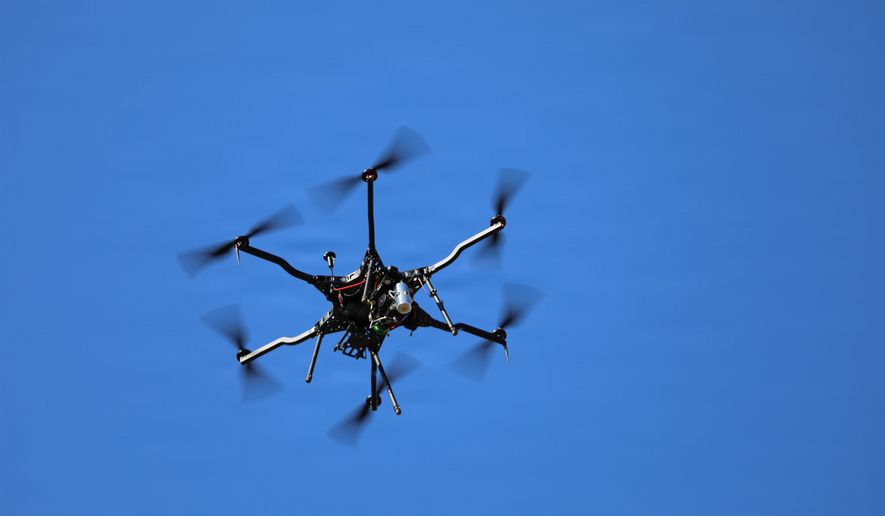
The Army rolled out an uncrewed aerial system exchange in March, letting military units purchase drones as easily as ordering paper towels or cleaning supplies from Amazon.
The Army worked closely with Amazon Web Services to develop the platform — officially known as the UAS Marketplace. Its reach has greatly expanded since the unveiling, allowing access to the marketplace by the wider U.S. military, federal agencies and even some international allies.
“Through the drone marketplace, we have roughly 100 products across the airborne and counterdrone segments. We’re standing up the ground and maritime parts of the marketplace,” Alex Miller, the Army’s chief technology officer, told reporters on Wednesday at a press conference. “We’re getting different products in there now. We’ve done almost $800 million of procurement off of the drone marketplace.”
People were interested in these podcasts
Col. Gregory Merkl, director of the Army’s Drone Dominance program, said the Pentagon has a reputation for being overly bureaucratic and risk-averse.
“But what I’ve really seen instead is a genuine willingness to evolve quickly across every staff section and every echelon of command,” he said. “It’s really focused on delivering the equipment our war fighters need, removing barriers to realistic training so that we can turn equipment into true capability, and adopting Army policy and regulation to the changing character of war.”
Army officials pushed back on media reports that it was phasing out an experimental drone battalion in the 173rd Airborne Brigade, returning the unit to a traditional airborne infantry role. They said the battalion was never intended to be a permanent, centralized drone unit.
“What we were doing was using the six or seven months before they got their [infantry battalion] military equipment to let them learn some of those [uncrewed aerial systems] lessons and then pass them out to the rest of the Army,” Mr. Miller said.
The Army isn’t planning to create large UAS-specific units. The service branch wants drones to be as common on the battlefield as a soldier’s rifle. That means pushing the technology down to the company, platoon and squad.
“Our theory is, if you centralize that in one place, what you lose is the ability to actually scale that learning and send that out to the rest of the Army,” Col. Merkl said. “Not having it centralized in that one battalion, but actually democratizing it across the brigade and across the Army was the right move.”
As drones become more prevalent on the battlefield, the Pentagon has been concerned that leadership would look at a $1,000 quadcopter drone as just another aviation asset like an Apache gunship.
“But we are not seeing that. In fact, there’s a huge amount of collaboration in the drone community,” Mr. Miller said. “Most of the operators that I’ve had the opportunity to work with are not aviators. They’re infantrymen and women.”
The Army created a new career field, Tactical Unmanned Aircraft Systems Specialist, to train dedicated drone-focused soldiers. On top of that, Col. Merkl said he and his team are seeing new soldiers coming into the Army with significant UAS experience.
“People are coming through the training course to get the skills to fly something like a [First Person View] drone, which is a bit more complex. But a lot of them are hobbyists who have already done it,” he said. “But I do think there is a generational gap that we’re navigating in the meantime.”
Democratic and Republican lawmakers have repeatedly expressed concerns that the Pentagon is pushing for offensive, strike-capable drones while underinvesting in counter-uncrewed aircraft systems. While drone and counterdrone problems are not two sides of the same coin, Pentagon officials said they’re still interrelated.
“The sensors that we have to use to acquire a target and make sure we can do a one-way attack mission or do a surveillance mission are the same sensors that we need for the counterdrone mission,” Mr. Miller said. “The ground robots that we want to launch air robots off of, or the maritime robots that we want to launch ground robots off of, are the same platforms that we’re going to want to be able to put sensors, decision-support tools and effectors for the counterdrone mission.”
Contact the author

Please read our comment policy before commenting.