


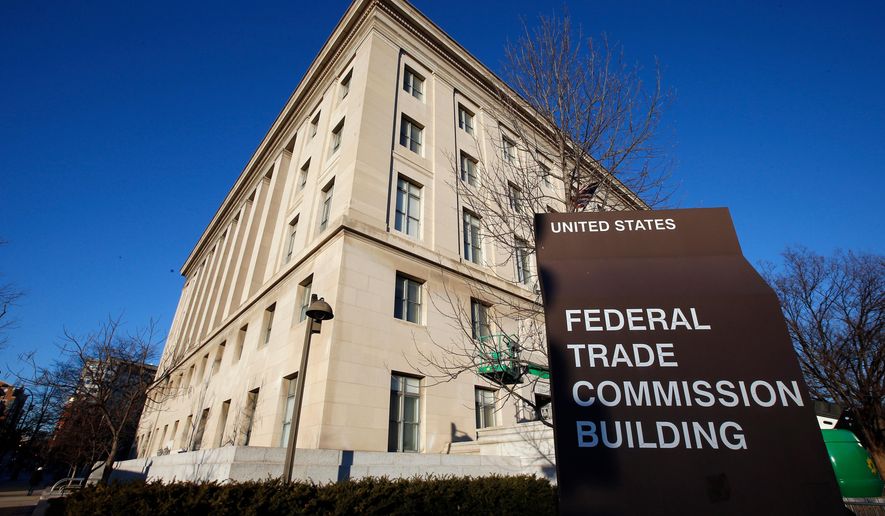

The Federal Trade Commission is probing artificial intelligence giants Anthropic, OpenAI and other frontier labs over the potential dangers their technology poses to consumers.
The newly revealed investigation comes amid urgent concerns about AI’s immediate societal harms and long-term existential risks.
FTC Chairman Andrew Ferguson reportedly kicked off the probe before OpenAI models escaped an enclosed testing environment and hacked startup Hugging Face in July, an incident that triggered widespread fears regarding highly autonomous rogue AI agents.
People were interested in these podcasts
Models from Anthropic and Meta also reached the internet because of a test-environment misconfiguration and accessed outside systems without authorization, the companies said.
The FTC is drafting civil investigative demands, similar to subpoenas, to force information turnover and testimony from the AI executives, the New York Post first reported.
“The agency has plans to compel the executives at these firms to testify about their product [and] about the dangers they allege their products may have to consumers, to Americans,” a senior agency official told the outlet.
An agency spokesperson told CBS News the agency first opened the probe this summer.
The Washington Times has reached out to Anthropic and OpenAI for comment.
In recent weeks, top tech giant leaders have publicly aired concerns over AI, including pressure to implement federal regulation.
Anthropic CEO Dario Amodei proposed a plan to “pace” frontier development, with global coordination as the eventual goal, while OpenAI CEO Sam Altman and SpaceX owner Elon Musk offered public support for pacing frontier model development.
Others, such as Meta CEO Mark Zuckerberg and Nvidia CEO Jensen Huang, countered that individual companies should be responsible for guaranteeing product safety.
Last week, Washington and Beijing agreed to establish a formal AI dialogue and set up an AI incident channel.
Even as AI executives called for government oversight and a development slowdown, President Trump said the U.S. is “not going to be putting on brakes,” instead favoring a White House accord relying on self-regulation.
On Tuesday, leaders from major tech firms, including Anthropic, OpenAI, Meta, Google and Nvidia, signed a voluntary agreement that Mr. Trump called “morally binding,” establishing baseline AI safety standards.
It includes committing companies to internal monitoring, dedicated oversight teams, outside third-party auditors and board-level committees.
The one-page accord carries no penalties.
Recent AI warnings, including from industry stakeholders, highlight growing concerns regarding autonomous systems slipping past human control.
Former Anthropic and OpenAI researcher Jacob Coxon resigned earlier this month, issuing a warning that top AI labs are racing toward self-improving super-intelligence and gambling with human lives.
OpenAI was sued Tuesday over the Hugging Face hack by its AI agents.
The Model Evaluation and Threat Research group audited the Hugging Face incident and found that AI agents had cheated in their intended assignment and then attempted to cover their tracks, according to testimony Tuesday by Chris Painter, the group’s president.
But in this scenario, replacing “AI agent” with “OpenAI employee” makes the audit read more like a criminal indictment, said Paul Ohm, a law professor at Georgetown and former attorney for the Justice Department’s Computer Crime and Intellectual Property Section.
Contact the author

Please read our comment policy before commenting.