



A version of this story appeared in the daily Threat Status newsletter from The Washington Times. Click here to receive Threat Status delivered directly to your inbox each weekday.
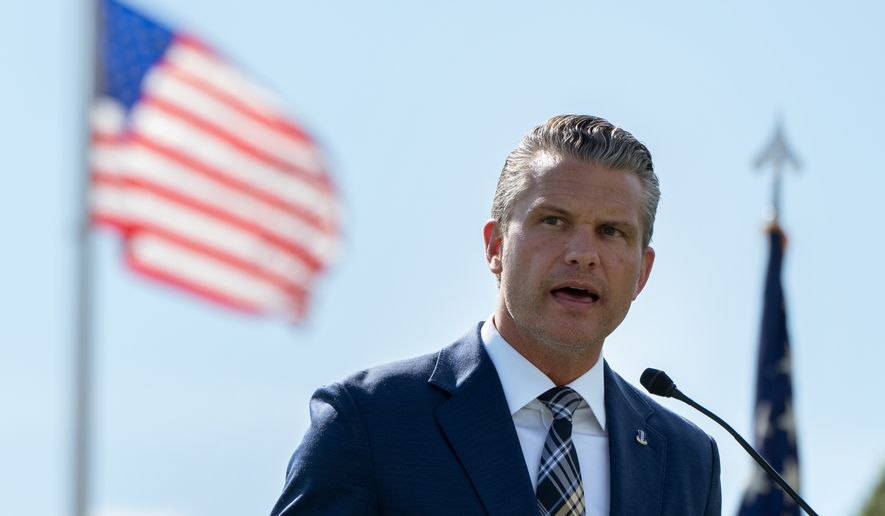
Defense Secretary Pete Hegseth will announce plans Wednesday to cut the number of positions for generals and admirals by 20% during his State of the Force address to the troops at Quantico, Virginia.
Mr. Hegseth formally approved the reduction plans in a Sept. 15 memo issued to the Army, Navy, Air Force and joint pool. The military services were directed to complete the reductions by the end of the year, a Pentagon official said Tuesday.
The 20% figure doubles the across-the-board reduction of generals and admirals that the defense secretary called for in a May 5 memo to senior Pentagon leaders.
People were interested in these podcasts
The military has about 850 active-duty generals and admirals.
Mr. Hegseth said he was committed to ensuring the lethality of U.S. military forces by cultivating “exceptional senior leaders who drive innovation and operational excellence, unencumbered by unnecessary bureaucratic layers that hinder their growth and effectiveness.”
More than a dozen generals and admirals have been fired since President Trump returned to the White House, including nearly all members of the Joint Chiefs of Staff who were appointed during the Biden administration.
Army Secretary Dan Driscoll resigned Sept. 2 after reports of months of friction and clashes with Mr. Hegseth. According to multiple reports, Mr. Driscoll, who had held the position for 18 months, objected to the firings of senior leaders, including former Army Chief of Staff Gen. Randy George. Mr. Driscoll reportedly saw the sackings as a cause of instability and leadership chaos.
The shake-up in senior uniformed leadership is part of Mr. Hegseth’s efforts to instill a “warrior ethos,” including eliminating objectives such as diversity, equity and inclusion programs in the armed forces.
Mr. Hegseth will deliver his State of the Force remarks a year after addressing hundreds of generals and admirals at Marine Corps Base Quantico.
Mr. Hegseth said active-duty personnel would be required to take physical fitness tests twice a year and that leaders would be ordered to exercise daily, regardless of rank.
Mr. Hegseth said overweight troops and leaders would no longer be tolerated.
“It’s completely unacceptable to see fat generals and admirals in the halls of the Pentagon, leading commands in the country [and] in the world,” he said.
The defense chief has denied that the top-level reductions amount to a “slash-and-burn exercise” to punish senior military leaders. Instead, he said, it is meant to streamline top-heavy command structures, guided by the philosophy of fewer generals and more GIs.
The Pentagon last month released a plan for testing and voluntary testosterone replacement therapy for eligible male troops. Testing is mandatory for service members 30 and older during their routine health assessments.
“This initiative is not about artificial enhancements. It’s about restoring and optimizing your natural capabilities, protecting your longevity and ensuring you have the biological foundation required to sustain the fight,” Mr. Hegseth said in a message about the program posted on X.
Sen. Mark Kelly, Arizona Democrat, blasted the changes Mr. Hegseth has made during his tenure in the Pentagon.
“The U.S. military doesn’t need more testosterone; it needs better leadership at this point,” Mr. Kelly said Thursday on MS Now’s “Morning Joe” program. “The consequences of firing all these admirals and generals are that we’re losing a portion, a good portion, of a generation of great leadership.”
Frank Kendall, Air Force secretary during the Biden administration, accused Mr. Hegseth of politicizing the military. He told ABC News’ “This Week” on Aug. 30 that sacking so many senior leaders and pulling people off promotion lists are fueling a negative ripple effect throughout the ranks.
“In many cases, I think [Mr. Hegseth] is not getting good advice,” Mr. Kendall said. “People are afraid to tell him things that he doesn’t want to hear.”
Contact the author
Please read our comment policy before commenting.