



A bill to create nationwide rules for compensating college athletes and to limit athletic conference consolidation is on a glide path to passage in the Senate after clearing a cloture vote Thursday.
The measure guarantees athletes the right to profit from their name, image and likeness, known as NIL. It also sets rules on athletes’ ability to transfer schools and requires top-tier schools to maintain programs and scholarships for sports that do not draw as much attention, such as Olympic sports.
The bill cleared on a 74-25 vote, well above the 60 votes needed to invoke cloture, but it still needs to pass the House.
People were interested in these podcasts
Supporters said the legislation is the only way to prevent an arms race among football programs that could overwhelm colleges and drain money from their academics.
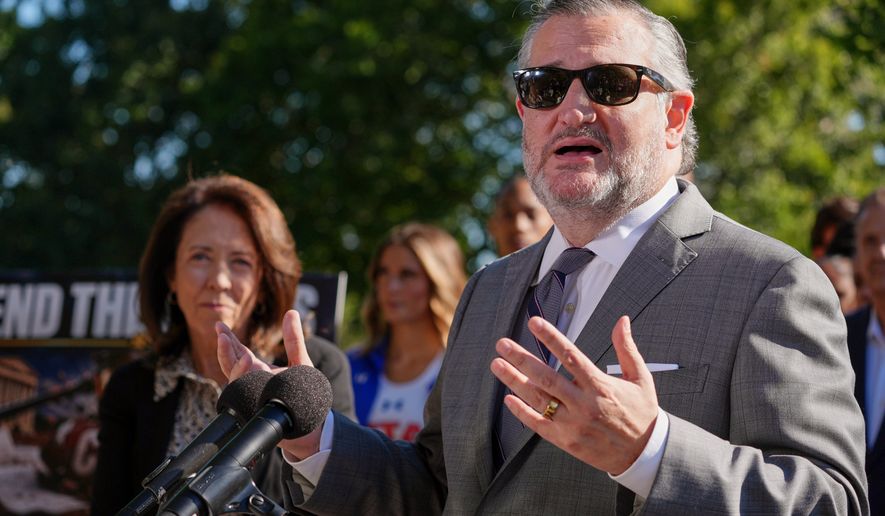
“If we’re going to have national competition, then it is only Congress that can establish a clear and enforceable legal rule book. There’s no other option,” said Sen. Ted Cruz of Texas, the lead Republican co-author of the bill, along with Sen. Maria Cantwell, Washington Democrat. “That is what the Protect College Sports Act does. And this is what student-athletes, coaches, universities and conferences have repeatedly come to Washington asking Congress to provide.”
Opponents of the bill have offered various complaints.
Some civil rights groups, including the NAACP, have argued that the bill leaves too much power in schools’ hands, allowing them to profit from athletes who will not receive fair compensation for their athletic prowess.
Other opponents called the bill an unwarranted intrusion into college sports.
“With gas at over $4 a gallon, a persistent war with Iran, $40 trillion in debt, the Senate has decided that the most urgent thing now is to dictate how college sports are run from Washington,” said Sen. Rand Paul, Kentucky Republican.
He acknowledged “chaos” in college sports but blamed antitrust laws that allowed colleges to band together to set eligibility standards, and federal courts that used litigation to set rules for eligibility and transfers.
The bill’s most prominent change would increase the amount of money schools are allowed to pay players. Each school’s rate is currently set at $21 million a year, under a court settlement. The bill would raise that cap to $48 million, with some of that money reserved for women’s and Olympic sports.
It would allow NIL deals but channel them to prevent circumvention of revenue-sharing caps.
Athletes would receive one transfer without penalty and five years of eligibility to compete, starting either when they began college or when they turned 19.
The top four athletic conferences — the SEC, Big Ten, Big 12 and ACC — would be barred from further consolidation or from growing too large.
The legislation was negotiated by an army of lawyers and, after rewrites, gained support from the National Collegiate Athletic Association, the big athletic conferences and some high-profile football and basketball coaches.
Mr. Cruz said the schools and conferences have struggled for years to resolve the issues but have been unable to do so.
President Trump has been a major supporter of the bill, calling the current landscape “out of control.”
Mr. Trump warned that schools would cut revenue-losing sports such as women’s events, and predicted that some colleges would go bankrupt as they engaged in recruitment spending battles.
Some schools have reported considering using academic funds or charging students new “athletic fees” to keep up with the arms race.
Student-athletes had traditionally been constrained by NCAA rules, which barred them from profiting from their participation, except for scholarships and other school benefits.
In 2021, the NCAA reversed course and allowed student-athletes to negotiate deals for their name, image and likeness.
The NCAA then reached a court settlement that allowed schools to pay athletes directly through revenue sharing, supplanting the athletic booster “collectives” that had been compensating athletes directly.
Under that system, top college football players earned millions of dollars, though the majority of players earned less than $10,000 in 2025, according to Opendorse data reported by Forbes.
Most of the opponents Thursday were Democrats who lean toward the party’s left wing.
Among the Republicans, Sens. Rick Scott and Ashley Moody of Florida joined Mr. Paul in opposition.
Sen. Bernard Sanders, Vermont independent, also voted no.
Contact the author

Please read our comment policy before commenting.