



A version of this story appeared in the daily Threat Status newsletter from The Washington Times. Click here to receive Threat Status delivered directly to your inbox each weekday.
OPINION:
The Thursday summit between President Trump and Chinese leader Xi Jinping will address myriad issues and perhaps give hope that Washington and China can cooperate for the common good.
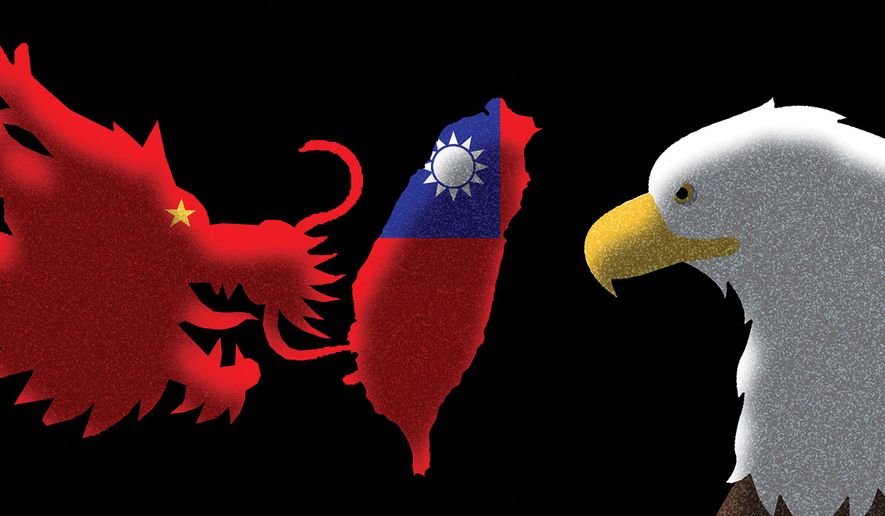
The meeting should address Taiwan and the South China Sea. Preventing conflict should be the paramount objective. The U.S. rightly does not support any unilateral change to the status quo in the Taiwan Strait. This is an issue between China and Taiwan that should be resolved peacefully.
The South China Sea is another source of tension between the countries. Given that one-third of global shipping passes through the South China Sea, this issue requires immediate attention, ideally through quiet, effective diplomacy, to ensure that the U.S. and China do not stumble into conflict.
People were interested in these podcasts
Although the U.S. trade imbalance with China persists, it has improved. The countries are interdependent and linked through trade, global supply chains and financial investments. The summit will permit a candid discussion of these issues, hopefully with an agreement that the diplomats and trade negotiators should routinely meet to discuss and help resolve them.
Conflict resolution should be high on the list of subjects to discuss. The agenda should ensure that we do not have a repeat of the U.S. bombing of the Chinese Embassy in Belgrade in 1999, when the U.S. believed the embassy was a legitimate Yugoslav military target.
The agenda should also address the EP-3 incident of 2001, when a U.S. reconnaissance aircraft, flying in international airspace, collided with a Chinese aircraft, killing the Chinese pilot. In both instances, the U.S. president was unable to reach his counterpart in Beijing.
The leaders must communicate in a timely and secure manner to ensure that such incidents do not escalate. Also important is a hotline between military leaders to avoid escalation and potential conflict on any issue that could involve the military.
Then there is the nuclear issue. Over the years, China has refused to discuss it with the U.S., citing the disparity in the number of nuclear weapons between China and the U.S. China is embarking on an ambitious nuclear program to increase its arsenal of nuclear weapons, with the goal of seeking parity with the U.S.
Yet if nuclear risk reduction is the goal, then China should accept the U.S. invitation to discuss nuclear-related issues.
Another item that should be high on the discussion list: artificial intelligence. Recent reports of AI escaping human control and concerns about it threatening humanity require immediate attention.
Also under considerable discussion now is the AI race between the U.S. and China. Worrying about who is leading distracts from how the U.S. and China can collaborate to ensure that AI responds to human commands and values.
The U.S. and China must work together to ensure that the technology is not used for unauthorized hacking, the engineering of vaccine-resistant pathogens or the launch of global cyberattacks on a country’s critical infrastructure.
The two countries should also cooperate on counterterrorism, counterproliferation, counternarcotics and combating international organized crime.
China has cooperated with the U.S. on several public health issues, such as SARS and avian flu. The devastation of COVID-19 was a wake-up call to both our countries to work together on pandemics.
In 2002, Secretary of State Colin L. Powell asked China to assist with the denuclearization of North Korea. The following year, China hosted the six-party talks, with Vice Foreign Minister Wang Yi presiding. A Sept. 19, 2005, joint statement committed North Korea to abandoning all nuclear weapons and existing nuclear programs in a verifiable manner.
China should encourage North Korea to meet with Mr. Trump and resume negotiations with the U.S.
The Thursday meeting is an opportunity to message the world that the U.S. and China are working together to prevent and end wars and conflicts while cooperating on transnational issues for the greater good of all.
• The author is a former associate director of national intelligence. All statements of fact, opinion or analysis expressed are those of the author and do not reflect the positions or views of the U.S. government.
Follow the author

Please read our comment policy before commenting.