


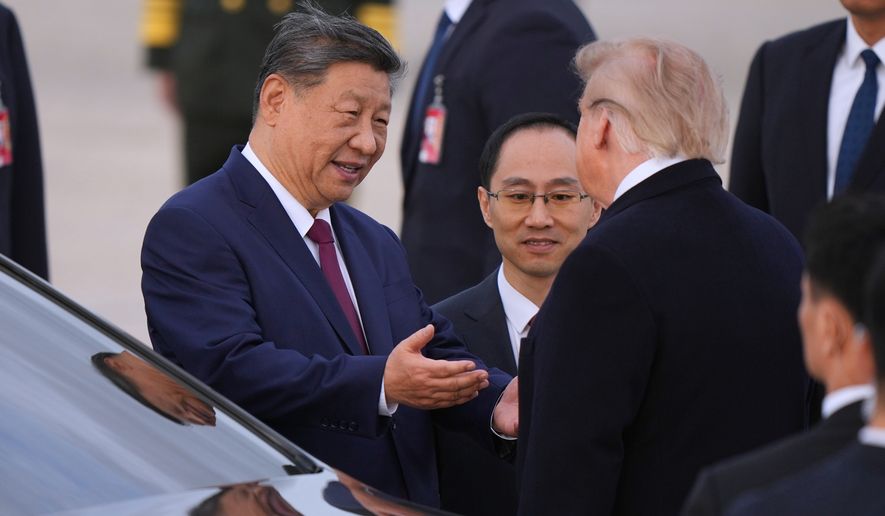

Chinese President Xi Jinping’s state visit to Washington is shining a light on the harsh realities of life under communist rule, including the suppression of religious minorities and life sentences imposed on Americans imprisoned on dubious drug charges.
Beijing is ejecting foreign journalists, cracking down on Tibetan language, religion and culture, and systematically detaining Uyghurs and other Muslims in Xinjiang. Its centralized government allows no meaningful multiparty elections.
Congressional lawmakers, advocates and families pushed President Trump on Wednesday to raise those concerns when he welcomes Mr. Xi for a lavish state visit to bolster the U.S.-China relationship and discuss issues such as trade and artificial intelligence.
People were interested in these podcasts
The families of two Americans serving decadeslong prison sentences in China — Nelson Wells Jr. and Dawn Hunt — said they are on the “1-yard line” of negotiations to secure their release.
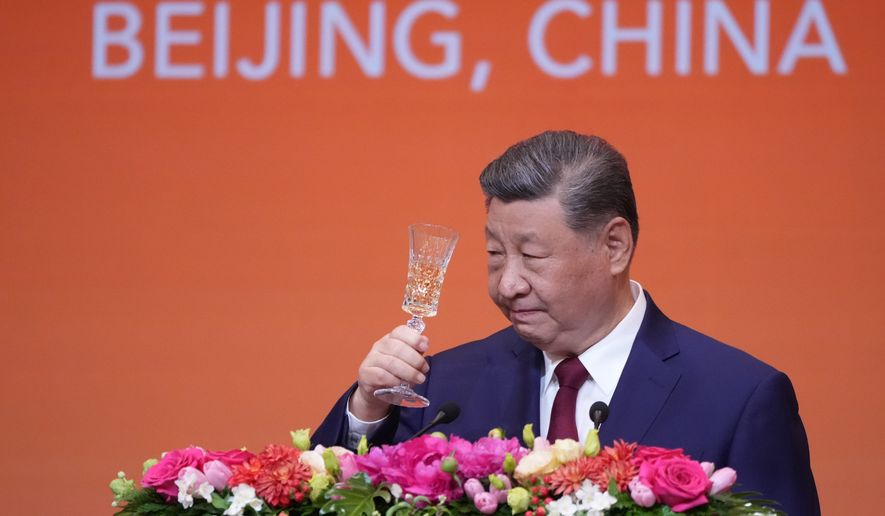
“We’re trying to get as much recognition as we can so that their names will be raised in this summit meeting,” Nelson Wells Sr. said during a media call. “We’re trying to get Nelson and Dawn home.”
Mr. Trump has praised Mr. Xi as a “tremendous leader of a very powerful country,” though he says the U.S. deals with China from a position of strength, leveraging technological superiority and tariffs.
Mr. Xi’s visit will include military fanfare at the White House, a state dinner and a visit to the National Archives before his departure Friday.
The leaders will discuss trade, critical minerals, artificial intelligence and Taiwan, a democratically governed island that Beijing considers a breakaway province.
On Wednesday evening, Treasury Secretary Scott Bessent said the two countries had agreed to extend through the new year a truce against imposing new trade restrictions.
“I don’t know whether a bigger deal can be done. I don’t know whether we will just roll the current deal,” Mr. Bessent said in a Fox News interview, noting the extension to Jan. 10 could buy time to talk about the issues at upcoming international summits in China in November and Florida in December.
Advocates and lawmakers say those issues should not overshadow the plight of oppressed people and American detainees in China.
Dozens of human rights organizations, led by the Chinese Human Rights Defenders group, wrote an open letter to Mr. Xi urging him to take concrete actions before his state visit, such as releasing prisoners of conscience and repealing laws that cracked down on freedom of expression in Hong Kong.
They want Mr. Xi to allow the Dalai Lama and others to travel safely into China and have told him not to punish anyone who protests his U.S. visit.
The letter said those actions are needed to correct years of abuse during his tenure.
“Tibetans, Uyghurs, and other communities continue to face your government’s atrocity crimes designed to erase their culture, identity, and language, and their rights to free speech and fair trials,” it read. “Your government’s violations of Hong Kong’s once-vibrant civic culture and free media, and of the rights-defense efforts undertaken by faith leaders and communities, feminists, journalists, lawyers, public health experts, and other activists across China are well-documented.”
Mr. Trump says he has a terrific personal relationship with Mr. Xi, allowing them to work through issues despite his vocal criticism of China’s inability to control fentanyl precursor chemicals and its refusal to cooperate with investigations into the origins of the coronavirus that causes COVID-19, among other matters.
Some lawmakers worry that Mr. Trump will lavish too much flattery on Mr. Xi, undercutting American positions on the economy, human rights and Taiwan.
Senate Minority Leader Charles E. Schumer, New York Democrat, said he does not want China to gain access to powerful semiconductors and warned that Beijing plans to flood the global market with electric vehicles, undercutting American manufacturers.
“Stop fawning over foreign strongmen like Xi and put your foot down,” Mr. Schumer said. “Put your American foot down and defend our country and our workers.”
A group of Republican senators, led by Sen. Mitch McConnell of Kentucky, urged Mr. Trump not to abandon Asian allies during Mr. Xi’s visit.
The Republican senators said Mr. Trump must provide Taiwan with military funding approved by Congress, and they criticized the president’s remarks about Taiwan.
“We are concerned by President Trump’s description of Taiwan as ’a very good negotiating chip’ in engagements with Xi Jinping and the Chinese Communist Party,” they wrote in a letter to Mr. Trump.
In a sign of possible action on Taiwan, China recently updated its National Defense Mobilization Law, originally enacted in 2010, which gives its military greater ability to control the national economy, supply chains, technology and critical infrastructure in wartime.
Rep. Jim McGovern, Massachusetts Democrat, urged Mr. Trump on Wednesday to call out the communist government’s “abysmal” human rights record.
“Xi Jinping will walk on a red carpet. He will be warmly received. He will get the honor of a state dinner. That is wrong,” Mr. McGovern said. “Our message today is, ’No Xi in D.C. without human rights.’”
Mr. McGovern and advocates criticized China for its crackdown on democratic expression in Hong Kong and the imprisonment of activists such as Hong Kong businessman and media mogul Jimmy Lai, who was sentenced to 20 years in prison on foreign collusion and sedition charges under Hong Kong’s National Security Law.
Mr. Trump has called for Mr. Lai’s release before, though he acknowledged that Mr. Xi might not comply.
Others hope the Xi visit will produce tangible results for lesser-known Americans caught in the Chinese prison system.
Mr. Wells and Ms. Hunt have been detained in China since 2014.
“They need to come home,” Mr. Wells Sr. said. “They need to be free.”
Mr. Wells Jr., a Louisiana native and father of three, was arrested on drug smuggling charges in May 2014. He had traveled to China from Japan for treatment after a traffic accident and was asked by an acquaintance to carry a bag of “baked goods” back to that person’s family members in Japan.
Mr. Wells said he did not know the bag contained drugs, though he received a prison sentence after his arrest at the airport. As it stands, he faces life in prison.
Dawn Michelle Hunt, an artist and former flight attendant from Chicago, was lured to Asia under the guise that she had won a sweepstakes.
The itinerary sent her to parts of China before a planned trip to Australia. She was given “prize documents” in purses that, unknown to her, contained drugs.
She faces life in prison “for being scammed,” said her brother, Tim Hunt.
Both families said their loved ones have suffered medical issues during their captivity. Their detained relatives are also cut off from the outside world.
“She craves that information. She craves what’s going on in the news media,” Mr. Hunt said. “It’s heartbreaking.”
• George Caldwell contributed to this report.
Contact the author

Please read our comment policy before commenting.