



OPINION:
The most important development at the recent Group of 20 finance ministers meeting was not the statement governments issued. It was what happened when China refused to join it.
The other 19 members moved forward anyway. That may offer a blueprint for the future of the global trading system.
For decades, international economic institutions have operated on the assumption that the world’s largest economies could ultimately agree on common rules.
People were interested in these podcasts
Yet that model has an obvious weakness: It gives the country responsible for some of the world’s most significant market distortions enormous power to block efforts to confront them.
That was exactly what happened at the G20 meeting in North Carolina.
Nineteen members supported language calling on countries with “excessive and persistent external surpluses” to address policies that create overreliance on exports for growth. That was the very model on which China built its economy.
China objected, preventing a consensus. The United States issued the language as a chair’s statement instead.
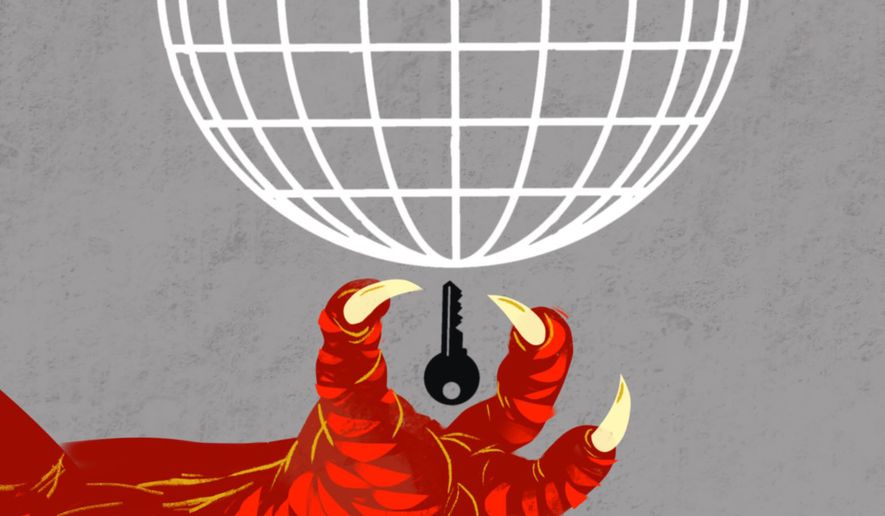
The lesson should be larger than a single statement. When Beijing refuses to participate in efforts to confront subsidized overproduction, market-oriented economies should be willing to move forward without it. The alternative is allowing China to exercise an effective veto over the rules meant to discipline the consequences of Chinese economic policy.
The World Trade Organization itself is warning that the trading system has reached a critical juncture. The new World Trade Report estimates that failure to modernize the system could reduce global output by up to 10% by 2050. The WTO acknowledges that the global economy is far more complex than the one for which its rules were designed.
China agreed that reform is necessary, but only on terms that preserve many of the institutional restraints that have made meaningful action so difficult.
That position exposes the central problem. A rules-based system cannot survive if its rules are incapable of responding to massive state intervention, subsidized production and chronic overcapacity.
China’s manufacturing success was built in part on competitive advantages, including enormous scale, integrated supply chains and low labor rates. Yet it has also been propelled by extensive state intervention and production levels that far exceed what China’s domestic market can absorb.
The result is an enormous volume of manufactured goods searching for buyers abroad.
For American manufacturers, this excess capacity affects whether companies invest in new factories, whether communities keep industrial jobs and whether the United States maintains domestic capacity in industries vital to its economic and national security.
Steel has been living with this problem for years.
In 2016, G20 leaders created the Global Forum on Steel Excess Capacity to increase transparency and confront the subsidies and market-distorting policies contributing to chronic global overproduction.
China participated initially. In 2019, it walked away, arguing that the forum had fulfilled its purpose.
The numbers since then suggest otherwise. Global steel excess capacity stood at roughly 526 million tons in 2019. By 2025, it had reached approximately 640 million tons, an increase of nearly 22%. That excess capacity alone is several times the annual U.S. steel production.
China’s departure, however, did not kill the forum. The remaining participants kept working. That is the precedent policymakers should build upon.
The U.S. is already showing what this new model can look like. Working with other market economies, Washington is building stronger mechanisms to confront non-market overcapacity. The G20 chair’s statement and U.S. leadership of the Global Forum on Steel Excess Capacity in 2026 point the way forward.
That work could include common definitions of excess capacity and market-distorting state support; greater transparency into subsidies, ownership and production; better systems for tracing subsidized goods routed through third countries; and coordinated trade responses when persistent distortions threaten strategically important industries.
Such cooperation would also address one of the fundamental limits of unilateral trade action.
When one country restricts heavily subsidized production, that production does not necessarily disappear. It can simply be redirected into another market. Governments around the world are already discovering that protecting their industries from Chinese overcapacity is increasingly a shared problem.
Steel encountered this reality first because the industry is strategically important, capital-intensive and especially vulnerable to government-supported excess production.
Yet steel will not be the last. Similar pressures are increasingly visible in electric vehicles, batteries, solar products, semiconductors and other industries central to the economic competition of the 21st century.
When China left the steel forum, the other countries continued. When China blocked consensus at the G20 this month, the other 19 countries moved forward.
That should become the governing principle for confronting global overcapacity. International cooperation does not require Chinese consent, nor should China have the power to prevent everyone else from acting.
• Brandon Farris is executive vice president of the Steel Manufacturers Association.
Please read our comment policy before commenting.