



OPINION:
Six years ago, in an effort to address unexpected medical bills, Congress enacted the No Surprises Act. This congressional “fix” has spiraled out of control, and Congress is about to make a similar mistake in labor policy.
The No Surprises Act applies when a patient is surprised by high medical bills because, for example, she received emergency care from out-of-network healthcare providers. The law removes the patient from the payment dispute and leaves it to the provider and the patient’s health plan to determine how much the provider should be paid.
When they cannot agree, the law sends them to a federal arbitration process.
People were interested in these podcasts
Lawmakers expected arbitration to be a limited backstop to occasional billing disagreements, but it has become the exception that swallowed the rule.
Federal officials at the Centers for Medicare & Medicaid Services originally estimated in regulatory impact statements that arbitrators would handle about 22,000 claims a year.
According to CMS reports and analysis by The Wall Street Journal, the actual volume rose from about 200,000 disputes initiated in 2022, the first year the law was in effect, to 1.46 million in 2024 and 2.56 million in 2025. Another 1.4 million were filed during the first five months of 2026.
The Journal’s analysis found that providers received $14.85 billion in arbitration awards in 2025, when awards were more than six times the estimated amounts associated with typical in-network payment rates.
Once the No Surprises Act was in place, healthcare providers soon realized they had nothing to lose and everything to gain from making maximalist demands.
Arbitrators, who are paid several hundred dollars per case, have an obvious incentive to keep cases coming. An investigation by The New York Times found that arbitrators often award payments far above market rates. The Times reported that gynecologists have been awarded fees 600 times their normal rates for placing IUDs, while a plastic surgery practice won more than $1.4 million for five routine procedures.
As it turns out, providers are right to place their bets on arbitration; they prevail in almost nine out of 10 claims, according to data analyzed by Georgetown University’s Center on Health Insurance Reforms.
A spokesperson for the Centers for Medicare & Medicaid Services remarked that “the system is being gamed to get higher prices.”
Even one of the law’s co-authors, Rep. Frank Pallone, New Jersey Democrat, has conceded that “we need to rein in this arbitration process.”
The lesson for Congress is clear: When it creates a process that offers greater returns than negotiated arrangements, rational players pivot from negotiations to the government process. That quickly generates all manner of perverse consequences.
Yet Congress is now considering a comparable experiment in labor relations.
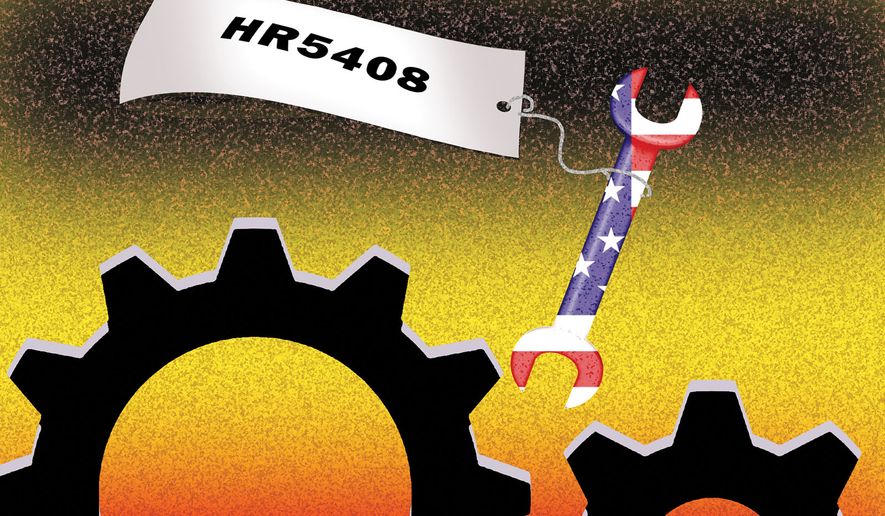
The Faster Labor Contracts Act passed the House of Representatives earlier this year and remains pending in the Senate. Under this proposal, a newly recognized labor union and employer have a strict 120-day timeline — comprising 90 days of negotiation and 30 days of federal mediation — to reach an initial collective bargaining agreement. If they fail to do so, the dispute goes to a binding arbitration panel that sets the terms and conditions of employment.
Proponents say the prospect of arbitration would prevent delay and encourage serious bargaining. The No Surprises Act shows why that assumption deserves skepticism.
The prospect of mandatory arbitration changes the very nature of the negotiation it is meant to facilitate. If either side believes it can obtain more from arbitrators than through negotiations, arbitration becomes the goal rather than a last resort.
Under the Faster Labor Contracts Act, arbitrators would do far more than determine the price of medical services for one patient. They would be empowered to determine wages, benefits, scheduling, seniority, discipline, subcontracting and other rules governing an entire workplace.
Federally mandated arbitrators would make sweeping judgments about how a business should operate.
The prospect of arbitration would incentivize labor unions to make unreasonable demands, avoid compromise and hope for the kinds of inflated arbitral awards that healthcare providers receive under the No Surprises Act.
If anyone doubts that the Faster Labor Contracts Act is a gift to unions at the expense of employers, look no further than here: The proposal has almost universal support from organized labor and is opposed by virtually the entire employer community.
Before lawmakers empower arbitrators to regulate American workplaces, they should consider whether they are once again underestimating the perverse incentives and adverse consequences that compulsory arbitration will create.
• Thomas Beck is the former head of labor relations for the nation’s largest healthcare system and former chairman of the Federal Labor Relations Authority.
Please read our comment policy before commenting.