



OPINION:
Every culture on planet Earth has its own quirks. In America, one of its most pronounced oddities is a fascination, possibly even an obsession, with death.
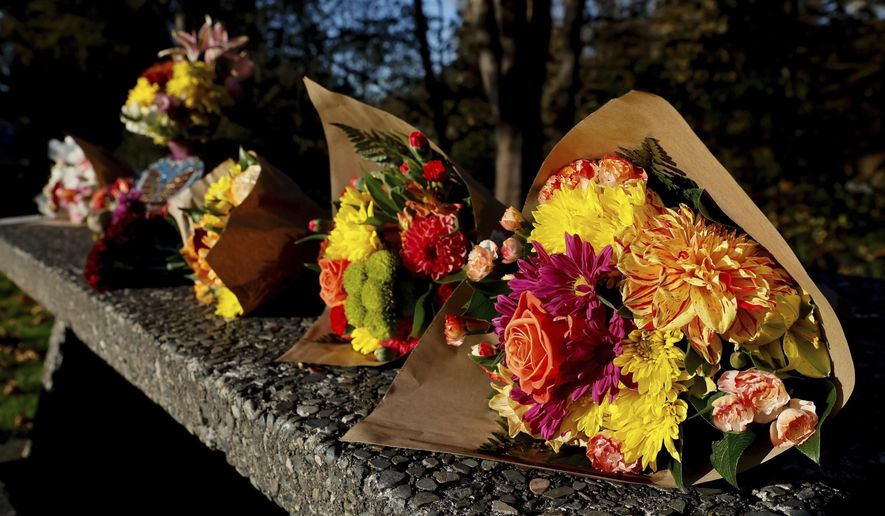
Death and the commemoration of death seem to take precedence over celebrating life and all that may have been accomplished by any individual. Think of the flowers and memorial bicycle markers that pop up occasionally on the side of the road. Both are intended to mark the spot of a tragic fatality. In the immediate aftermath of an accident, it’s completely understandable that a family would place flowers as part of the grieving process.
In the United States, however, we sometimes have trouble letting go of that moment. Flowers become perpetual markers of the loss. Some states sanction the use of official signs to mark the spot. Rather than celebrate the life of a lost loved one, many Americans get permanently stuck in the moment of his or her passing.
People were interested in these podcasts
If you doubt this cultural quirk even for a moment, think of President John F. Kennedy. The youngest man ever elected president, Kennedy was vibrant and full of life and charisma, until Lee Harvey Oswald pulled the trigger and hit the back of his head. Among the most shocking moments in American history, it is understandable that everything about it would become etched in the public’s mind. Kennedy became an iconic figure. Schools, bridges, an airport, the U.S. space center and a performing arts hall are all named in his honor.
The beloved Kennedy also provides a glimpse at the culture of death. When did he die? Many who weren’t even alive then can rattle off Nov. 22 as the correct answer. Conversely, when was JFK’s birthday? Who knows? We celebrate the birthdays of George Washington and Abraham Lincoln, but Kennedy? Focus on death.
Let me give you another example. During the duration of the NASA Space Shuttle program, there were 135 missions flown. If I ask you to name one astronaut from the shuttle era, what name comes to mind? I’ll bet dollars to donuts Christa McAuliffe is the name that came to mind more than any other.
Why do we remember her above hundreds of other astronauts? She died.
The Challenger explosion in January 1986 took the life of the 37-year-old teacher. Tragic. Horrific. Witnessed by millions as it unfolded on live television. Her death overrides any and all success enjoyed by the entire NASA body of astronauts in the space shuttle era.
Fast forward then to present day. America recently commemorated the 25th anniversary of the Sept. 11 terrorist attacks. We say we’ll never forget. The names of the nearly 3,000 lives lost on that fateful day were read at a televised event at the lower Manhattan memorial site.
Demonstrating just how big of a deal the Sept. 11 ceremony was, all four living former presidents attended, interacting cordially with one another. (President Trump attended a parallel ceremony at the Pentagon; Vice President J.D. Vance represented the current administration at Ground Zero.) It was a strong and unifying message, reminding the American public that during our darkest hour we come together. Political party and policy differences don’t matter in those most difficult of times. We’re all Americans.
What struck me as I watched the historic figures, however, was that just a couple of months ago, in a moment of pure joy and celebration, America’s 250th birthday, the four former presidents were nowhere to be seen.
America has the oldest single governing document, the Constitution of the United States, of any country on earth. The nation has an amazing track record of success, of prosperity, of growing, changing and improving, of providing opportunities and freedoms unlike anywhere else in the history of mankind. It’s not without its flaws and faults, but as a nation and as a global influence, there has never been a country like the United States of America.
The July 4 celebration included a parade, displays from each of the 50 states (even Pennsylvania eventually) and the largest fireworks show of all time. What was missing, however, were former Presidents Bill Clinton, George W. Bush, Barack Obama and Joseph R. Biden.
The spectacle that was America’s 250th birthday was fascinating, but partisan bickering remained. Unlike the 9/11 ceremony, we couldn’t put our differences aside. Some entertainment acts didn’t want to participate because they didn’t like the current occupant of the White House, apparently failing to understand the celebration was for a nation and its quarter-millennium anniversary, not for one of the 45 particular men to have been its president.
The failure to recognize the unique nature of the celebration either by the organizers or by the past presidents themselves speaks volumes. All were present for the solemn event 25 years after 9/11 and rightfully so, but their failure to unite together on one stage in celebration of America’s 250 years tells us all we need to know.
Perhaps if some tragedy had unfolded, the old leaders would have swarmed in, but in the midst of positive festivities, no one seems to have had an appetite for unity.
Follow the author

Please read our comment policy before commenting.